The darkest secrets of Fear & Hunger 2 Termina: second interview with the creator Miro Haverinen

Fear & Hunger was, in part, the game that made me start this blog. And you can see the results in the many articles I wrote about it. A one-man-army project, Fear & Hunger is probably the grimiest and darkest RPG available, with a satisfying and brutal combat surrounded by a deep lore. Last December, the official sequel, Fear & Hunger 2 Termina got released, bringing the horror and despair in a more modern post-World War setting.

Between an evil moon, grotesque mutations, old and new gods, and a set of disturbing and deadly enemies, Termina brings back the essence of the first title and encases it in a more open world format. In fact, you have three days to join the Termina festival by murdering all the other characters, and each time you sleep and save, the time will dramatically advance. Exploring the town by learning routes and possibilities is essential to survive and understand the mechanics. There is a lot to learn and optimise, not only how to efficiently manage the save points, but also how to use the sigils of the gods to obtain powers and which possibilities are available at a specific times. Because the characters around you move with time, and it is impossible to see many events once day/time changes.

As its prequel before, Fear & Hunger 2 Termina features grotesque and different enemies, some of them randomly appearing to destroy your party, while others are the bad endings of a specific characters. If you want to see some of the most dangerous enemies in the game, have a look at my article: Sadistic maniacs and grotesque abominations: the unique stalking enemies of Fear & Hunger 2 Termina.

When the first Fear & Hunger was released, I had the possibility of asking questions to the creator, Miro Haverinen. Together with Miro we explored the secrets, lore, and references of Fear & Hunger. The interview is available at the following link, if you missed it: 

Interview with Miro Haverinen, the creator of the dark RPG Fear & Hunger

Back then, it was the first interview posted here on Dark RPGs and now, with the release of Termina, talking again with Miro is like continuing a path. Because Miro Haverinen was kind enough to provide a “part 2” interview, this time completely focused on Termina. Together with Miro, we will analyse more the references, secrets, and curiosities of Fear & Hunger 2 Termina.

If you enjoyed the game and want to know about its future, or discover the secrets and curiosities behind some mysteries such as the Irrational Obelisk or the Iki Turso, have a look at the following interview.

Q1: Hi again Miro, and thanks for the possibility of asking again some curiosities about the expanding world of Fear & Hunger. Fear & Hunger 2 Termina released last month, bringing a new breeze of disturbing horror for RPG fans. The biggest surprise is probably the change in time, moving from dark middle-ages to post-WW2. Why did you decide to shift toward a more modern setting? Were there also other ideas before, including maybe a more directly-tight sequel?

A1: Hi! Glad to answer these questions again. It helps put things in perspective for me too.

As for the setting – I wanted to create something new. These games are pretty big commitments, it gets boring working with the same setting for years on straight. I also felt like there were lots of other dark medieval games around. The world didn’t really need another one. So a more directly-tied sequel was never in the books really.

I got the idea for the main ending of Termina pretty early on. I felt it was a logical direction for things to progress towards with the rules and themes of this universe in mind. The story idea played a big part in the decision for the setting. I first toyed around with even more modern setting that was lighter in tone, but felt it was too big of a departure, so I dialed things back and came up with the 40s setting. Although I approached the setting pretty liberally and it is far from an accurate depiction of the times. Much like how F&H1 is wildly inaccurate in its historical take, it’s more like a hodgepodge of multiple different centuries. Termina’s 40s is very similar in this regard. There are things in the game that would better suit a 1800s setting and things that would make more sense in 1960s-70s setting.

If the old dungeon was full of monsters, modern war now truly creates monsters.


Q2: If this was hinted at in the first Fear & Hunger, it is now clear how the setting of Termina is an alternative version of our world, with connections and references to existing places and figures. And the perfect meeting point for these influences is Prehevil, the main city of Termina, a complex character of its own. How did you manage to combine the fictional and historical aspects of Termina to build Prehevil?

A2: The game was even more tied to real world history in the beginning of the development, but with each passing month the game universe drifted further and further away from historical events because it felt a bit constraining. I like how with this “strangereal”-like setting people can fill in the blanks in worldbuilding easily but there’s still plenty of room for the world to grow to any direction that benefits the overall story.

As for Prehevil, I wanted the city to have strong European feel in its architecture and the story benefitted from the city being in the middle of all these different coalitions, that’s why I ultimately settled into Prehevil being (very very) loosely based on Prague of Czech Republic. I was browsing through WW2-era photos for inspiration and something about Prague just appealed to me.


Q3: While Old Gods already appeared in the previous game, Rher, the Moon God, was always referenced on the side. But now everything changed, and Rher is the central element of Termina. Why did you decide to use the Moon God as core element of Termina? Which were the references and the ideas to build this god and integrate it into the gameplay?

A3: This delves into the in-universe lore a bit, but in many ways Rher always had the main antagonist role when it came to human progress and reaching new heights. Being the “Jealous Moon” that he is. The first game was mostly set in dark dungeons though. Not much moonlight reaches those depths, but this time it made more sense for the moon to follow the events more closely in broad daylight. I’ve just always been personally fascinated by the moon, I think that’s the main inspiration really. The real thing. I know many draw parallels to a certain Nintendo game with the words “Termina”, the moon and the 3-day time limit, but that game didn’t really play big role as far as inspirations go. The most significant influence Majora’s Mask had to Rher was that I was desperately trying to differentiate Rher’s design from the moon in Majora’s Mask. It’s not easy to design a moon with a face that doesn’t look similar.

The jealous moon Rher watching down from the sky.


Q4: Termina has a new and interesting mechanic based on sigils, which really expands player management during the game. However, Rher’s sigil is a very peculiar one, allowing the player to shift toward an alternate reality made of wood. As a fan of Silent Hill, and in general of parallel dimensions of pure pain, I am curious: which are the lore and the ideas behind building this reality? And why was wood the main element of this dimension?

A4: No comments on the lore reasons, sorry. I don’t like explaining the lore too much outside the game and this particular topic would reveal a lot of big things. The basic aesthetic of it came from some old drawings I had done years ago. I think I originally got that visual of crude wooden walls rising infinitely to darkness above from a dream of mine. My dreams played a big part with many visuals found in the game. The dinner with the mayor, the intro scene, the church, the mold apartment – they all came to me in different dreams. I guess dreams also play a big part in the lore too? Of course the parallel universe also takes strong influence from Silent Hill. No escaping that fact.


Q5: Termina really hits strong with the enemy design, between a horde of grotesque abominations and deadly maniacs. Which is your favourite enemy and why?

A5: I think I like the generic moonscorched enemies the most. Or the evolution they go through from enemy to enemy. Like you can see how moonscorching advances from first slightly distorting one’s features, to their skin peeling off revealing the innermost desires, to hardening of the exposed flesh, until that hardening growth takes over the whole body. It’s pretty interesting visually I think, but it also has interesting implications. The moon reveals the truth and all that.


Q6: Prehevil city hides many secrets, but one that I really couldn’t solve was the Irrational Obelisk. For those who don’t know, hidden inside a shop lies a tower made of clothes, apparently purposeless and impossible to kill. Can you give us some clues about the purpose of this mysterious being?

A6: That thing exists for real. How scary is that? I once saw it in a small art exhibition in Helsinki, Finland. It’s been years since that encounter though, so I probably don’t recall my meeting with that irrational being accurately. This is just my depiction of the events that went down. I’ve had irrational phobia for buttoned shirts too since I was a toddler. That probably played part in its creation too. When making something that’s trying to be horror, you have to go with your gut instincts. I find that stuff weird and eerie.
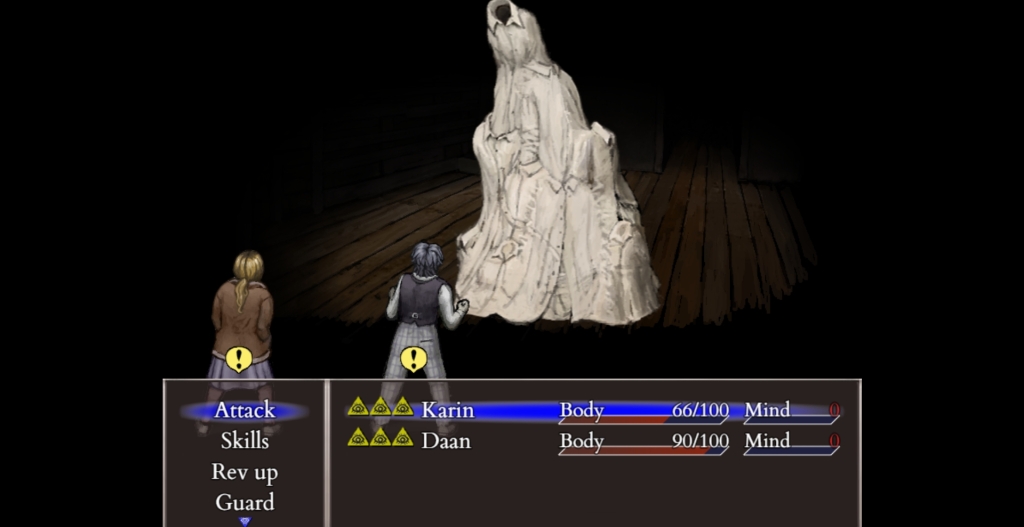
The impossible battle against the Irrational Obelisk.

Q7: Compared to the previous entry, Termina doubled the number of playable characters from four to eight. Which is your favourite main character and why?

A7: Hard to pick just one. I like the whole cast and my favourite changes based on the time of day. Maybe right now at this moment it’s Tanaka. I like the idea of Hero’s Journey in the world of Fear & Hunger, even if his arc isn’t a complete quest just yet… I guess technically this doesn’t answer to your question though. Tanaka is not one of the eight…


Q8: Are there still secrets that you think people still didn’t discover? Maybe something about the mysterious Doppelgangers?

A8: There are some things I haven’t seen anyone mention. But I’ve been mostly in bug fixing mode since the release and honestly I haven’t properly been able to follow the discourse. It’s hard to have secrets in games these days. People start datamining even niche games like F&H. I think that’s like a magician revealing their secrets. Just makes things more boring. But it is what it is. You probably haven’t seen the last of doppelgängers yet though.


Q9: I already had the same question for the previous part of the interview, but I have the same curiosity for Termina: were there during the development monsters and bosses that were not included in the final release?

A9: Yeah there’s always content that doesn’t get to the game. Although I think I got most content in that I really wanted. I did have delusions of grandeur at times during development when I thought I could expand the game even further, but I never seriously thought that stuff was going to make it. At least not for the vanilla release build. There is at least one Pillarman variation I thought about adding and also wanted to have another Iki Turso creature randomly walking around the city on day 3. Those didn’t make it. At least not yet.

Imagine that Iki Turso was supposed to randomly walk in the city on day 3.


Q10: The first Fear & Hunger received many updates, including new endings, places to explore, and even the more light-hearted School Mode. Are you planning similar support for Termina? If yes, can you give us some clues about what to expect in the future?

A10: I’ll keep supporting the game with free updates. Not 100% sure to what extent quite yet, but there will be things to come. I think the first new content to come tries to deal with some replayability issues. A completely new route to the city might keep early game more fresh on repeated playthroughs and bring some variety to the areas you find in the game. New playable characters and a new ending route are also pretty high on the list. Some of these additions would take a lot of work though, so no idea when/if they are all coming to the game. I’ll just keep working on this stuff for as long as I feel like it. The game has certainly been received well enough, so the motivation is there in that regard.


Q11: Between jumps in time and different continents, such as the mysteriously hinted Vinland, the world of Fear & Hunger is continuously expanding. Maybe it is early to ask since the game only got released last month, but could you say us something about what to expect from the future of the saga?

A11: I have a couple of more fleshed out ideas, but it’s too early to tell if either of them become anything more. When F&H1 was close to being done, I thought of a thematic throughline for a trilogy of games. So I have a pretty good idea what F&H3 would be about even if there is a lot of freedom in the surface story to set it in different places in the timeline. It could take place before the released games or after, and that’s pretty much what those fleshed out concepts are. One happening before the events of F&H1 and one happening after F&H2. The other is a more conservative idea that’s closer to the established formula, while the other one is a wild card. I’d probably prefer to stir things up because I fear if things settle down to a more clear formula, any deviation from that in the future would be more difficult.

I do have some ideas for potential spin-offs too, so who knows, I might make something completely different than what’s on my mind currently. That’s what happened with Termina too. I had few very different concepts for F&H2, but ultimately I picked a wild card idea that came to me at the last minute.

Final Remarks:

I would like to thank again Miro for the opportunity. Miro provided really interesting answers to my questions, and I truly hope to see new contents for Termina in future. As a big fan of the saga, it was a pleasure for me to explore again the grim world of Fear & Hunger, and Termina really offered a huge amount of new contents. Meanwhile, Termina was quite a success, reaching already an “overwhelmingly positive” evaluation on STEAM. And if you still didn’t play it, Fear & Hunger 2 Termina is available on STEAM and ITCH.

Sadistic maniacs and grotesque abominations: the unique stalking enemies of Fear & Hunger 2 Termina

Fear & Hunger 2 Termina is the sequel of probably the most grim and horror indie RPG. However, this time the setting is not in a dark version of middle ages, but a war-affected town in 1942. The change in setting influenced everything, from the inclusion of firearms, to more modern-looking creatures inspired by war machineries and medicine. But the world is still the same, imbued in cosmic horrors and malevolent Old Gods (and you can see some example here: Challenging the Old Gods of Fear & Hunger [Boss Battle]), where magic is real and people dies in unthinkable ways. Another huge difference with the prequel is that Termina is an open-world to be explored in the span of 3 days. The changing in time and day will affect the world, from quest and characters, to secret bosses and the appearance of new enemies. The combat system staid the same, still brutally difficult and based on severing the opponent limbs to reduce risks. After all, a deadly sword is not dangerous anymore if the arm wielding it is severed.

Grotesque and deadly enemies are still the core of the horror experience. From insane villager to deformed abominations, the world is a place full of dangers. And since Termina doesn’t feature a classic experience system, avoiding fights is a must, since the reward is often nothing… or maybe a severed limb as a souvenir of the battle. Understanding which enemy can be safely killed without risking permanent mutilations and damages is a core skill to acquire in such a difficult game. Interestingly, by having a doctor in the party, the bodies can be analysed to discover lore regarding their appearance and condition. Because the moon is not a regular object in Termina, and being “moon-scorched” brings terrible consequences. However, standard enemies are not the only one roaming the streets, and unique stalking enemies will often appear to chase the player. These enemies must be avoided at all costs, especially when met the first time and without a full party. From a sadistic clown stalking the city to kidnap people in their “fun dungeon” to an abomination made of beehives hiding in the shadows waiting to strike, the streets of the city are a dangerous place.

In the following article, I will analyse the most unique chasing stalkers of Fear & Hunger 2 Termina. The creatures analysed are unique enemies, non-mandatory, which should be in general avoided due to their strength. Without a fully equipped party, or a perfect solo set-up, they are almost impossible to kill without huge risks and consequences. They are also fast and relentless killers, which will chase after the player around the map. I will cover only pre-existing enemies, and not the moon-scorched forms of the human characters, which are indeed very interesting boss battles that I will probably cover in a future article.

Welcome to a world of pain ad suffering.

Death Mask

Death Mask is a challenging and disturbing enemy, not much in his appearance, but definitively in his behaviour. A gigantic humanoid creature, Death Mask looks not much affected by the deadly mutation scourging the area. Other than for the gigantic size, Death Mask looks like an extremely muscular male human, wearing a green chainmail-robe, a sort of plague doctor mask, and wielding two machete. Death Mask is often maniacally laughing, a sound distorted by the mask that he is wearing. In fact, the mask modifies the horrible death gurgle of the wearer into a “joyful” laugh.

The most bizarre behaviour of this enemy is definitively his entrance. Locked coffins are scattered all around the city, useless objects never containing any items, offering to the player only the purposelessly action of knocking on them without receiving any answer. However, in one random unlucky occasion, one of the dozens coffins will open, and Death Mask will rise from it, quickly stalking the player. Death Mask is an incredibly strong and deadly opponent, able to attacks four times in a turn, dealing incredible damages and amputating arms like if they are butter. Escaping from this fast enemy is already challenging, and one missing escape could mean losing limbs or party characters. And discovering that he could jump out from any coffin will create a pure sense of dread for the rest of the game. The bravest will be rewarded with different items, including a chainmail armor, and the powerful death mask itself.

Beekeeper

If being chased by a gigantic hulking humanoid is already a terrifying experience, being chased by a gigantic hulking humanoid made of hornet-hives is the quintessence of terror. The Beekeeper is a grotesque being that hides in the city. A pale mass of muscles, the Beekeeper body is almost covered in hornet-hives, especially arms and head. Moreover, after examining the body, it is impossible to determine where the hornet-hives end and the creature starts. And if this was not enough disturbing, the creature is practically hollow inside… with the exception of hornets.

The Beekeeper hides behind a metal door, inside a sort of empty garage in the city. The first time that the player will pass by there, they will only hear the hornets buzzing. However, when crossing again that area, the door will suddenly open, and the Beekeeper will start the chase. The creature is a very difficult battle that must be avoided early on. In fact, the massive foe not only has a huge amount of HP, but can also attack multiple time in a turn. First, the hornets will swarm the player, stinging multiple times and inflicting poison. Then, the Beekeeper will finish the job, hitting them with the arms as strong as a maul, able to deal an insane amount of damages. And, after the strenuous fight, the reward for the victory is… nothing. This is another reason to completely avoid this dangerous fight.

Stitches

While wandering around the city, the player can meet grotesque creatures made of human body parts stitched together. But it is only when reaching a mysterious bunker, hidden in the deepest woods, that the player will discover the evil mind behind these creatures. Stitches is the disturbing lunatic stalking the bunker while satisfying her obsession of surgically sewing humans together. Looking at her appearance, Stitches is a female vile looking maniac, with a grinning face and the skin slightly peeled up and sewn, like an ancient Cenobite. She tries to speak, but since she sewn her own mouth, this is an impossible task.

Stitches is a dangerous maniac that loves to cut and sew things together, but the most dangerous details is that she is not alone in the bunker. One of her creation, an amorphous mass of flesh, is also slowly wandering in the bunker. Start a battle with one of them, and you have one turn to escape, because on the next one, the other will join the fight. The mass of flesh has only a strong one-hitting attack, but also an insane amount of HP. On the other hand, Stitches is a jack-of-all-trade, able not only to heal herself, but also to quickly sever limbs and to immobilize characters using wires. The battle is excruciating and not very rewarding, and fighting two hunters at once is a huge challenge. Moreover, losing against Stitches unlocks a very disturbing Game Over scene… let’s just say heavily inspired by the movie “Human Centipede.”

Centaur

A grotesque and disgusting abomination, the Centaur is probably the fastest creature in the game. It dwells in the woods, protecting a military bunker, charging and chasing whoever enters the area. The territorial beast is an offence to every sense, a nauseating being composed of two bodies horribly fused together. The main body is a horse-like creature, with a pale skin covered in deformities and bandages, and a bizarre head similar to a sort of grotesque flesh mushroom. The upper body is instead humanoid, with similar colour and aesthetic to the animal one. However, by closely analysing at the humanoid figure, it looks almost as the human and the animal were “very closed” together when they morphed. This is even confirmed by analysing the body, when the doctor addresses the issue as the “elephant in the room.” As before for other creatures in the prequel (and you can find the analysis HERE), the Centaur could be born from a marriage to the God Sylvian between a human and a beast, when the bodies get fused together.

The Centaur is fast and deadly, a creature almost impossible to avoid without using traps or taking weird trajectories hoping to kit it. And as the fastest creature in the game, this is a huge challenge. The fight is difficult to win without heavy damages and casualties. This is especially true due to the stampede attack, which will damage the entire party. Moreover, by having two heads, the creature is even impossible to kill with only one lucky head-shot. And if this was not enough, the wounded limbs spray an acidic blood. As other stalker before, the Centaur also gives no reward, so it is crucial to avoid this deadly fight.

Vile

The first unique chasing enemy met in the game is a disturbing mutant wearing a pig mask. The towering humanoid is dressed like a sort of pest control worker, also wielding a spray canister with an acid liquid inside. The pig mask is not a simple ornament but it is fused with his head, a secondary effect of the moon scorching mutation. The creature is first met in the village outside the city while spraying the pesticide liquid on drying fish. Even if it looks like a gigantic demented killing machine, the creature is instead one of the few still able to talk and keeping a sparkle of intellect.

The Vile is an extremely dangerous enemy, especially since he can be faced in the beginning of the game. The first time that the player crosses the village, the creature can be easily avoided, since he is busy spraying the fish. However, after entering the village again, the maniac will quickly appear to chase the player. And he is fast. The battle is tough, especially without additional party characters. The Vile can hit twice in a turn, first by spraying acid, and then by smashing with the gas canister. So severing the arms is an essential task to survive the battle. An interesting detail is that the battle can also be won by… talking. In fact, by talking at the creature and selecting the correct option, it is possible to trick the monster into temporary lifting the mask, a sufficient time to inhale the gas leaking from the canister and dying from it. A really unexpected solution to get rid of such a killing machine.

You can also have a look at how to kill the Vile by talking in the following video on Surreal and Creepy Games channel:

The Mob

By looking at the image of random enemies grouped together, you would never expect this to be probably the most dangerous and annoying enemy in the game. Not only they are fast and extremely challenging, even with a full party, but the fact that they can randomly appear in different parts of the city could ruin a perfect run or cut you out of that area. The Mob are three enemies grouped together: a unique one and two common enemies. The first one is a sort of doctor or scientist wielding a rifle, with a deadly aim and a modest damage output. The other one is a grotesque half-cocooned mutant using a hammer to hit hard. But the most dangerous one is a unique gigantic mutant wielding a deadly circular saw.

The Mob can randomly appear when entering specific areas. First, you will hear the sound of a breaking bottle. Then, the buzzing chainsaw, and only in the end, you will see the three maniacs charging at you from multiple directions. They are fast, and just touching one of them will start the battle against the entire group. The Rifleman is a pretty standard enemy, but still able to inflict serious damage with his attacks, same for the Half-Cocooned with the hammer. However, the Meat Grinder, wielding the circular saw, is the most dangerous of the trio. His attacks hit multiple times, causing an insane amount of damage, bleeding status, and probably severing an arm. Even as standalone enemy, the Meat Grinder is a deadly challenger, but together with the other enemies, it becomes a battle almost impossible to win without losing characters and limbs. Moreover, each enemy is an individual target, without any body part to attacks, meaning that it is impossible to disarm any enemy. The Mob can completely ruin a run by locking the player out of a zone, because not only they can appear in very important areas, but are also extremely difficult to defeat and avoid.

Needles

Needles looks extremely inspired by Art the Clown from the horror movie Terrifier. And trust me, behind this look lies the most aggressive and disturbing stalker of Fear & Hunger 2 Termina. The deranged clown takes his name from his obsession for needles. In fact, not only he uses as weapon a syringe full of a mysterious liquid, but also a flail with medical needles in the end. The clown is a tough enemy, apparently only an ultra muscular human, but still incredibly tough to kill. Moreover, after examining his body, the question of “is he really dead” rises up. Judging by the sadistic behaviour, the strong bodies, the obsession for medical instruments, and the names, Stitches and Needles probably share a similar origin story.

Needles is an almost mandatory fight inside a military bunker, but later he will become the main stalker through the city streets. He can appear everywhere, accompanied by a maniac laugh and an on-screen message. At that point, Needles enters somewhere in the map, starting to hunt the party. He can be avoided by exiting the area, but sometimes his appearance is so repentant to nullify every escape plan. It is possible to kill Needles, but only after a dangerous battle. He attacks twice, once with the mysterious syringe able to inflict deadly status effects, then with the whip inflicting bleed and heavy damages. Plus, he also has a huge amount of HP. And he also has an ace in his sleeve. If you sever one of his arm, on the next turn, Needles will change his weapon for a gun, inflicting by surprise even more damages. Dying against Needles will not always cause a direct Game Over. The main character will wake up chained in a bunker, without a way of escaping. Then, a mysterious spirit will appear, entering inside the main character’s body and causing… well, let’s just day “massive happiness.” After that, the game will continue, leaving everybody puzzled about what happened and the motifs behind Needles’ actions.

A peculiar and violent hell in Lakeview Valley: power-up while murdering and send the town to Hell [Evil Quests]

Lakeview Valley is a very peculiar game, sometimes described as a murderous Stardew Valley. This is in part true, since the game allows many secondary activities, including gardening, fishing, and decorating the house. However, Lakeview Valley is also a gory, vile, and disturbing horror game, where the protagonist can act as a serial killer. After every murder, hiding the bodies and erasing the clues is essential to don’t get caught by the sheriff the following day. So be ready to murder every witness, throw the bodies inside the lake, and use ammonia to clean the blood.

While Lakeview Valley is widely known for its adult and violent components, as the other games in Lakeview saga, few is known about its deep and complex lore. The town is full of creepy inhabitants, hidden secrets, multiple endings, and even a morality system. Seriously, to discover every element and complete all the achievements, the player will need multiple playthroughs… or time loops. If you want to find more about this town and its secret, you can find Lakeview Valley and similar games in the article Towns with a Dark Secret.

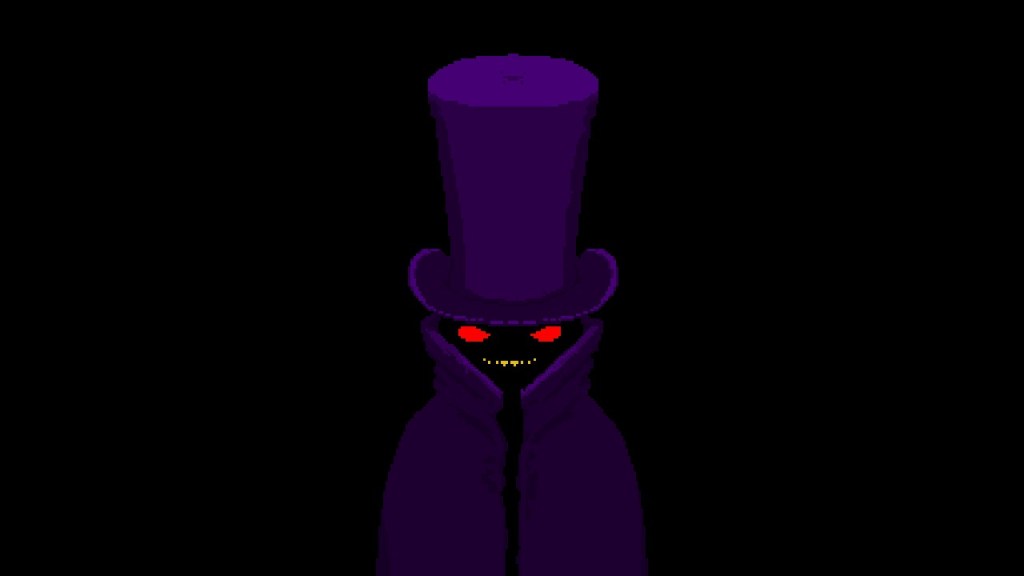
Playing the good Samaritan comes with a price, because murderers receive a reward in this insane world. After murdering the first victim, a mysterious Circus will open during night in the woods outside town. Mergo is the mysterious creature in charge of the Circus, a tall guy with a hat, hiding in the shadows and showing only a wide row of sharp teeth. For every homicide, the player can select new dark powers from hollow trees outside town. These come in a wide selection of powerful skills, from infinite stamina and oxygen to unlocking a realtime map of the town.

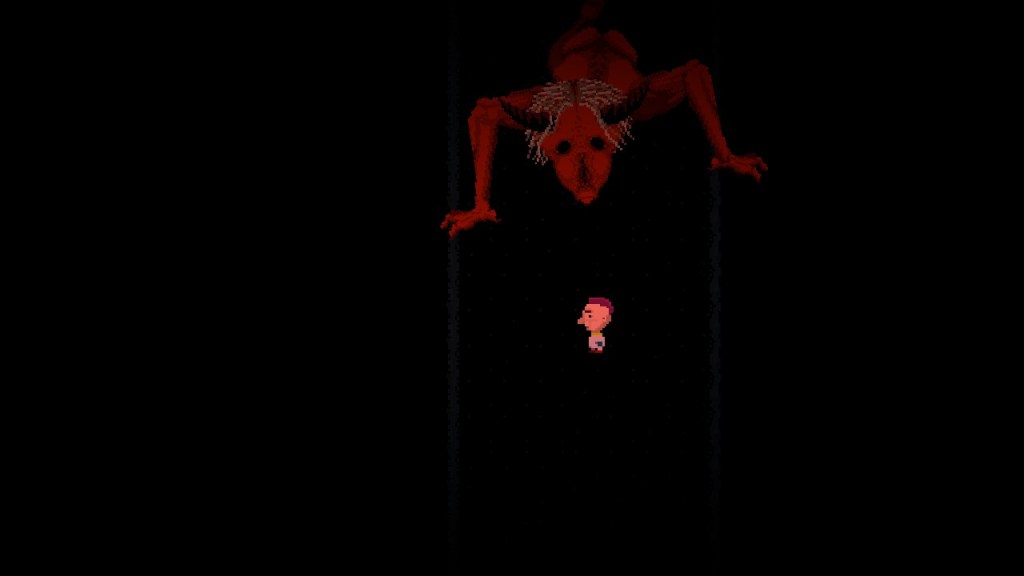
And this is not everything, because between the many secrets, the existence of a hidden hellish dimension is one of the most unexpected. Even more, because this dimension can only be accessed by sleeping in a random bed inside a deserted house. The house is always locked, and finding a special key is required to open it. After that, by sleeping on the bed, the main character will twist in a vortex, ending up in this grotesque and violent hell. The place is full of demons, which will not directly harm the player, and will offer some disturbing philosophical conversations about hell and torment. The main area includes many characters, but it is also quite small. Only a long bridge connects the main area with the Queen’s room, but, of course, it is protected by a guardian. Entering this bridge without being summoned by the Queen or in possession of a holy power will lead to a horrible death. A gigantic invincible demon will crawl toward you, with the only viable option of running away from this place.

Every of your victims will end up in this violent and brutal hell, tortured for the eternity by the demons residing here. By talking with the victims, you can see detailed portraits of the brutal torments they are enduring. Some of them have their hair ripped out, burned, or skinned alive. Seriously, this is not a place for weak stomachs. But there is an exception. The mischievous boy of the town, Billie, will not being tormented by demons. Instead, Billie will act as one of the torturers, and the demons will compliment his skills. Well, looks-like not all the kids are pure and innocent in this twisted town.

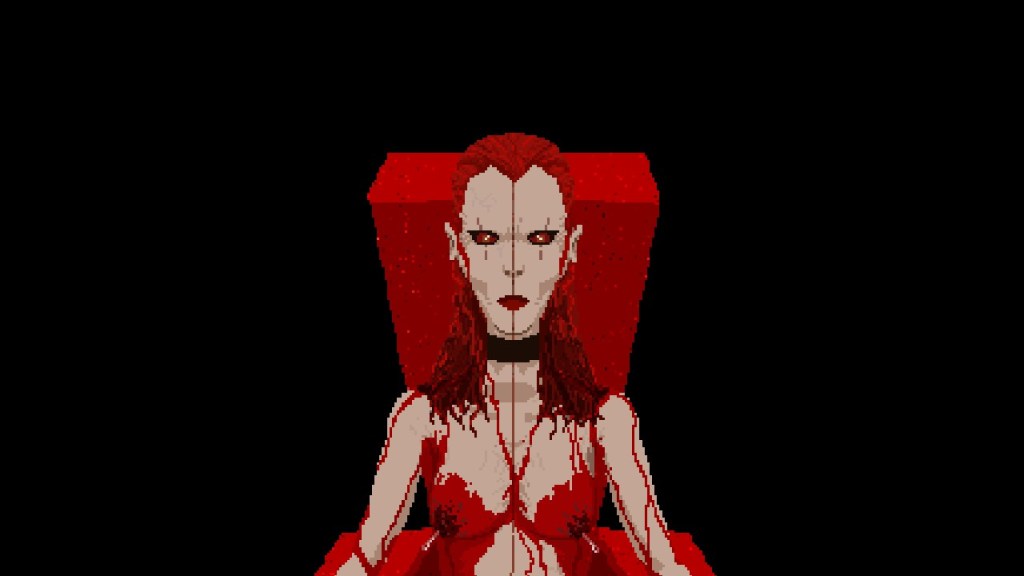
What will happen when you murder all the town? That is the time when you will get an audience with the Queen of Hell. Meeting the Queen is the ultimate step of the most evil ending. But what should be the reward for such evil act? Well, let’s just say that the Queen is so amazed by your actions that will allow you to “satisfy” her.

Murdering to obtain supernatural powers, causing a hecatomb to sleep with the Queen of Hell, and a hellish dimension of torments: what other horrible destiny is waiting for this poor town? A detail is still missing, because if the victims’ souls will go straight to hell, their body will roam the streets as zombies. The town is never a safe place at night, between mothmen, the upper league demons, or a moving scarecrow (you can read more about it HERE). But after each murders, the victim will become a zombie, and the streets during the night will have a new enemy roaming around. Afterall, there is a small price to pay for being evil.

A JRPG boss that looks like escaped from Silent Hill: surviving the 4 stages of Dominus Circus from Scarlet Nexus [Boss Battle]

Scarlet Nexus has quite simple mechanics for a JRPG, but what it lacks in gameplay is amply balanced in terms of lore and enemy design. Because the antagonists of Scarlet Nexus, called The Others, could easily join the roster of creatures of a never-released Silent Hill game.

Every creature is a chaotic mix of random items, such as vases, and human parts, especially female legs. The elements are combined together in the most grotesque and surreal way, creating figure that could be part of a Dalí or De Chirico’s painting. In fact, the creatures are created by the modern Japanese artist Masakazu Yamashiro to convey the most alien-looking aesthetic.

While many Others show truly interesting concepts, the most disturbing and brilliant design is always Dominus Circus. One of the last bosses of the main story, the creature will suddenly appear in a giant labyrinth inside the mind of the main antagonist. The monster never appeared before, and only a brief cutscene before the battle provides a barebone background of its past. The only provided information is that Dominus Circus is a immortal Other that was never defeated, a boogeymen for all the soldiers in Scarlet Nexus’ world. And soon after this cutscene, the player should be ready to face the terrifying creature.

The introduction of Dominus Circus is a disturbing surprise. In the beginning, the boss appears only as a sort of classic ghost, a humanoid figure covered under a white shroud. Then, after starting to rotate, the creature will reveal multiple human legs on a monocycle. But only after reversing upside-down, the real monster is revealed: a complex humanoid architecture kept together by thin horse legs. According to Masakazu, Dominus Circus is the climax of the Others’ anatomy, a creature so alien and bizarre to represent the ultimate Other. And from this apex symbolism comes the name “Dominus,” a being almost looking like a disturbing pagan god. The “Circus” part of the name is even more evident, since many details of the design are inspired by the circus, from the umbrella remembering a tent, to the monocycle of the upside-down creatures and the elephant head.

To have a glimpse of the complex and disturbing design of Dominus Circus, you can have a look at the creepy intro in the video below.

The battle against Dominus Circus is one of the hardest of the entire game, especially because it will challenge your memory in 4 long stages. In fact, each phase needs a different approach, and the specific use of supporting characters. This is because, in Scarlet Nexus, connecting with secondary characters unlocks special abilities, including hyper velocity to slow time, telekinesis, or teleportation. The correct use of different powers is necessary to overcome the main obstacle of each stage of this long and complex battle.

During the first stage, Dominus Circus wields a big umbrella as main weapon. With this bizarre spear, the creature looks even more whacky. However, regardless of the appearance, this is probably the most challenging form. In fact, the umbrella will not only completely shield the boss from frontal damages, but will also erupt a water jet that inflicts heavy damages while also knocking the characters down. Moreover, the rotating lower body can also become a deadly drill that the boss uses to charge at the characters to inflict huge damages. And if this was not enough, Dominus Circus can also summon a gigantic water storm, so gorgeous to see as deadly to experience. Using quick skills to jump behind its back, bypassing the umbrella shield, is crucial to kill the first phase.

After each form is defeated, for a brief instant, the small ghost-like figure on the monocycle will appear, completely harmless. Then, it will fall on the ground, disappearing below, just in time for a new dangerous form to remerge.

For the second stage, Dominus Circus has no weapon, but instead it proudly wears a disturbing elephant head. As you can expect, this is the deadly weapon of the second stage. From the trunk, the boss can shoot different kinds of projectiles, including oil. Moreover, Dominus Circus can also summon a thick mist, which completely hides the creature. Using the clairvoyant skill is essential to counter this move and see through the mist. The second stage is very disturbing and intimidating, but luckily less challenging than the first one.

For the third stage, Dominus Circus will be again headless. However, this time, instead of an umbrella, the boss wields a disturbing sword, which looks like made of a combination between a seashell and multiple human arms twisted together. If the other forms are creepy, just looking at how this fleshy sword bounces in its hand is pure nightmare inducing. During this stage, Dominus Circus shows, as expected, dangerous melee combos, which can easily and quickly kill a character. More unexpectedly, the sword can also throw wind-waves, also working very well as a distance weapon. With a good timing while dodging and a balanced use of powers, this stage is not so difficult to overcome.

Now that the 3 main forms are defeated, it only misses the last stage, in which Dominus Circus will combine all the previous weapons and attacks. Yes, you read right, every move and ability will show off in the final stage. So the elephant head to shoot projectiles and create mist, the tricky umbrella to shield from frontal attacks, and the deadly sword, everything packed together in a complex battle that will test your memory and reaction times. Once the combined form is defeated, after a stylish execution, Dominus Circus will be finally and truly dead.

Scarlet Nexus shows since the beginning a set of very creepy and disturbing creatures, but is only with the long and complex battle against Dominus Circus that it clearly shows its climax.

When your average JRPG protagonist becomes a grotesque monster: how Ripper Jack in Mary Skelter 2 works [Mechanics]

The first Mary Skelter was a pleasant surprise, a really dark dungeon-crawler JRPGs, where fairytale-inspired characters are imprisoned in a living environment, forced to fight by using blood. And if this was not horror enough, the gameplay is also influenced by this gigantic living ecosystem (as you can read in a previous article here: Mary Skelter Nightmares: When the dungeon is a colossal living creature with its own needs), while immortal monsters stalk the group like a proper survival horror (and here an analysis about these Nightmares: The Nightmares of Mary Skelter: fairytale characters reborn as twisted immortal stalkers). However, the sequel was released in the west only on Nintendo Switch. Luckily, it recently became available also on STEAM, so more people can try it.

Mary Skelter 2 is really difficult to describe without spoilers. Because for almost the entire game, the player who previously played the first game has no idea of what is happening. In fact, Mary Skelter 2 is altogether a prequel, a sequel, and a remake. And why some things are the same, some will drastically change. This is especially true for Jack, the only male protagonist.

In the first title, Jack was the classical “good boy who cares for a complicated girl” inside a harem of female characters. However, his function was unique and essential, since by managing the use of his blood, the player could avoid the girls to fall into a deadly frenzy. It was an interesting balance: shoot too much of Jack’s blood and he will go KO, but by being too strict you risk that your party will self-annihilate in a bloody frenzy.

Even in Mary Skelter 2, Jack is essentially the same… but very briefly. In fact, Jack will suddenly transform into a Nightmare, a gigantic, obtuse, and grotesque creature barely able to talk. This insane twist will not only affect the story, but will also reflect on the gameplay. Nightmare Jack can only communicate with Otsuu, the new protagonist princess, and will share two turns with her.

The monstrous new protagonist act quite differently from his previous self. But he can still shoot blood to momentarily reduce the frenzy of the party. However, this time instead of affecting his body, the action will have a toll on his mental health. This time, Nightmare Jack has a bar representing his mental health, which will deteriorate the more actions he will take. Of course, there are ways to regain sanity, for example by walking around the dungeons without using his powers. Moreover, Jack can also relax on his own by spending an action to take a Deep Breath, reducing in this way his level of stress. But what will happen when Jack’s mental health completely deteriorates? He will truly become a rage-full Nightmare, attacking indiscriminately both enemies and allies. And yes, he is far more dangerous than any other party member in frenzy.

Luckily, Otsuu has also ways of calming Ripper Jack (a familiar name for his nightmarish version), and can in fact talk to him by using “Counseling,” an action to calm him down. The other girls can also try to Embrace him, hoping to calm him as well. But often, only a single turn of Ripper Jack could wipe out your party. Moreover, if Jack loses control three times in the same battle, there is no way to turn back. It is Game Over.

While hopping between sanity and deadly frenzy, Jack has also other interesting actions. While outside battles, he can use a power that in the first game was of Alice, allowing the player to create a Save Point everywhere, at cost of Jack’s sanity. While in battle, Jack can use a very special power: Nightmare Zone. This attack can change the course of a battle by completely inhabiting the enemy for one turn. But of course, such power will have a drastic effect on Jack’s sanity.

The sudden change of the good-boy Jack into his nightmarish counterpart strongly marks what Mary Skelter 2 is trying to achieve: a huge change inside the comfort of your pre-built knowledge. Everything is similar to the previous game, but there are also huge differences in the plot. What is happening in Mary Skelter 2? This question will need a lot of time to receive an answer. Nightmare Jack is a really peculiar protagonist for a JRPG, not only for his grotesque appearance but especially for his intrinsic danger. Managing the mental health of this character to help the party survive, while avoiding the appearance of Ripper Jack, is an interesting and unique horror mechanic. This is also reflected in the exploration, because if Jack’s sanity is already low, creating a Save Point could lead to your annihilation in the next fight.

Like the previous entry, Mary Skelter 2 offers a unique combination of dungeon crawling and horror, plus some interesting new mechanics, and a twisted plot that is quite difficult to figure out till the very end.

Tortures, snakes, and blasphemy: the lore of Volcano Manor in Elden Ring — Surreal and Creepy

Elden Ring is surely a surprise, the quintessential of Souls-like games set in a gigantic open world. If previous Fromsoftware’s games were full of creepy enemies and cryptic lore to analyse, the huge world of Elden Ring has an incredible amount of secrets to discover. Between decadent families of demigods, different continents, mysterious characters, mystique […]

Tortures, snakes, and blasphemy: the lore of Volcano Manor in Elden Ring — Surreal and Creepy

When your vacuum cleaner becomes a gigantic menace: fighting against a giant vacuum cleaning robot in Yakuza Like a Dragon [Boss Battle]

Yakuza Like a Dragon (YLD) is a brilliant new entry in the Yakuza franchise that completely changed the gameplay from brawler to classic JRPG. And the result is a brilliant masterpiece, combining a dark and grim crime story, with out-of-mind humor and very likable characters. Moreover, on the gameplay side, YLD creates a complex and complete system, including many skills and jobs to interchange, dynamic turn-based battles, and even insane summons!

While the majority of enemies and bosses are thugs, weirdos, or crime lords, in some cases the game will go out of the ordinary with more complicated boss battles. For example, on a couple of occasions, the party will face industrial machinery, such as a wrecking ball, and even a tiger. But the game will always give its best in the nonsensical secondary quests that, sometimes, will also end up in insane boss battles. And this is exactly what happens with the battle against Sojimaru, a gigantic Roomba that went berserk and is trying to vacuum clean everything.

The insane quest that will bring to this crazy fight is called “Preparing to Suck.” In the beginning, you only need to provide funding for an eccentric scientist that created Soji, the best vacuum cleaning robot in Yokohama. After collecting the money, the scientist will show its progress: Sojimaru, a gigantic version of Soji aimed at cleaning the streets of Yokohama, while also providing coffee and massages to the people passing by. Then, of course, something will go wrong when the scientist will activate the hyper mode, sending Sojimaru insane. Before starting the actual battle against the gigantic robot, there will be space for nonsense comedy, where the robot will suck inside its body not only the scientist but also a kitten and an elderly woman! Just to don’t put pressure on your success.

The battle is a concentrate of pure madness in every detail, starting with the music. While the normal battles have a very standard soundtrack, the battle with Sojimaru plays boring and repetitive music, which sounds like the one that you can find in an elevator. But the explanation provided by the scientist is very straightforward: this is the music that Sojimaru plays when offering a massage, which now got stuck in a loop.

The proper battle against Sojimaru has multiple phases. In the beginning, the main body is impossible to damage, and the party should focus on the two more fragile extendable arms. The robotic arms will attack independently, each of them using a special move related to their function. For example, one arm will use a powerful fire-based attack, which consists in throwing a jet of incredibly hot coffee, like a sort of altered flamethrower. The other arm has installed the massage function, which now got altered in a deadly electric attack, like a sort of high-voltage taser. The friendly and serviceable robot transformed all its “to serve and pleasure humans” functions into deadly elemental weapons.

The main body of the gigantic cleaning robot is also able to independently attack, mainly by using a frontal extendable platform, which is also electricity-based, but definitively less dangerous than the arms. However, another attack is the highest danger while facing Sojimaru. The robot will create a sort of beam vortex, spinning and vacuuming the party members. The attack is visually very appealing, and also dangerous. In fact, this spinning attack can hit a character multiple times, and can even affect more than one character at a time. The deadly “Giant Slalom” can truly turn against the player the sort of the battle.

The long battle will move to the next phase after the arms are destroyed. The main hatch on the body will open, revealing a weak point in the military-grade defense of Sojimaru. By attacking this point, the player can finally damage the main body of Sojimaru. Moreover, the panel is also weak against electricity, which can be exploited to speed up the long battle. The enemy has a lot of health, and it is quite resistant to physical damage, so the battle will be a very long one. Luckily, without the arms, Sojimaru is less dangerous than before. It can still use the powerful rotating attack, but at least it will not attack multiple times in one turn.

However, the battle is still not won. After more than half of its health is depleted, Sojimaru will enter into another hyper mode, boosting its stats. This event is also accompanied by a comic scene, where the scientist will reveal that only a secret password can activate this hidden power mode… but since you beat Sojimaru too much, the mode got self-activated for the damages.

After finishing the quest, Sojimaru will be repaired and a “management” mode will be implemented to its key component. This means that the robot can now be recruited as an employee in the business management minigame of YLD. Yes, this is a strange game.

But the flights against giant vacuum cleaning robots are not over in YLD. In fact, there is a secret version of Sojimaru, called Seiso Shogun, hidden in a secondary dungeon in the sewers of Yokohama. According to the in-game Bestiary (called Sujidex, just to mock Pokemon), this Sojimaru version was stolen and modified by a hacker, creating practically a war machine. The fight is identical to the base Sojimaru, just much more difficult, especially now that the arms can inflict an insane amount of elemental damages.

You can have a look at the actual battle against Sojimaru on the Surreal and Creepy channel:

In space no one can hear you die: Interview with Cradle Games, the creators of Hellpoint, challenging Souls-like with horror sci-fi atmosphere

Action RPGs are definitively a prolific genre these days, challenging games often inspired by Fromsoftware’s works for their mechanics. Due to their challenging gameplay, death is always ready behind a corner, and players will learn to advance cautiously. For this reason, “Souls-like” mechanics combine very well with horror or dark atmospheres. However, while many titles use dark fantasy worlds and characters to enhance the stressful environment, very few games try to build a completely different world. Now thanks to Hellpoint, action RPGs have a representative for horror sci-fi settings.

Hellpoint is an action-RPG set on a mysterious orbital station where something catastrophic happened. Between cosmic horrors, claustrophobic corridors, madness, lack of oxygen, and a gigantic black hole constantly imposing its presence outside the station, Hellpoint’s atmosphere couldn’t be more horror. The oppressive feeling while walking around the station exactly triggers all the right notes of a proper horror sci-fi product. Also in terms of gameplay, Hellpoint is a great addition to the genre, including nice variations such as firearms, insane weapons including the hand of an eldritch god, cosmic magic, and alternative dimensions where the main bosses offer dialogues instead of a brutal fight (you can read more here if interested about: Why fighting when you can ally with Cosmic Evil Gods in Hellpoint? [Evil Quests]). And the surprises are not over, because one year from the official release, Cradle Games studio, the Canadian team behind Hellpoint’s development, announced a new DLC called Blue Sun.

While waiting to step back into the claustrophobic tunnels of Idis Novo station, I had the possibility of interviewing Cradle Games to know more about Hellpoint and its development. Cradle Games’ designer, Mathieu Boudreau, was kind enough to answer my questions. Also known as “Gropwel,” Mathieu is a veteran in game development and worked before with Activision and Ubisoft before co-starting Cradle Games.

If you want to know more about the development of Hellpoint, how its atmosphere and system were born, and the future of the series, you should read the following interview with Mathieu and Cradle Games.

Q1: Thank you for the possibility of interacting with you. Hellpoint is an interesting new take on souls-like games, how did the project start, and how Cradle Games was born?

A1: Of course! The project took off in the Fall of 2015 when we founded Cradle Games with a couple of fellow game devs with which I’ve been working for over a decade at Ubisoft and Activision. It all started in my house basement where I concocted this strange dark sci fi universe and we were just obsessed with the new trend of hardcore games. I took all the ideas I’ve been carrying on from childhood from Doom 1993 and Super Metroid and it was on.

Q2: The oppressive sci-fi atmosphere is clearly one of the strong points of Hellpoint. Which movies or games did you use as a reference to create this horror environment?

A2: The main inspiration for the game world came from my love of old Swedish death metal like In Flames and Meshuggah who often incorporated elements of cosmic horror put on top of face melting riffs. Game wise it was 1993’s Doom and Super Metroid that I wanted to explore again, with that unrestrained old-school level design jam packed with secrets and the feeling of no hand holding, the strong feeling of isolation deep within an alien world.

When you are alone in a space station, finding a cult of demonic creature is never a good sign.

Q3: Souls-like games are definitely one of the most famous genres now, with amazing games both from big and small studios. While developing Hellpoint, which were your “to do” and “to don’t” things to create your personal view of Souls-like games?

A3: While we adore the Dark Souls series, it’s really Bloodborne that left the deepest trauma on our gamer mantra. To me the main character is really the game world, and it’s got its own story, logic and attitude so very early on we forgot about the soul series to build and expand our own thing. It’s a really fun process! But from the beginning we made it a point of honor to invent more new ideas and mechanics than we borrowed from existing game, so yes Hellpoint has a stamina bar and “bonfire” kind of checkpoints, but beyond that it is its own thing with the jump mechanic, the real time station orbit, the way we handle multiplayer, etc.

Q4: From the huge hand of a dead god to a scythe made from the bones of an interstellar whale: Hellpoint’s weapons are a true blast of innovative and well-integrated designs. Could you name some of the favourite weapons of your team?

A4: Oh, thank you so much! We’ve put a lot of love in the weapon design and really pushed it as far as was humanely possible for us. My personal favorite is Nemundis Occulus, I find it really bad ass to defeat a boss and then fight using his eyeball. I think the team is really into the new weapons that we’ve produced for the Blue Sun DLC. They are very YOLO.

Q5: Hellpoint is rich in weapons and monsters, but I am curious, were there some creatures or weapons that for some reason were cut out from the final release?

A5: Probably we should have cut more, hahaha! That was a lot of content to produce for our small 11 people team. But yes, there was some cut content but I’m glad to say we’re putting it all back in with the Blue Sun DLC.

Q6: A very unexpected feature of Hellpoint is that the Cosmic Gods are not only enemies to be defeated but, with the right choices, they can become allies and even provide quests. Why did you decide to implement this feature in the game?

A6: Well I think it’s an interesting aspect of the “Lovecraftian” cosmic horror genre that these giant entities are too massive to really give a damn whether we live or die. So it’s an achievement for the player to be able to interact with them in either ways. It also fitted with the concept of the “Underworld” which is an inversion of everything you find in the real world.

Sometimes you can talk with Cosmic Evil Gods, and sometimes you cannot.

Q7: Hellpoint is full of novel and interesting mechanics. One of the most interesting is how the orientation of the ship around a black hole basically defines “hours,” and specific events or places can only be accessed at a specific time. How did this concept evolve during the development of the game?

A7: Something that we always like to do when we make game is try to make it feel like the game world is ever evolving whether you’re in it or not. It’s not like the show Truman where the world revolves around you, rather the opposite. It makes the world feel more concrete, alive and unpredictable. But for Hellpoint, the black hole orbit system was a huge challenge! We had to plan many different game states and mods for environments that were already immense, we had to design a dynamic skybox that spins and twists realistically, we had to make correct maths for the spin of the Irid Novo station so that the black hole always looks glorious in the sky, we had to create many different sets of stat balancing and loot drop tables for every bosses and enemies… a bit insane but it paid off by making the game feel so unique and alive.

View of the black hole in the outer space from inside the space station.

Q8: Surely Hellpoint can be defined as a challenging game, especially some sections (personally still having nightmares about the zero-gravity sections outside the ship). How did you balance the difficulty? Were there some areas that were majorly revised due to being too difficult?

A8: To be honest for us it was rather the opposite that happened. Prior to Dark Souls the whole industry was in a “casual gaming” and “accessibility first” trend so we were very thankful to From Software for making hardcore games popular again. We cranked up the difficulty to make a very skill-based game but we also wanted players to be able to personalize their experience, allowing them to skip to late game environments if they find the right secrets, or letting them craft items that would allow them to lower the stats of the enemies. The character stats and upgrades are basically not capped at all. But the enemies are still savage and can be buffed if the black hole is in the sky. The game can be played in coop uninterrupted from beginning to the end, etc.

Q9: Recently, for the first anniversary, the DLC Blue Sun was announced for Hellpoint. Could you tell us something more of what deadly and lurking things a player should expect in the new DLC?

A9: I think we really outdid ourselves with this DLC! I can’t really say much but I really hope players will see how much we evolved as a team since last year. One thing I wanted to do is making sure the added content doesn’t feel tacked on and expendable, I wanted to make content that makes the whole game more exciting and motivates another playthrough, and make sure that we make it interconnected with the base game so it doesn’t feel tacked on.

Q10: Now that the DLC is coming out, I imagine this will be your main focus for some time, but I am curious, do you already have plans for a future game or a sequel of Hellpoint? Could you tell us something just to satisfy our curiosity?

A10: We’re on fire. We got tons of projects and ideas, we’re expanding, we can finally not worry about money so much and focus on crafting our art and working with our fan base. We got new IP’s in the work as well that is sure to make folks fall off their chair. I don’t think anybody can possibly expect what’s next for us. We want to concretize as many ideas as possible while we’re not too old. It’ll take time but it’ll be worth it.

Final Remarks:

I would like to thank Cradle Games for the nice opportunity, especially Mathieu for the very interesting answers. I look forward to diving again into the oppressive universe of Hellpoint with the new DLC Blue Sun, mentally preparing to slash new grotesque monsters using the eyeball of a cosmic god. While waiting for the new DLC, if you still didn’t try Hellpoint, it is available on STEAM and all the major consoles.

Eat dragon meat or give birth to a dragon: the nefarious destiny of the Witches in Dragon Star Varnir [Mechanic]

Dragon Star Varnir is a JRPG developed by the partnership of Compile Heart and Idea Factory. In the game, Visual Novel sections alternate with dungeons exploration, moral choices, and turn-based battles. The battles are especially unique since everyone can fly, dividing the battlefield into 3 different levels. While this adds tactical decisions during normal fights, it is even more important during boss fights, because some dragons are so big that the different body parts occupy all the levels. However, there is an even more interesting and unique mechanic, very well integrated into the lore and the world-building of the game that I will describe in the following article.

The world of Dragon Star Varnir is a grim and dangerous place. Dragons roam around, challenging the bravest knights and warriors to control their population, and then there are witches, women with powerful abilities forced on feeding on dragons. In this world where everyone is at war with everyone, there are even darker secrets involved in the dichotomy between witches and dragons. In fact, witches constantly fight the biological impulse of giving birth to a dragon. Sadly, the harsh truth is that every dragon was before a witch that was unable to control this horrible event. Dragons are some kind of embryo or parasite living inside witches’ bodies, a mysterious process that will need a lot of effort for the player to be discovered, so I will minimise spoilers. A witch can control the development of the dragon by eating dragon meat or drinking their blood, a procedure that every witch finds extremely repulsive and disgusting. But when your life is at stake, and the alternative is having your body ripped by a dragon, there is not much to question about. Witches hunt dragons in order to feed on them, delaying their transformation that will generate a new dragon. Somehow, this is an extreme form of cannibalism.

If a witch refuse to feed on dragons for a long time, she will start to starve, quickly triggering the maturation of the dragon inside her. And the ending is not only sad, but extremely painful and violent. After the pain will get uncontrollable, the dragon will emerge from the witch’s body, ripping it apart in an explosion of blood. The newborn dragon will get immediately aggressive and feral, losing any humanity that the witch could have, usually attacking the other witches that before were friends.

The interesting novelty is that this constant struggle between feeding on dragons or giving birth to one is also integrated into the gameplay. This feature will not directly affect party members, since they are adult and veteran witches, which will consume dragon meat on their own. But for the young and inexperienced “Little Sisters,” this is a very delicate issue. These young witches are still fighting against the repulsive need of eating dragon meat, a disgusting practice that will keep them alive. These little sisters are waiting at home while the adult witches hunt food, but every meal is a battle for them. In the beginning, this struggle will be only part of dramatic cutscenes, but then, it will become part of the gameplay.

The Little Sisters need a constant flow of dragon meat or blood in order to retain their humanity and survive. Each sister will have an icon associated with her level of happiness, and the player should take care of it. Because if the face becomes angry, there is a clear chance that the poor little sister will run away to give birth to a dragon. Maintaining stable the mental sanity of the sisters by giving them dragon meat is essential to achieve the best endings. However, the process is very challenging and complicated, and very few details are actually explained inside the game. Because if dragon meat can be obtained by killing any enemy around the world, the timing can become quite a challenge due to a hidden internal clock. Wander, explore, or fight too much in a dungeon, and the next time you will go back home one of the sisters could be on the verge of going insane, because their happiness will constantly decrease with time.

The game should be a good balance of collecting meat and advancing the story, while remembering to leave the dungeon if too much time passed, so the dragon meat can be delivered to the sisters. And there is also another problem related to another metric, because if you “overfeed” the sisters, they will also go insane. After all, who wants to be force-feeded dragon meat if not strictly necessary to survive? Fail to correctly care for the little sisters, and they will run away to give birth to a dragon. Each sister will run to a different area and will transform into a specific dragon, which will roam in that region as a hidden boss fight. So, by failing the quest of the Little Sisters, the best endings will be locked away, but it will be possible to face secret bosses.

The constant dread of playing the game while being worried about the sisters, plus the balance between farming meat and experience knowing that each minute spent in a dungeon could send the sisters mad, transform a common JRPG game into a complex fight for survival. This is a truly interesting and unique mechanic that not only moves Dragon Star Varnir toward more survival-horror atmospheres, but is also well-integrated inside the dark and grim world that was created for the game.

The most unusual Demons from the Japanese dungeon-crawler The Lost Child

The Lost Child is a quite obscure Japanese dungeon-crawler released for PS4, Vita, and Switch, and published in the West by NIS America. The game is a spin-off and a sequel of El Shaddai, an action game with a peculiar and unique aesthetic set in the Biblical Heaven. Even if the story is now set in modern Tokyo, Lost Child is also based on biblical figures and references, featuring a cosmic war between angels, demons, and fallen angels. And of course, the humans are in the middle of this.

The gameplay alternates a first-person dungeon-crawler exploration with turn-based battles, which share an interesting similarities with Shin Megami Tensei franchise. Because if a cosmic battle against heaven and demon sharing the names of gods around the world and the different cultures was not a sufficient reference to Shin Megami Tensei, the protagonist has also the ability to capture and purifies demons to join the party. Specifically, the protagonist can in fact capture demons by using specific bullets of a heavenly gun.

The bestiary of Lost Child is very interesting, with mythological creatures and gods portrayed with a very uncommon design. The enemies are divided into three categories: Angels, which are mainly gorgeous anime-like characters, Fallen Angels, peculiar robot-like figures with complex architecture and shapes, and Demons, the most variegated and twisted designs in the pack. The captured demon can also use Karma to level up and evolve, changing into three different forms.

In the following article, I selected the most interesting and unusual Demons from the Lost Child. In general, I will only share the base design, but if some demons will have a very different and unique evolution, I will also include that one. If you like the article stay tuned, because next time could be the turn of Fallen Angels.

  • Hades

The ruler of the Greek underworld and god of death was never such alien or bizarre before. The demon can only be defined as a green organic mass that looks like an eldritch rotten pumpkin, including wings and two red spheres that could be the eyes. However, the most disturbing and interesting details are the “legs” made of a sort of dead bodies composed of a green substance, missing the head and using their hands to support the creature. If they are not tormented souls serving the god of hell, I have no idea of what else they could be. In the final evolution, the demon’s body will break like a seed, freeing a big flower on the top, and revealing a creepy skull previously hidden under the green structure. Strangely enough, the demon is associated with the wood element, and it is vulnerable to fire. However, the creature is a deadly opponent and great addition to the mid-game party, with high defense and strong physical attacks, including a skill known as Assassinate, very fitting for Hades.

  • Old Ones

A creature inspired by Lovecraft’s mythos, the Old Ones are a race of alien being serving old gods such as Cthulhu. In the game, the Old Ones are powerful demons infesting especially the 100 floors dungeon of R’lyeh. The appearance is quite interesting, with the alien creature portrayed like half-born from a cosmic egg, a grotesque mass of green flesh and tentacles still in part fused with the shell. In the following evolutions, the creature will gain more colours, also twisting quite drastically its shape in the last form. The Old Ones are wood demons, with strong defence and quite dangerous, able not only to boost their attack but also to inflict multiple wounds by summoning wood branches and tentacles.

  • Echidna

The mother of all the monsters in Greek mythology is an interesting demon, and one of the most powerful. Echidna has the upper body of a sort of female elf, with white hair and purple skin, wielding two different swords. However, at the waist, her body will twist in a mass of raw flesh, and will then transform into a gigantic and obese worm with wings. The contrast of the female humanoid with the grotesque worm creates a dynamic and original design, symbolising fecundity and the ability to procreate dozens of monsters. Interestingly, in the final evolution the demon will gain butterfly-like wings and a more epic design. The demon can be recruited and faced early on, and she is one of the most versatile allies in the entire game. Because even if Echidna is a wind demon, she will learn practically every elemental magic, making her a great magical attacker for every battle.

  • Kerberos

The three-headed dog guarding the Greek underworld is instead portrayed as a sort of aggressive baboon. The body is covered in orange fur, with yellow skull patterns. The head is big and long, with three dumb-looking faces with different expressions, the only connection with the original three-headed Cerberus. The demon will change quite drastically in the last evolution. In this case, the faces will dispose circularly on a bigger body, now looking more demonic and less dumb, while the tail will also morph in a sort of branched tentacle. Three long spikes will now come out from each face. The demon is one of the first encountered, a weak but useful foe associated with the fire element. Kerberos is a physical attacker, showing useful skills to damage the same target multiple times, making it an aggressive party member that will also learn powerful fire spells.

  • Baphomet

A classic demon as a reference, Baphomet is an evil entity usually associated with goats and the Black Mass. However, the design in Lost Child goes in a disturbing and creepy direction. The creature is a giant goat head, a sort of spider supported by four short legs, with a long white beard. Everything in the face of the creature is completely nightmare-inducing, from the yellow eyes to the long ears, but the giant human-like mouth gains the first prize as the most disturbing element. The following evolutions slightly change the face and the colours, with the final one being completely black instead of white. Strangely, Baphomet is a water demon, but it uses mainly physical attacks and spells to boost its strength.

  • Kraken

The legendary beast scourging the seas is here represented in a twisted and unique way. The face is an alien shape full of octopus-like eyes, while the body is a swollen and amorphous mass of tentacles. The Kraken also exhibits humanoid features, specifically the three clawed arms. The final evolution is not that incredible, the main change will be the face, now bigger and longer, very similar to the head of a squid. The Kraken is a common enemy in the water related dungeon of Umeda, and it is of course a water demon, which possess strong elemental magics very useful against fire enemies.

  • Shiva

A humanoid creature with purple skin and four arms, dressed in light clothes and with the face completely hidden: except for the ascetic position it will be quite difficult to recognise the Hindu god Shiva in this design. Multiple floating eyes surround the mysterious creature, an extension of its body and a very creepy detail. The evolved form is an upgrade of the original one, with a more divine look, golden accessories, a bigger throne with cobra heads behind, the floating eyes are complete of eyelids, and it is now wielding a big hammer. Shiva is an incredibly powerful demon, a secret boss, and an endgame party member with devastating physical attacks. Shiva can attack all the enemies with Acid Rain, a powerful skill able to inflict not only heavy damages but also all the negative effects. The demon is also strong on the defense side, generating mirages that could prevent all the damage for 3 turns.

  • Orthrus

The brother of Cerberus, Orthrus is a two-headed dog defeated by Hercules, also represented in Lost Child as a grotesque baboon as well as Kerberos. In contrast with its brother, the demon has a more brownish fur, misses the arms, and has a snake as a tale. The face is definitively the most unique element in the design, a huge mouth with few but long teeth and two heads, one for lip, with a more demonic and less dumb expression compared to Kerberos. The final design is a completely new look, even more bizarre than this one. The body structure will change in a sort of “Y,” with two female and almost angelic faces at the end of each branch. The body will instead remain quite similar, with an even longer snake as a tail. Orthrus is found in the very last dungeon, a demon connected to electricity, with strong lighting attacks able to hit multiple times, and even a spell that can debilitate and weak its enemies.

  • Owatatsumi

Owatatsumi is the Japanese god of the sea, and in The Lost Child it is a sort of old humanoid figure heavily connected with water. The old humanoid shows its age with the long white beard, while the grotesque blue and swollen head conveys its demonic nature. The hands are just tentacles, coming out of the robe to wield a staff surmounted by a seashell. The old god is traveling on a giant turtle, which is also the creepiest detail of the design, with a very evil face and a grinning mouth too human to be on a turtle’s face. The final evolution can be clearly called a majestic and primordial sea god: the head will become bigger and longer, like a sort of fish-like structure, while the tentacles will grow and become bigger. Everything will improve, including the staff that it is wielding, now a lot bigger and more elaborate, and also the turtle will get huge, while losing its creepy face for a more flat structure. The demon can be found in the final dungeon and it is a strong creature unexpectedly focused on physical attacks and boosting.

  • Okada Izo

A Japanese samurai is reborn as a grotesque demon with a really complex appearance. The head is a giant multicolored eye, with greasy white hair, while the body is a twisted mass of flesh. Instead of normal arms, the creature has multiple tentacles, while the red body is composed of pieces of raw flesh forming ghostly faces. Everything in the design is symbolic, probably highlighting the regret of the samurai for taking many lives. The giant eye is in fact crying a white goo, while the body is covered in the screaming faces of the people that it killed in its previous life. Elements of its past life are still part of the design, such as the armour on the shoulders, or the big and rusty sword that it now wields using the tentacles. The last form is just a sort of heroic upgrade of this one, with a more fierce pose, long orange hair, and the sword now is more magnificent and surrounded by burning souls, without a huge overall change into the design. The demon is middle- to high-level, encountered in the second half of the game. As expected from a samurai, the demon is focused on inflicting physical damages, with skills allowing it to attack a single target multiple times.