The grim world of the Pale City: where cannibals are looking for eternal life and babies are born crawling out of Tunnels [Grimdark Worlds]

If by looking at the images you are thinking that this is another random game made using RPGmaker and with a corny plot, well, I hope you will change idea because this is a really dark and original RPG with incredible writing. The best thing about the Pale City is definitively the world-building, which has an insane amount of lore. The gameplay is pretty standard but satisfying. Often you will fight alone against multiple opponents, and a good strategy and balance will be necessary to survive. 

This is truly the essence of a grim world, where babies are born crawling out of tunnels to then finish in an indifferent city hoping that somebody will adopt them. Of course, the few ones that can crawl out alive. Gods are dumb or insensitive beings far from humans, living isolated or eternally digging tunnels. Then, you have a huge variety of weird cults, totally insane characters, and every possible mischievous act. This is not a game for the faints of heart, because some moments could go really dark.

The Platform and the Dark Sea

The world is a sad and grim place, a land lacking any kind of hope or wishes. Only the Platform exists, a tall structure surrounded by a deadly black sea. Dumb gods and hideous creatures dig and crawl inside the Platform, creating tunnels and chambers in the entrails of this gigantic structure. On top of the platform, a giant town is the only place inhabited by living things. A crawling hive of chaos and criminality, always expanding on top of the Platform. But there is even a stronger binding between the Platform and humanity. In fact, the Platform is composed of living matter, precisely, the bodies of all the humans dying that are absorbed inside the structure, improving its growth. Moreover, if dead bodies composed the Platform, some theories claim that humanity’s blood created the dark sea beneath. And this is not all, because humans are also born inside the Platform. Hidden in the secluded depth of the Platform, a room called The Womb is where all humans are born as babies. The poor infants must dig their way out of the tunnels, avoiding starvation and other beasts. Only the babies that come out alive from the tunnels can join the society up in the city. Of course, only if they find somebody kind enough to adopt them. And in this world of violence and selfishness, this is not a trivial task.

The Three Gods

This grimdark world has three main gods, and all of them couldn’t mind less about humanity. Melchior is the most human god, a sort of old wizard who lives in a huge tower. The god went silent long ago, refusing to speak again to humanity, except for a few chosen ones, and living hidden in his tower. Wretched people surround the tower in the hope that the god will speak again. But their wait became a trap for their mind, and all the worshippers went insane. Or well, another possibility is that the god itself radiates a sort of madness, and this is why he decided to isolate himself. Moragar the Ravenous is a god that hides inside the Platform, a gigantic and dumb creature constantly digging tunnels. It doesn’t mind any living beings and shows no other value. The god only knows how to dig inside the Platform, expanding the colossal maze inside of it, as a gigantic mouth devouring millennia of dead bodies. The last god is more cryptic and mysterious, a sort of living darkness, Balthier the Dark, spreading inside the tunnels. Balthier’s core is a sentient being existing through darkness, while the monsters crawling beneath the ground are its immune system, killing everything inside. Once it rested enough, the darkness of its body spread inside the tunnels, never going out. The Pit is a huge opening where, from the surface, people can have a glimpse of the darkness beneath. This works as a lure for madmen and wretched humans, who worship its presence and suicide by jumping inside the darkness.

The Inhabitants

The City is inhabited mainly by humans, but other beings also exist. Demons live hidden in dark places, including an entire society inside a well. Magic exists, and so are humans powerful enough to rip people apart with a gesture, or living in symbiosis with a skin parasite. A race of powerful Reptilians once walked the land, and who knows if they are still there. There are also other beings existing in parallel realities, such as the Gatewalkers summoned by mages.

Cults, Factions, and Peculiar Places

The city is full of weird places and mischievous or bizarre associations. While some of them are described only in a few lines, probably just hidden in a room of the gigantic main tavern, others are instead very well described, providing several quests and moral choices. In the first category fall the Silent Speakers, a group of people always in silence but constantly speaking with their minds. The Ones Which Stand In The Dark are instead a mysterious group of people hiding in a room constantly engulfed in darkness. They believe that darkness creates equality in people, afterall, we are all the same in complete darkness.

The Cult of Life is probably the biggest and most characterized faction… and also the most disturbing. Their people dress in red and live together in a huge building, like a proper sect. But the most peculiar element is their unnatural health and life span. Some of them claim to be immortal or with eternal youth. How did they achieve that? By eating the bodies of the infants that were unable to crawl out of the tunnels. As cannibal scavengers, their members patrol the tunnels to retrieve the dead babies before they are absorbed by the Platform. Only then, they prepare their famous stew, stealing life from life itself. They are not intrinsically evil, claiming to do a necessary task without hurting anybody… or at least this is what they believe. The main character will also face this horrible dilemma at the end of the game. Will you join this grotesque cult to drastically improve health?

The Infirmary is a peculiar place without much content related. There are no quests or big events associated with it, but it offers very peculiar vibes. The Infirmary exists to monitor people who survived a spirit possession. Usually, the survivors are left barely human, almost as empty husks, existing only for sleeping or staring at the void. Be aware, that the Infirmary is not there for healing people, but only for observing and monitoring, trying to learn the most from the patients. Because the patients are observed for 500 days… and then sentient to death.

The Chain House is a very peculiar building associated with a long quest. The structure is a prison for just one person: a giant and muscular man. But the guard of the prison is also only one, so what is happening here? Long ago, the two had a feud over something… that both parties don’t remember. To punish the giant… for something, the other used all his money to build a magical prison. The colossus is now forced to live in chains, in his dirt, and eating rats. Why all this hate? The main character can decide the side in this feud, even by freeing the giant from his magic prison. Of course, the first action of the giant after regaining his freedom is to brutally kill the other man. Apparently, only death could solve this futile rivalry.

A peculiar and violent hell in Lakeview Valley: power-up while murdering and send the town to Hell [Evil Quests]

Lakeview Valley is a very peculiar game, sometimes described as a murderous Stardew Valley. This is in part true, since the game allows many secondary activities, including gardening, fishing, and decorating the house. However, Lakeview Valley is also a gory, vile, and disturbing horror game, where the protagonist can act as a serial killer. After every murder, hiding the bodies and erasing the clues is essential to don’t get caught by the sheriff the following day. So be ready to murder every witness, throw the bodies inside the lake, and use ammonia to clean the blood.

While Lakeview Valley is widely known for its adult and violent components, as the other games in Lakeview saga, few is known about its deep and complex lore. The town is full of creepy inhabitants, hidden secrets, multiple endings, and even a morality system. Seriously, to discover every element and complete all the achievements, the player will need multiple playthroughs… or time loops. If you want to find more about this town and its secret, you can find Lakeview Valley and similar games in the article Towns with a Dark Secret.

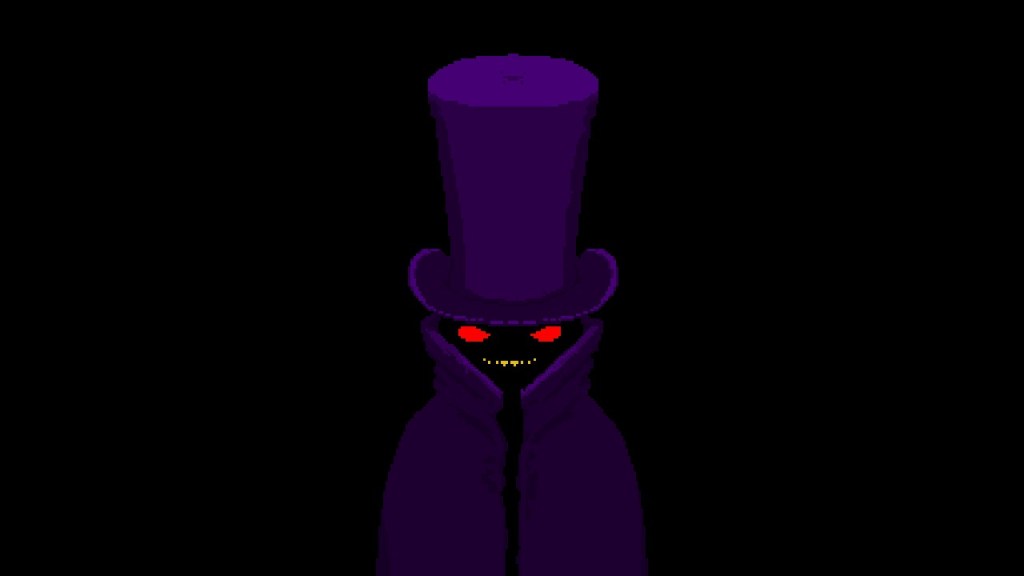
Playing the good Samaritan comes with a price, because murderers receive a reward in this insane world. After murdering the first victim, a mysterious Circus will open during night in the woods outside town. Mergo is the mysterious creature in charge of the Circus, a tall guy with a hat, hiding in the shadows and showing only a wide row of sharp teeth. For every homicide, the player can select new dark powers from hollow trees outside town. These come in a wide selection of powerful skills, from infinite stamina and oxygen to unlocking a realtime map of the town.

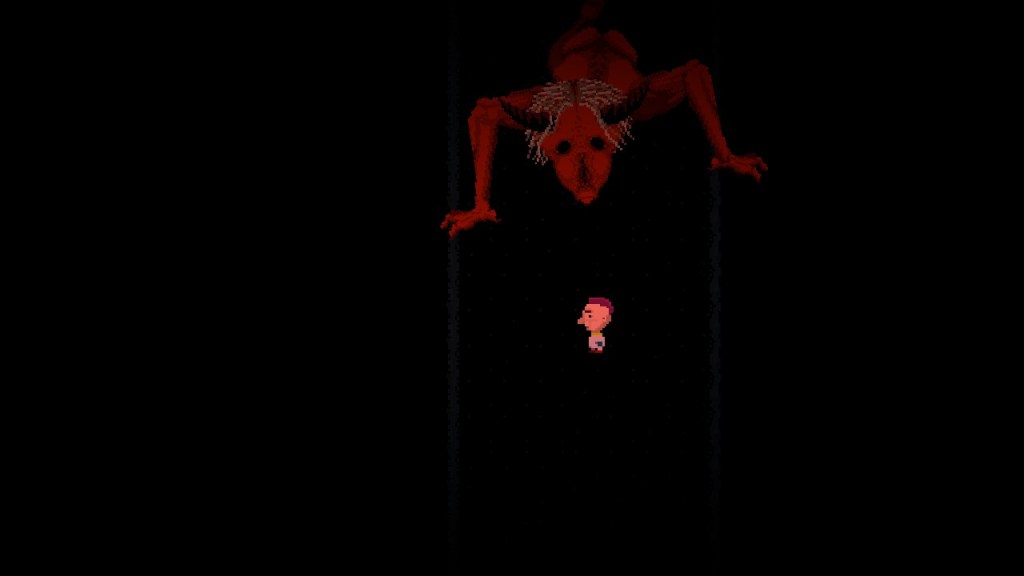
And this is not everything, because between the many secrets, the existence of a hidden hellish dimension is one of the most unexpected. Even more, because this dimension can only be accessed by sleeping in a random bed inside a deserted house. The house is always locked, and finding a special key is required to open it. After that, by sleeping on the bed, the main character will twist in a vortex, ending up in this grotesque and violent hell. The place is full of demons, which will not directly harm the player, and will offer some disturbing philosophical conversations about hell and torment. The main area includes many characters, but it is also quite small. Only a long bridge connects the main area with the Queen’s room, but, of course, it is protected by a guardian. Entering this bridge without being summoned by the Queen or in possession of a holy power will lead to a horrible death. A gigantic invincible demon will crawl toward you, with the only viable option of running away from this place.

Every of your victims will end up in this violent and brutal hell, tortured for the eternity by the demons residing here. By talking with the victims, you can see detailed portraits of the brutal torments they are enduring. Some of them have their hair ripped out, burned, or skinned alive. Seriously, this is not a place for weak stomachs. But there is an exception. The mischievous boy of the town, Billie, will not being tormented by demons. Instead, Billie will act as one of the torturers, and the demons will compliment his skills. Well, looks-like not all the kids are pure and innocent in this twisted town.

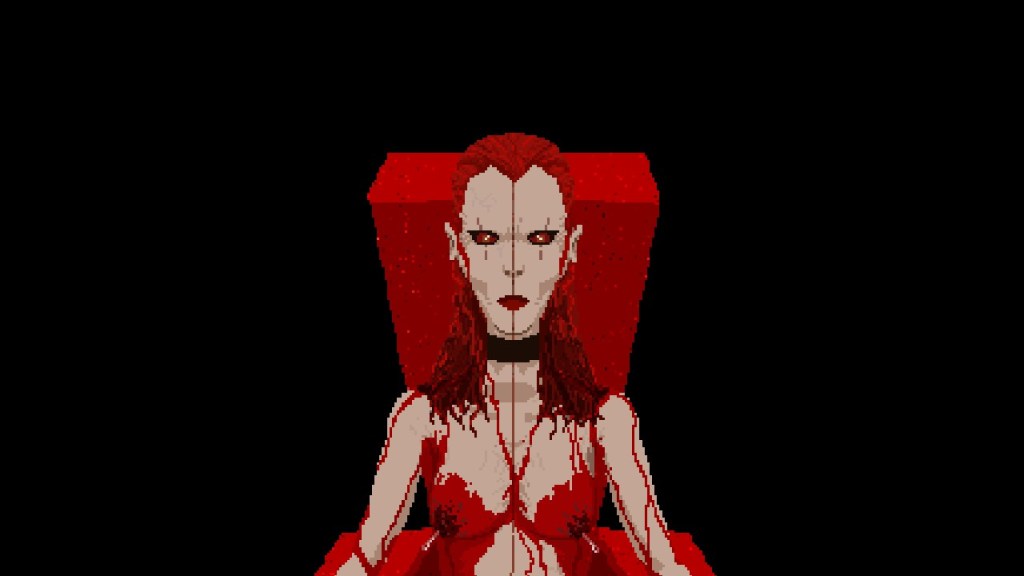
What will happen when you murder all the town? That is the time when you will get an audience with the Queen of Hell. Meeting the Queen is the ultimate step of the most evil ending. But what should be the reward for such evil act? Well, let’s just say that the Queen is so amazed by your actions that will allow you to “satisfy” her.

Murdering to obtain supernatural powers, causing a hecatomb to sleep with the Queen of Hell, and a hellish dimension of torments: what other horrible destiny is waiting for this poor town? A detail is still missing, because if the victims’ souls will go straight to hell, their body will roam the streets as zombies. The town is never a safe place at night, between mothmen, the upper league demons, or a moving scarecrow (you can read more about it HERE). But after each murders, the victim will become a zombie, and the streets during the night will have a new enemy roaming around. Afterall, there is a small price to pay for being evil.

Tortures, snakes, and blasphemy: the lore of Volcano Manor in Elden Ring — Surreal and Creepy

Elden Ring is surely a surprise, the quintessential of Souls-like games set in a gigantic open world. If previous Fromsoftware’s games were full of creepy enemies and cryptic lore to analyse, the huge world of Elden Ring has an incredible amount of secrets to discover. Between decadent families of demigods, different continents, mysterious characters, mystique […]

Tortures, snakes, and blasphemy: the lore of Volcano Manor in Elden Ring — Surreal and Creepy

Wacky characters, insane machines and hypnotic mushrooms in “Let It Die”: how to build a lobby in an explosion of style [Mechanic]

Let It Die is a free-to-play game developed by Suda51’s team, so of course is 100% pure insanity. The main aim of the player is to climb a dystopian tower, fighting monsters, invaders, collecting new items and experience, while advancing each floor toward the top. The combat is souls-like inspired, with a stamina bar dictating the possible moves, light and heavy attacks combined with dodging, and easy ways to die if the enemies are underestimated. If this looks quite standard, everything else is totally over-the-top.

The tower was mysteriously built after a cataclysm on a small island close to Tokyo. Since that time, the tower has continued to grow, attracting different kinds of people. Powerful lords started to live and take control of the tower, building a sick new system where even the dead bodies are brought back to life to fight for them. Meanwhile, adventurers started to climb the tower, hoping to claim the mysterious treasure hidden on the top. The ground floor of the tower is a small shopping mall connected to the metro station, with a fountain in the middle, bathrooms, and elevators. But it is exactly this place that became the base camp of all these crazy operations, attracting the most insane and illegal merchants to open a shop there. And it is exactly the ground floor that works as the hub or lobby of Let It Die.

The lobby of the tower is the equivalent of a small town, with a lot of services and bizarre characters to interact with. Even if many places have standard services, like to buy items or to level up the player, the shopkeepers and the setting are anyway insanely original and plainly weird. Because nothing is as it should be on this floor. The bathrooms are brainwashing prisons, freezers are where clones are stored, and the metro station works as vehicles to invade other players. And these are only the standard things.

Let’s have a look at the most whacky places and services available in the lobby.

Fighter Freezer

Each death in Let it Die is permanent, there is no other way to say it. However, with enough gold, dead bodies can be collected and reanimated. On the other hand, new clones can be produced to rescue the dead body of the previous character, who will be wandering like a bloodthirsty revenant on the floor where it died. Because the lords of the tower are controlling death, and facing your previously dead characters is not a surprise The freezer is where the available characters are stocked, hanging like dead meat on chains. New characters can also be recruited here, or they can be organised for different tasks, for example, to defend the base from other players’ raids. Alternatively, unused characters can also be sent to scavenge and hunt on other player’s floors. They will become invaders, challenging enemies for the other players to face, and they will come back with scavenged materials as a reward after enough time passed.

Metro Front

Let It Die also involves a multiplayer attack-defend the base mode, freely playable by everybody. But of course, also this mode is totally insane. To access the Raid mode, the player needs to talk to a weird-looking robot, similar to a train operator mascot, with a creepy smile on the face and electric blue eyes. The small robot is totally insane, and will direct the player, with the voice full of crazy enthusiasm, to the different raid modes and the power-up for the base: “Thank you for riding with us today.” Then, the attack mode is very straightforward: jump inside the metro and it will bring you directly to the enemy base. The other players will leave their characters heavily armored to defend the base or, if you are lucky enough, it will be defenseless. With enough time available and with the defensors killed, the other players’ resources can be looted from their base.

Prison Bathroom

There is a random and bizarre consequence of the train raids. Sometimes, when another player’s character is defeated, its body will stay on the ground. These characters can be kidnapped and brought back to the base. They will end up imprisoned in the bathrooms, now reconverted in jails. The kidnapped character will be trapped there, wrapped in plastic, and with a visor on their face, totally isolated from reality and in constant sufferance. The characters are indeed undergoing a brainwashing procedure, which has a fixed time to be executed. After the time has passed, the kidnapped fighter will be totally brainwashed and ready to join the player’s team. However, the other player will not stay quiet when one of his characters is kidnapped, and will have the chance to attack the base where is imprisoned in order to free him.

Shop “Choku-Funsha”

The regular shop of Let It Die is probably the less inspired section of the lobby. Here, the player can buy weapons and armors, but also access the R&D section to develop and unlock new equipment using the correct materials. The owner of the shop is a legendary merchant, with the head protected inside a glass, and surrounded in the background by weapons drenched in blood, including chainsaws. The fact that the shopkeeper is definitively too similar to an infamous German dictator doesn’t anyway help in giving more identity to this shop.

Vending Machine “Hernia”

A regular vending machine but with a creepy twist and design. The machine will sell different items that will change periodically, which can be acquired by using different kinds of currency. One of the main forms of payment is called Bloodnium, and it is linked to blood. But the interesting detail is the execution of this payment. Small spiked cylinders will appear like a medieval trap, and the character’s hand will be voluntarily wounded by this instrument of torment in order to extract the payment: blood. The fact that the shop is called “Hernia” is also causing additional uneasy feelings.

Mushroom Club

The Mushroom Club is probably one of the most bizarre shops ever seen in a game, owned by an insane woman. She is dressed only in a bikini, covered with tattoos, with mushroom-like hair and tribal fangs covering half of her face. The legends say that she was a backpack traveler that went insane after trying weird fungi, and now is managing her tribal shop inside the tower. When not working, she will perform a lap dance on a giant umbrella, but her role is far more bizarre. Like a post-apocalyptic shaman, the woman will provide a psychedelic mushroom soup to her customers, which will give very unexpected results. In fact, after trying the different soups, the player will receive adhesives to wear like tattoos on the different characters. Some adhesives, or decals, are only temporary and will disappear with the death of the character, while the premium ones can be recovered even from dead bodies. The scene when the character drinks the psychedelic soup is particularly weird, and the decals will appear from a rainbow of colors sparkling from the empty dish.

Quests: the Voyeur Visor

Secondary quests were generally selected by talking to a cute girl in the arcade room, another section of the lobby that can be accessed from the fountain (check the associated section). However, after an update, quests can now be selected in a more bizarre and peculiar way from the main hub. A visor supported by the statues of two kids now works as shortcut to access the quest menu. The kids look like characters from an old Japanese manga, or from some school propaganda, jumping very happily while working as support for the visor. By accessing the visor, the player can select different quests to complete, from “collect x items” to “kill x enemies,” or sometimes more variegated challenges like complete specific floors without wearing any armor. Interestingly, the visor also works as a sort of voyeur machine. In fact, after finishing to select quests, the player can see the face of the girl in the arcade room. The girl seems unaware of the player’s presence, and she looks like busy watching something and will often comment “No, no , not there” or “He hide what and where!?”

Mingo Head

Experience hardly collected during the explorations inside the tower needs to be used inside the lobby to level up the characters, deciding which attribute to power up, from strength to agility. And of course, to use the experience, the player has to interact with a creepy creature that looks like a living brain combined with a motorbike in a sort of cyberpunk jellyfish. The grotesque creature will directly inject tubes with jacks inside the character’s back, and, in a painfully-looking scene, highlighted by disgusting sounds, the experience can be used to power up the characters.

The Arcade Room

A lobby inside the lobby, the arcade room is a meta-game festival, and another stylish insanity added to the game. As if Let It Die was just an arcade game that the player is actually trying to beat, the Arcade Room works as a place for hints, advice, and to better understand the lore. The different characters will tell you how to get better in the game, like if the player was really asking help from other players. Moreover, a radio can be selected to change the music, while a mysterious machine provides information for the lore of the game in the form of old and distorted VHS movies.

Death end re;Quest 2 and Ao Oni: when a horror JRPG and an indie survival-horror collaborate

It is nice to see when two different worlds collide together in the video game format. It happened several times, especially for big companies, for example hunting a Final Fantasy’s Behemoth inside Monster Hunter World. However, what is not so common is a collaboration between a big company and an obscure indie title, especially if they are from far away worlds such as JRPGs and survival-horrors. But this is exactly what happened between Death end Request 2 and Ao Oni.

Death end Request 2 is a JRPG with a strong horror component and a creepy set of creatures. If you follow the blog, the game should be already familiar since I wrote different articles about it, including a review where you can find more complete information: Death end re;Quest 2 Review: mysterious Visual Novel by day, horror JRPG by night. On the contrary, Ao Oni is a Japanese game survival-horror, a freeware and obscure title that got quite popular around 2007. The game is a RPGmaker-style horror game, with a great focus on hiding and surviving a creepy stalker. The game got quite a following in Japan, even getting manga, anime, and live-action movie adaptation. The real protagonist of the game is the enemy, the actual Ao Oni, a gigantic blue ogre with a peculiar face and altered proportions. The creature got iconic, an example of Japanese indie horror games, with a look not so intimidating, but for sure somehow disturbing.

How the collaboration between Death end Request 2 and Ao Oni take shape? During the first playthrough of the game, the player will see nothing related to the Ao Oni. Anyway, horror elements will be not missing from the experience, from gory and tragic bad endings to multiple grotesque enemies (more info here: The most creepy and disturbing enemies and bosses of Death end re;Quest 2). After reaching the good ending, in Death end Request 2 it will be possible to continue in a NG+, keeping the experience and the equipment, while accessing new contents, story branches, and a new ending. It is during the NG+ that the Ao Oni will become a more present element.

In the first area of the game, an old telephone will allow the player to access new contents. The first one is a mini-game, and it is the most horror-shaped experience featuring the Ao Oni. In this short but intense mini-game, the main character needs to run fast inside a city area while avoiding different Ao Oni jumping out from nowhere. The creatures are of different sizes, from small Ao Oni to more human-sized ones. They will also jump out from the most unexpected places, including cars and water elements.

The stressful event is a fast and crazy run against the deadly blue humanoids: trial and error is the only way to survive and conquer this mini-game. Only by learning the positions of every sudden appearance of the Ao Oni, the player will have a concrete possibility of surviving. Avoiding the many blue creatures while running is not the only way of surviving because scattered around the map there are suspicious closets that can be used as temporary hiding places. Of course, this is not a completely safe solution, since the Oni can still discover you while hiding. This mini-game is an easy and different addition to the main game, and it really tries to encode the horror atmosphere of Ao Oni, with frenetic chases and breathless hiding.

There is also another surprise involving the Ao Oni in Death end request 2. Moreover, during NG+, starting from the third Act, it will be possible to visit a challenging bonus dungeon: the Pain Area. This place is a hellish maze with dozens of tough and mandatory battles, including unique and interesting bosses. But the true surprise hides on the fifth and last floor of this dungeon, where the ultimate boss fight against the Ao Oni itself will take place. The blue ogre is the toughest battle in the entire game, the secret hidden boss typical of JRPGs, which usually needs the best equipment and high-level characters. The Ao Oni is a super boss for a reason: it has an insane amount of HPs, the highest in the game, with >6 million, plus maximised attack and defence. The creature is indeed an extremely dangerous foe able to use many tricks, including almost every possible negative effect, and a complex combo of energy attacks executed as fast karate moves.

Watching the giant blue creature rendered in 3D graphic, performing deadly attacks while the group of heroines throws it around the stage, is a unique and bizarre experience. A collaboration between indie games and a big production is always a welcomed experience, especially if horror elements find a new home inside JRPGs.

Towns with a Dark Secret: the most hermetic, cryptic, and bizarre communities at the core of open-world games — Surreal and Creepy

The sun shines high in the sky, the grass is green, the new neighbours look really friendly, and the town smells of cake. What could go wrong? Sometimes a lot of things, especially if you are unlucky enough to finish in a Town with a Dark Secret. This trope is quite well explored in horror […]

Towns with a Dark Secret: the most hermetic, cryptic, and bizarre communities at the core of open-world games — Surreal and Creepy

The most creepy and disturbing enemies and bosses of Death end re;Quest 2

Death end re;Quest 2 is a proper horror JRPG, with an interesting battle system, disturbing scenes, and creepy monsters (for more info check my complete review: Death end re;Quest 2 Review: mysterious Visual Novel by day, horror JRPG by night). I personally find the design of the monsters as a jump forward for the saga. The first Death end re;Quest had enemies almost entirely modelled around insect anatomies, probably to convey the concept of computer bugs in a metaphoric way.

The creatures roaming the streets of Le Choara, the town where Death end re;Quest 2 is set, are disturbing and twisted beings that will be perfectly integrated even if moved inside a classic survival horror game. From obese creatures imbued of an unknown energy, to laughing dolls missing the eyes: the level of horror elements inside the design is always of great visual impact. The connection with horror games is so strong that even the Ao Oni, the famous immortal monster of a Japanese indie game, will make the appearance as super boss.

Worth to specify that creatures showing a twisted insect morphology are also present in the sequel, but this time other concepts are far more common in the monster designs. Doll-like enemies are a major part of the pool of deranged foes, both bosses and common enemies. More than common dolls, straw or rag dolls are more present, providing an additional level of creepiness with the stitches covering their bodies, or the organic secrets hidden below the fabric. Symbolism hidden behind the design is also quite common, especially for bosses, with complex designs enriched in elements underlying a complex story, such for example twisted and jealous love.

The battles are interesting puzzle-like challenges, where each enemy can be thrown around the battlefield, to crash against barriers, or to be intercepted by other party members. The size of the enemies also affects this throwing mechanic, so forget about launching colossal bosses around the arena. Each monster is also associated with one of the three elements, star, moon, and sun, and will receive damages accordingly.

In the following article, I will describe the most creepy and disturbing creatures of the game, from bosses to common enemies. The article is practically spoiler-free, so feel ti jump inside without much worry.

Laughing Mary

A sort of doll, or a small girl with something really wrong, dressed in elaborated and ancient clothes. She always comes running, with the arms open as if she is ready for a hug. While standing-still, Mary happily moves and performs pirouettes. This apparently sweet girl is a terrifying creature since she is missing any facial features, with the exception of a cartoonish and big smile that looks like stitched on a sack. Laughing Mary acts as the boss in Chapter 2, becoming soon after a regular enemy, changing colors of clothes and also of skin, such as Metal Mary, a version with dark and metal skin.

Killer Filler

The disturbing creature looks like a nightmare born from Tim Burton’s mind. The body is an amorphous mass covered in a torn green piece of cloth, like a sort of grotesque dining table. A grinning face comes out from the front, a dark clown with heavy makeup and reversed anatomical traits, with the grinning smile in the place where the eyes should be. From a hole in the middle of its body, right below the fabric, insect-like appendices turn out like a mass of teeming organic scythes. Killer Filler moves and attacks on the four legs, like a feral predator. It is not a super dangerous foe, but some of the most evolved variants can be quite troublesome if not quickly eliminated.

Evil Vigor/Gigas

This disgusting and obese obscenity would not be a surprise if seeing wandering in Silent Hill. The monster is the first boss of the game, before becoming a regular enemy with many variants. The chubby and pale body is covered in veins, while a sort of liquid energy is flowing inside its massive neck. Other variants, called Gigas, have their middle part of the bodies completely exposed till the bones, as if the glowing energy corroded their flesh, or exploded shredding their bodies. The fatty creatures usually attack in couples: they hit strong and, due to their weights, are quite difficult to throw.

Blood Butterfly

An upgraded version of Laughing Mary, but this time the doll-like creature is mixed with a butterfly, creating an abomination that looks like a sweet fairy. The creepy stitched smile is still there, but this time the creature has also the eyes, similar to the ones of a fly. The monster is very fragile but hard to hit, it is also quite bothering since can heal or power-up other enemies, and even flee the battle if too damaged. The Blood Butterfly variant is one of the last battles in the game, an enemy that is better to not underestimate.

Dias

A huge dragon without a face, the creature is a secondary boss inside the game. If its body is clearly resembling a dragon or a similar beast, what is happening where the head should be is a really interesting and peculiar detail. The upper-body is covered in a combination of black goo and crystal shards, creating a sort of glitchy effect on the creature, as if it was an incomplete or still in developing being. The head is a long worm-like appendix, amorphous and missing any anatomy, just a long and disgusting mass of blackness. The incomplete creature is a strong enemy that works as a hidden boss for some Side Quests, but it will get a common enemy in the last hidden dungeon during NG+.

Mother Fearest

The boss of Chapter 5 is a true nightmare, not only for its design but also for its strength. Just by looking at it, the boss sends symbolic vibes of whatever could be wrong in a mother-child relationship. The abomination is a towering and obese creature, with the purple skin terraced by fatty rolls or falling breasts. The legs are especially disgusting, composed of lumps of red flesh fused together. Like souls trapped inside a living material, disturbing faces are emerging from below the skin of the legs. The twisted mother is wearing a cuff similar to the ones used for babies, and she is wielding a massive club that also looks like a baby rattle, strong details amplifying the twisted mother-child dualism. The boss is one of the toughest battles in the game. Its attacks are quite dangerous and can easily kill a character in one turn. Moreover, the boss has a massive amount of HP, and it is even able to completely heal itself with just one action, creating a long and exhausting battle.

Succubus

The boss of Chapter 4 has one of the most complex and symbolic designs in the game. At first glance, the creature looks like a cute fairy, with a delicate body and colorful butterfly wings. However, at a closer look, all the creepy details emerge. The face is partially blindfolded, while the body has multiple arms, similar to the ones of a mannequin. Another head is positioned in the belly, even bigger than the actual one. Every detail in the design screams about a painful love, one not corresponded, from the eye blindfolded to the two independent heads. Everything is fitting with the events of Chapter 4, but I would avoid spoilers. The most creepy details are the legs, twisted like a rope to form a single appendix. If you still have doubts about how this design is a symbolism of twisted love, this particular choice for the legs is clearly inspired by the tragic end of two lovers in Junji Ito’s masterpiece Uzumaki.

Kidnapper

The boss of Chapter 3 is a disgusting and strong being. The creature is described as an old man practically naked, with a mouth opening in its belly. When discovered, the monster was ready to eat two children with fork and spoon, like if they were a proper meal. The obese creature has a dumb and void expression on its face, with intimidating and gigantic proportions of the body. The boss wields a scythe and is able to use it quite deadly. The battle is, in fact, the toughest one until that point, not only for the amount of HP of the boss, but even more for its ability to heal almost completely and to kill a character with a single swing of its scythe.

Skinshank

The boss of Chapter 7 is bigger than expected, a colossal being that looks like a nightmarish version of a Shrek character, or an inhabitant of Halloween town in Nightmare Before Christmas. The monster is a sort of humanoid sack, a rag doll with stitches all around its body. However, the creature is well-dressed, with a hat, a wig, gloves, and boots, providing even more cartoonish vibes. But the creepiest detail is what lies below its artificial skin. A mass of raw and amorphous flesh is revealing where the cloth is not falling apart, a layer of grotesque skin covered with eyes. Something monstrous is clearly living under that fake fairytale appearance. The boss is wielding a giant anchor as a weapon, a deadly mace used to crush the opponents. The battle is a long fight of eroding strategy. The boss not only is hitting hard, but has also an obscene amount of HP. The boss is even able to use a defensive pose, counter-attacking all the player actions in a deadly and accurate way.

???

The real name of the boss will hint heavy spoilers on the game’s plot, so I decided to leave it blank. The titanic abomination sends strong Lovecraftian vibes in any detail, especially in the face. A grotesque puzzle of eyes and teeth, the creature is a terrifying nightmare, including long hair composed of a sort of yellow tentacles. The hands are even bigger than the rest of the body, totally out of proportions, gigantic and intimidating from the long fingers to the claws at the end. The monster killed a multitude of humans during a rampage, this explains while the hands and the mouth are covered in blood. The boss doesn’t have much health, compared to previous encounters, but sadly this is its only flaw. Its claws will kill any character with one single attack, transforming every turn in a desperate struggle to increase defence or gain immunity.

Catholic Art and Architecture in the twisted world of Blasphemous: how religious iconography can build nightmares

As the name suggests, Blasphemous is a horror metroidvania that really uses inspiration from religious art to create the unique world of Cvstodia. In this horrific land, the Miracle is a sort of eldritch energy that grants wishes to the believers, but twisting their desires and martyrdom in a disturbing and unexpected way. In this fictional land where religion and fanaticism are founding elements, existing classic and religious art is the most important reference. Dark fantasy elements are combined with the aesthetic and extremes of Catholicism, shaping a unique world full of interesting places and memorable characters. Not only famous paintings of saints and religious figures are partially reshaped into disturbing creatures, but also symbolism and religious iconic elements are used to create nightmarish entities. Between the many twisted creatures and characters inhabiting the world of Cvstodia, in the following article I selected the most striking references to Catholic art in terms of paintings, sculptures, and architectures.

One of the strongest and most evident connections with religious art is the boss called Ten Piedad. Probably the first boss to be faced in the game, the creature immediately strikes for the resemblance with the iconic Michelangelo’s statue the Pietà. If the statue of the Virgin Mary is identical to the real one, Jesus, by contrast, is far more different, because the boss itself is lying in the arms of the statue. The reference is familiar but disturbing at the same time, since the hideous and disfigured monster is still posing at the beginning of the fight as the statue of Jesus. The name of the boss is also not hiding the reference, since Piedad is the Spanish name for Pity, same as Pietà in Italian. Other than a striking artistic reference, the boss also works reverting the religious symbolism, transforming the body of Jesus ready for resurrection, in a disturbing figure. The monster was once a man, who just wanted to sleep in the arms of the statue of Mary. During his restless sleep, the Miracle morphed his body in a disfigured monster, imprisoning his sleeping mind in this hideous monster. This concept could be a symbolism of “what if the resurrection of Jesus went wrong?”. A creepy what-if, imagining how after sleeping, or being dead, the man-that-once-was would instead come back as an evil version of himself.

blasphemous_art1

The martyrs are a common topic in many religious paintings, often adorning the colourful windows inside churches with images of their ultimate suffering. San Sebastiano (Saint Sebastian) is probably one of the most famous martyrs, at least for the strong and iconic image of his death. The Christian man was executed by Romans after they discovered his true religion and, after being bound to a stake, he was shot with dozens of arrows. The image of his martyrdom was portrayed many times by famous painters, becoming an iconic symbol of unjust sufferance. In Blasphemous’s world, the character of Gemino is a direct visual reference to the martyrdom of San Sebastiano. He is imprisoned inside a metal statue, bound to an olive tree, exposed to extreme coldness, and pierced by multiple arrows, resembling in the pose every painting of San Sebastiano. Gemino is also a martyr, suffering this terrible torture until he will become part of the tree itself. Gemino’s only treasure is a small olive, the last gift that nature offered him before starting his torment, a small symbol that he will treasure in his hand till it will freeze.

blasphemous_art2

Between countless artistic references to Spanish traditions or masterpieces such as the works of Goya or Velazquez, it is difficult to decide which reference is more interesting. But focusing on the religious more than on the artistic side, Cherubs, for example, are a very common concept used in many characters and creatures of Blasphemous. Sometimes, the reference is used quite literally, for example in the collectables, which in this case are flying childish angels imprisoned in cages.

Even if there are several references to Cherubs, especially to the way they are portrayed in religious art, the case of the Headless Chamberlain is probably the most emblematic. The nightmarish creature has the body of a man but missing the head, going around with a pillow with on top the head of a Cherub. To highlight its creepiness, the creature has also a bag full of disembodied heads. The Headless Chamberlain attacks by throwing the flying head, which can move on its own while hunting the intruders. In this specific case, the Headless Chamberlain is directly inspired by the painting The Immaculate Conception (1662), as stated by the creators of Blasphemous in the official artbook (NDR which is really gorgeous, if you didn’t buy it). In the painting, several angelic heads are flying in the top corners of the painting, harmless and angelic in this case, but used as the core element to create the nightmarish Headless Chamberlain.

blasphemous_art6

Child-like angelic faces are common in many other designs in Blasphemous universe. The lord of all the Cherubs, called Jocinero, is a particularly interesting and disturbing character, but I will talk about him in a future article. The embodiment of paedophobia, or the fear of children, is clearly Exposito, the most iconic and disturbing boss of Blasphemous. The creature is a gargantuan baby with the strength of dozens of men, resembling a giant Cherub. However, Exposito is also very similar to Baby Jesus, especially due to the golden crown of thorns adorning is head. I will not speak more about Exposito since I already covered its design and symbolism in a previous article, available HERE.

The artistic religious references inside Blasphemous are not only limited to paintings but are also connected to more architectural details. Churches are specifically implemented inside the design of several enemies, a combination of flesh and architecture, connecting the sacred with the profane. Some enemies simply use as main weapon church elements, such as giant crucifixes or bells. The Shield Maiden is a small exception and, even if it uses religious architecture as weapons, the design of the weapons is more interesting and elaborated, integrating complex decorative elements. The most interesting detail is that while using a golden decorative element as a shield, the creature removed the head of the statue to wear it as helm.

blasphemous_artX

On the other hand, other creatures have architectural elements directly embodied in their design. Let’s talk for example of the Blazing Icon. The female figure is covered with red velvet, looking like an elaborate walking curtain. The most interesting detail is the cage-like structure around her head, which uniquely defines the design. The structure is clearly inspired by architectural elements inside churches, for example resembling the famous baldachin in the middle of St. Peter’s Basilica in Vatican City. The baldachin is positioned in the middle of the church, marking the entrance to the supposed tomb of St. Peter. The head-ornament creates a figure that is practically a living and walking element of a church. The baldachin-like cage is probably quite heavy, and this is reflected in the Blazing Icon, which is slowly walking around oppressed by such weight.

blasphemous_art3

Another enemy brings the concept of religious architecture integrated into the design even a step further. The creature is not present in the game, at least for the moment, but its beautiful concept is available in the artbook. The heavy knight shows an incredibly detailed and complex design, practically looking like a weaponized chapel. A tower-like tabernacle, which is used to store the images of various saints, would be probably used as the main weapon of the knight, like a sort of improvised holy mace. The body itself works as a reliquary, with the probable head of a saint exposed behind glass. This is a very common phenomenon in several churches, where body-parts of saints are exhibited as religious emblems. The knight is the quintessence of religious architecture integrated into the design, a walking chapel ready to smash down the infidels.

blasphemous_art4

Still, there could be a lot to talk about artistic and religious elements inside characters and monsters of Blasphemous. For example, Sepulcro Errante is a golem-like creature bringing on its back the tomb of a Spanish king, while the iconic creature Amargura could be almost considered as a living altar. But I think that the creatures analysed in the article are the most iconic and direct integration of catholic paintings and architectures into the grim world of Blasphemous.

The gray machinery of the Inquisition behind the cute facade of Minoria [Review and Analysis]

When you check images of the new game from the creators of Momodora, Minoria, you see an interesting aesthetic full of cute characters, like a modern fairytale. But behind this delicate facade, Minoria touches really dark and delicate topics, from religion, to dogmas, the oppression of the weak ones and the violence against nature. The colorful aesthetic is hiding the gray moral patterns of Minoria’s plot and setting.

minoria

From the gameplay point of view, Minoria is a classic Metroidvania with a good RPG component. There are secrets to discover, different equipment and magics (called incenses), and also a bonus boss fight. The game is short for the genre (around 5 hours), but with 2 endings and also secret equipment unlocked when defeating a boss without getting damaged.

But the plot, the lore and the hidden layers built of small details are the most interesting side of Minoria. In the world of Minoria, an unforgiving Catholic Church is using the Inquisition to hunt for witches, powerful beings in contact with nature. If this is not dark enough, behind the fairytale facade of the art-style, the dark core of Minoria will slowly and subtly appear. First, it will be the dead bodies lying in the background, then it is the turn of lore books with really disturbing details.

20191004232628_1

It will soon be clear through notes and books that the silent protagonist was brainwashed to become an inquisitor. A weapon without a morality ready to kill whoever is judged by the Church. The Church is also a rotten and corrupted organization. For example, the Saints in this world are members of the clergy who now live isolated from the world, surrounded by extreme wealth and pleasures. If games like Blasphemous use the horror of religions and Inquisition in a very direct way, in Minoria everything is more subtle, the grayness is hidden in few lines of dialogue, or in the backgrounds. But the player will feel this sense of uneasiness. The lack of free will, and the absence of morality, are also translated into the gameplay. Somehow, the linearity of the game is the main responsible of creating those chains. While killing witches, you will soon realize that they are not that evil, but, anyway, you cannot do nothing other than killing them.

This is really evident while fighting a couple of specific bosses. When they will be at low health, they will stop fighting, dragging around the arena while cursing you. They are already defeated and deadly wounded, but you have no alternative than keep on fighting. There is no way to have pity for the boss. The main character cannot fight the orders of the Church, as well as the player cannot break the linearity of the game. But you would like to do that, to find a way to avoid these murders. The linearity of the game is making you question your morality. Why cannot stop? Why cannot avoid to kill this character? But you character is only a brainwashed gear of a bloodthirsty machinery, so you just keep on fighting. Only at the very end of the game, the player will have a real decision to do. But, even in this case, the choice is reverted, and a promised happy ending will bring to even more death; and also to a final boss fight against a hopeless and powerless character.

20190927011632_1

Under the main cathedral of the Order, a dark dungeon will reveal all the hidden torments caused by the Church. While fighting your way through the dungeon, you will meet skinny and traumatized prisoners who will only ask to kill them, such big is their pain. There is no reward for sparing or killing them, so also in this case the weight of your choices is meaningless, like if for the main character the life or death of another human being is totally irrelevant. This will cause a huge sense of uneasiness for the player, in a gorgeous and colorful world with fairytale-like characters, death will powerfully emerge from the background.

Also the concept of fighting against the nature will make you question your action. Some of the boss Battles are against primordial forces of nature, called Witch Deities, but is it truly necessary to destroy something so ancient? Also the main purpose of the game is to burn down a magic forest, which of course can open so many parallelism with the problems of our real world. But this is another story.

Behind all the colorful and the beauty of Minoria, a dark truth lies, a gray story where the linearity of the game will make you feel a brainwashed and blood-thirsty machine, without second thoughts for questions or pity. A deep story where nature and free will collide against dogmas and impositions.