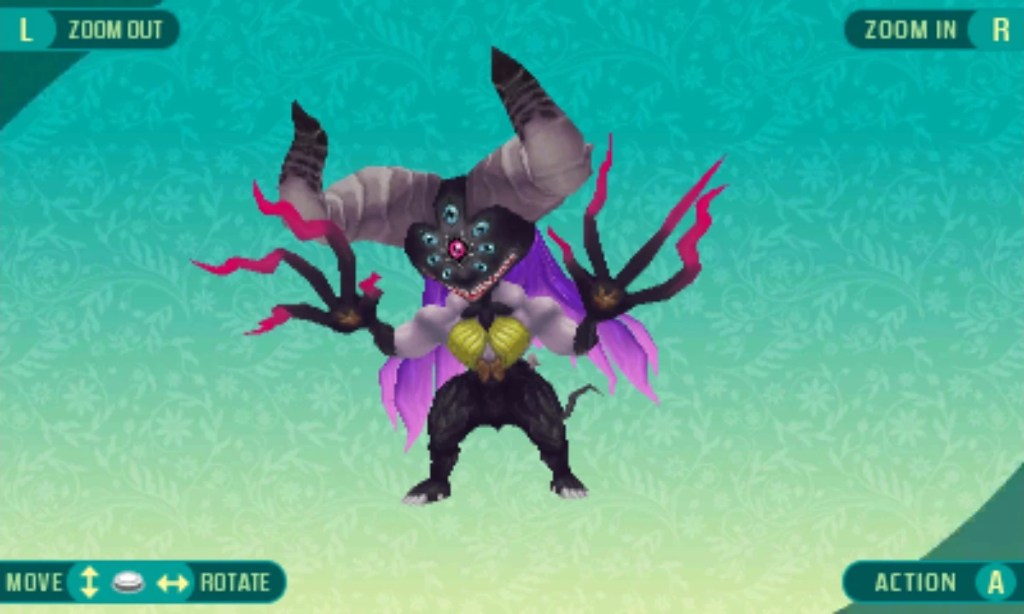
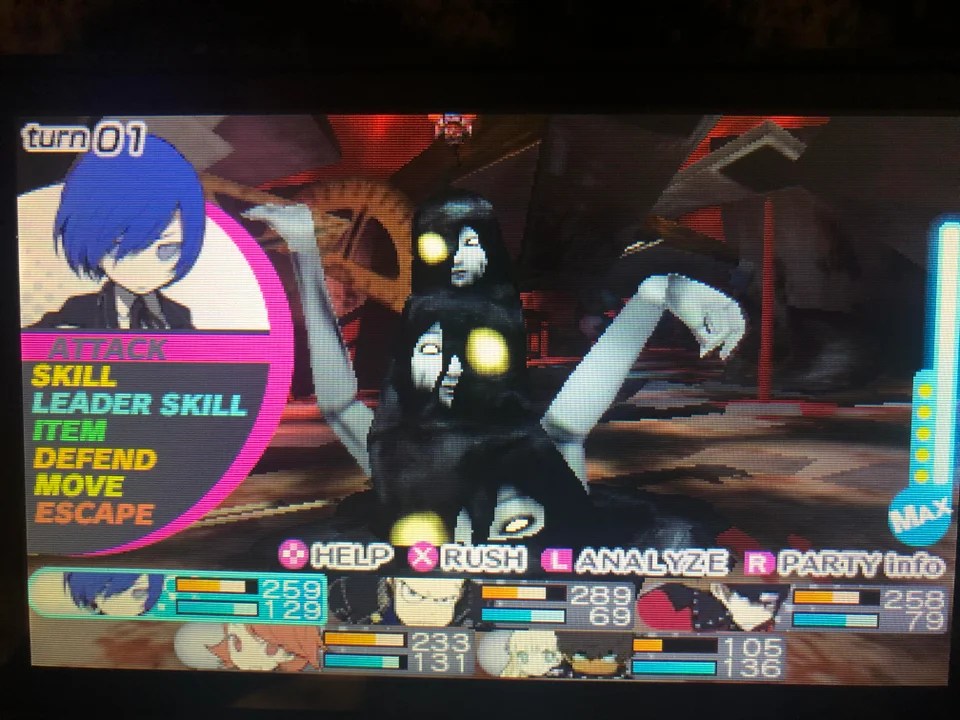
The hidden Superbosses of Look Outside (till v2.1)

Look Outside is an amazing comedy-horror JRPG entirely set inside an apartment building. However, in this place, tons of terrible things are hidden, from a parallel Meat World, to a glitch land existing inside a cursed videogame, and an entirely flooded apartment. With every new update, the world gets bigger and bigger, and, especially after the 2.0 Final Vision update, the game is almost in its final state.

Bosses and monsters also get expanded with each update, and now the Bestiary is simply huge. For example, according to the wiki page, there are at least 35 bosses in the game. And we are only talking about bosses, so the complete Bestiary is insanely huge. The main character and party members also get stronger, with new weapons and characters to recruit. And so do the bosses, with new and stronger bosses released at every update.

In the following article, I will focus on the superbosses hidden in Look Outside, enemies that are far stronger than the final boss of the game, often guarding powerful weapons or equipment. Some of them are really difficult not only to defeat, but also to unlock and reach. I will focus especially on completely optional bosses, guarding weapons, and not related to any ending… with maybe a couple of exceptions. Since Look Outside is always updated, including new superbosses in an update following the “Final Vision,” the article could be updated with future updates.

Hellcar

Hellcar is the first superboss encountered in the game since the first release. Hidden in a car park inside the basement, the Hellcar is a devilish orange car that will attack after the player collects the flamethrower. Hellcar has an insane amount of different phases, making it one of the longest battles. First, Hellcar attacks directly, using powerful burning attacks and its light to blind the characters. During the next phases, Hellcar will use its long tongue to swallow the player inside its body. At this point, the player has a limited number of turns to kill Hellcar before being literally dragged to hell, reaching a game over with a special bad ending. During the second phase, Hellcar’s interior is full of ghostly passengers, which of course must be killed. In the next phase, the element of the interior design transforms into demons and must be killed. During the last phase, the Hellmouth is revealed, a giant maw inflicting heavy damage. If you are fast enough in killing all the phases before going to hell, the reward is the powerful Hellblade, the strongest weapon in the first update.

Furnace

Furnace is the superboss of the original 1.0 release. The creature lies hidden in the sewers, the most challenging section of the basement. In the middle of a room flooded with water, a shut-down furnace is waiting to be awakened again. Before fighting the boss, the player must fight six giant ticks draining the heat away from the tubes. After killing the ticks, Furnace will come back to life. While even only accessing the fight is a chore, defeating Furnace is a real challenge. The boss looks like a hellish boiler room, with fire drawing a disturbing grin on the metal. Furnace uses powerful fire spells, causing the burning status with almost every attack. However, the biggest issue is its chargeable attack. Turn after turn, the fire grin becomes bigger, highlighting how the creature is almost ready for its most powerful attack. A firestorm will hit the entire party, with a high probability of one-shotting several characters. If not, the entire party. Surviving the annihilation is difficult, even by guarding the attacks, and killing Furnace before it unleashes hell is even more complicated due to the high HPs. In 1.0, Furnace had no reward for such a challenge. However, next updates introduced Furnace Edge, the only fire-based melee weapon.

Taxidermy

Taxidermy is the owner of the disturbing apartment on the 3rd floor, a place full of stuffed animals and hosting a stitched-skin dimension. In the beginning, Taxidermy appears as an immobile humanoid statue, with a grotesque mask-like face and horns on top. After traversing the parallel dimension, the Taxidermy statue starts to move, becoming a challengeable boss battle. In 1.0, Taxidermy has two main phases, with the second one called Suture Wire. In this phase, the boss covers itself in deadly metal wires, and is able to use powerful bleeding and slashing multi-hit attacks. However, the boss was still an easy fight, regardless of the disturbing appearance. But everything changed with the 1.6 update, when Taxidermy got a challenging 3rd phase. After Suture Wire is defeated, the creature merges with the stuffed animals in the room, becoming a grotesque and disturbing abomination. The main head is that of a moose, which can open up, revealing an even more disturbing interior. A bear and rhino head complete the disturbing design, merged together on a fat rhino body. In battle, the creature is terrifying, becoming a 3-enemy fight where each head has unique attacks and HPs. While the rhino and the bear are the main physical attackers, the moose launches deadly magics, including a black hole able to annihilate the entire party. To defeat Taxidermy, all the heads must be slayed. And if the normal battle was not challenging enough, in Cursed mode, introduced with the 2.0 update, the Taxidermy 3rd phase became a 5-enemy battle, since the creature now also merges with a crocodile and a swordfish.

Drowning

Drowning is a very peculiar superboss hidden in the 2.0 update. A new apartment appears in the building, a place completely flooded and underwater. The party has a limited amount of time to spend underwater before drowning, maybe a reference to the original FF7, where facing the underwater Emerald Weapon was regulated by a timer. However, in Look Outside, when the timer reaches zero, there will not be an instant game over. Instead, a battle against Drowning will begin. In 2.0, Drowning looked like a disturbing deep water creature, with giant jaws full of teeth and details difficult to understand. However, its design changed in 2.01, appearing more like a bug-related creature. The fight is not especially difficult for the damage received, since Drowning doesn’t hit very strongly, but more for the insane amount of HPs. In fact, Drowning has almost double the HPs of the final boss or Furnace. To defeat Drowning, you must heavily rely on status effects such as bleed or poison to chip away the huge HP pool. The reward for killing Drowning? Well, since the main character defeated the concept of drowning itself, he will become immune to it, and will be able to explore the flooded flat without timing. Not the best reward for the long effort.

Wilhelmina

Wilhelmina is a powerful witch trapped in a hidden basement inside the building in version 2.0. The craziest thing? Wilhelmina is inside a crossword-related dungeon. To access Wilhelmina, the player must complete the entire crossword book in the main apartment, a long and time-consuming task. After that, a secret password grants access to a dungeon contained inside a safe. Wilhelmina is trapped in a coffin protected by powerful sentences, which must be broken in order to free her. At this point, freeing Wilhelmina causes a secret ending, while facing her unlocks a challenging battle. Wilhelmina uses powerful and unique spells, including making the entire party regurgitating frogs, or breaking all their bones, causing massive debilitations and continuous damage. Moreover, Wilhelmina can also inflict almost every possible status effect, from stun to bleeding. By defeating Wilhelmina, the player can choose a special weapon as a reward, choosing from a sword, spear, or hammer.

Sybil

Fighting the real Sybil is part of a long and challenging secondary quest introduced in the 2.0 update. First, you must collect an Iris Key during the blackout, to then start to explore the Meat World to collect other keys. Then, you must explore and solve the mysteries and puzzles of apartment 12 to finally have a chance to meet Sybil. However, it is only after bringing her the repaired telescope that you can decide between two paths. And only by pursuing the truth, you are able to attack her, revealing her real form inside the Meat World. The real Sybil is a grotesque and colorful mass of flesh, with eyes and teeth all around.  However, fighting her at this point leads to an impossible battle, since Sybil can also attack 8 more times in a turn. To limit this ability, you must traverse the Meat World to kill 9 Organs, grotesque bosses with special powers, providing unique attacks to Sybil. For each Organ killed, Sybil loses a special attack, including the ability to digest your max HPs. However, the Organs regenerate after in-game hours (32h on normal), so not only you have to destroy them, but even in a limited amount of time. Even with the Organs destroyed, Sybil is still a tough fight, especially for the high HPs. At the moment, defeating Sybil mainly unlocks a bad ending inside a hidden room, without a strong reward for such a massive effort.

Baby Teeth

The apartment where the Teeth Family was corrupted by mutating into grotesque masses of teeth is one of the most disturbing locations in Look Outside. Baby Teeth is the boss of the apartment, an infant that mutated into a colossal abomination, spreading teeth on whoever gets bitten. The boss can be easily defeated or avoided, and the creature will simply hide again under the floor. However, after the update 2.0, the apartment got sealed by a giant mouth. The fauxes opened again in 2.1, where the mutated apartment became explorable again. And hidden under the floor, after a dungeon of flesh and teeth, Baby Teeth is waiting for her rematch. Just this time, the battle will be far more difficult. Considering that the apartment opens again on day 9, almost at the end of the game, says all about the difficulty of the fight. Baby Teeth grotesquely mutate during the battle and can attack with multiple body parts, including two long tongue-tentacles. The infant is highly resistant to different types of damage, can cause bleeding, and has an insane berserk attack. Moreover, the dungeon itself is constantly chewing whoever is inside, and every turn, the walls attack everybody, both the entire party and Baby Teeth, creating an even more unconventional and difficult battle. After defeating Baby Teeth for the (hopefully) last time, the player can access two new tooth weapons, including a rifle that converts HPs into tooth bullets.

Swordmaster Comatus

Comatus is another superboss added in the update 2.1. The mushroom swordmaster hides behind a fake wall in the depths of the fungal colony. The boss is probably an homage to FromSoftware’s bosses, a loyal and powerful swordmaster that fairly challenges the player to a duel. Facing Comatus is quite easy, but defeating it is a far more difficult task. Comatus hits like a truck with multiple attacks, is highly resistant against physical damage, and can adopt different stances. For example, it can counterattack physical attacks or heal at the end of the turn. Defeating Comatus unlocks the Whisperblade, a really powerful sword.

Honko

Honko is the protagonist of a videogame that you can play in the flat to learn a new skill. And in 2.1, Honko appears as a superboss in the new Glitch World. Already accessing the Glitch World is a complicated task, since it is only possible after using the cursed videogame hidden behind a secret door on a console inside a parallel meat world. Moreover, the Glitch World is a challenging dungeon to traverse, full of monsters, peculiar status effects, and glitched items. And fighting Honko is even more obscure. First, you need to find and finish his videogame, and only then can you find a secret path behind a glitched tile. Honko is a tragic figure who doesn’t want to fight but is forced by glitches. During the fight, the cute pink humanoid continuously glitches, sometimes briefly appearing as a cursed version of himself, or even dead in a pool of blood. Honko is extremely powerful, immediately showing huge defense and agility, making it very difficult to hurt, healing powers activating every turn, and the ability to inflict multiple status effects with a single attack. And if this was not enough, after sufficient damage, Honko splits into three entities… and then into five! The main Honko now launches really powerful spells, while the others hit hard and inflict status effects. The reward for defeating Honko is many candies providing permanent upgrades.

Grimdark JRPGs for fans of Fear & Hunger

Fear & Hunger (F&H) is one of the best examples of indie dark RPGs, set in a brutal dark fantasy world inspired by Berserk, where every amorality is allowed. However, regardless of its shocking value, F&H is an intriguing and original product, set in a world full of lore, featuring brutal combats that involve menomating the enemy’s limbs, and boasting a huge connection to survival horror titles. In fact, the enemies in F&H do not provide experience, and avoiding dangerous encounters is essential to survive. Brutal deaths, tough decisions, and sacrifices shape the freedom of this title, a world where you can side with really obscure beings, or die of starvation after jumping into a well.

F&H is a new starting point for indie horror JRPGs, with many incoming titles showing a similar brutal battle system or set in really dark fantasy worlds. While many proper “fhunger-like” games, or clones of F&H, will probably release soon, other very interesting horror JRPGs are yet available for people looking for another really dark and mature experience. Many dangerous and hopeless worlds, where grotesque enemies can brutally kill the party, bad endings are behind every wrong decision, and often sacrifices are necessary to proceed.

In the following article, which I will continue to update, I will write about the darkest, most horrific, and grim indie JRPGs available. I will focus on the most interesting and brutal settings, with challenging battle systems, a bestiary full of disturbing creatures, dubious choices, and bad endings. I will focus especially on games released after the first F&H (so from 2018), briefly describing the overall world, setting, system, bestiary, and whether tough choices are included. Some products are really inspired by F&H, while others are simply too good dark JRPGs not to be part of this list.

If you are a fan of F&H or, in general, of really dark and horror RPGs, this is an article that can definitely get your interest.

Look Outside

The best indie horror RPG together with Fear & Hunger, and not simply a dark JRPG or a F&H clone, but a completely independent product. The game is set in modern days, where something terrible happened. People live trapped inside, with the window closed, because only by looking outside, they mutate into a horrible monster, entirely losing their humanity. The setting is extremely dark and disturbing, especially at the beginning, with a few moments of comedy relief. For 15 days, the main character must survive while trapped inside his apartment building, with a lot of freedom on how to spend the days. Between recruiting neighbors, scavenging, exploring the other flats, fighting grotesque abominations, or simply spending time playing videogames, Look Outside has an insane amount of content to offer. And with each new update, the game gets even bigger, featuring a parallel dimension made of meat, around 10 different endings, and a world of secrets. Every apartment is a new world, a place shaped by the horrible mutations that happened there. An example is the “Teeth Apartment,” where every monster is uncontrollably growing teeth out of their bodies… for a very disturbing and sad reason. 

The bestiary of Look Outside is insanely huge. Seriously, I have no idea how many enemies and bosses are now inside the game, but definitely more than 50… if not more than 100. From grotesque insects to an entire boiler room or the different faces of a painter, fighting the monsters is not an easy task, and the player must scavenge improvised weapons to defend themselves. The problem is that every weapon can break if you are unlucky enough, even the super-secret weapons such as the Hellblade. Luckily, there are many melee weapons to discover, from bats to machetes or chainsaws, including firearms and throwable weapons.

The world became a hellish mutant landscape, and everyone is suffering from the effects of this change. From kids to innocent people, the grotesque mutants, when insane, must be eliminated. Some people seem to retain their sanity, even while mutated, and can even be recruited. However, for every small bright side and comedy moment, there are even more horror and extremely tough decisions. For example, a hungry hole will only feed on a child… or a main character’s arm, wounding him for all the game or forcing him to lose a party character. The majority of the endings are also incredibly bad, often involving the destruction of the entire earth (including being absorbed by a hamster god, check about it here: The Rats in Look Outside: A spreading disease of fur and teeth) or terrible mutations for the main character. There are also proper game-over endings while making quite bad choices, often after trusting somebody who definitely shouldn’t have been trusted.

Materialization of Memories

The game is probably the first F&H clone, following everything that made F&H famous. With one big difference: the characters are mainly… well… anthropomorphic animals. The protagonists are working on a mysterious experiment, which will soon go sideways, teleporting everyone to a mysterious parallel reality. This place is infested with anomalies, deadly and invisible events, causing harm to whoever gets too close to them. And of course, deadly monsters also roam every corner of this parallel world. Because here, everything wants to kill the main characters.

The three main characters always fight together, each of them covering a specific role, from healer to brawler. Thankfully, several weapons are also there to help, including firearms. The battles are almost identical to F&H, including targettable body parts. The world is freely explorable and very open, with almost every building accessible since the beginning. Looting a building is always an extreme danger, due to the unknown creatures roaming inside. The monsters are well varied and with different strategies, from a horde of TV-headed illusions with only one of them real to a disturbing smiling entity summoning biting mouths. The healer can also perform an autopsy on the monsters’ bodies, revealing lore and important information on how to defeat them.

The grimdark parallel world is full of dangers and monsters, where everything is ready to kill or mutilate the party. Finding a way to escape this world is the main task of the characters, but soon, this will become even more difficult. A group of deranged NPCs will soon start to torment the main characters, offering brutal choices, including permanently wounding or killing characters.

Blood Soaked Bastard

Just by looking at the amazing and dark art-style, you see how this game fits the article. Set in a dark fantasy world, the story follows an unconventional antihero: a blood knight, a dark paladin using blood as a weapon. During his journey, the knight will meet other twisted and peculiar individuals, from a ghoulish mass of flesh to an ugly elf obsessed with being a chef. While the game shows some hints of comedy, the world is always a hopeless and violent place, inhabited by grotesque and mischievous beings.

The game is a bite-sized dark fantasy JRPG, a short but intense experience. The party characters all have different powers and roles to play, including specific equipment. While there are very few enemies, the main bosses are different and satisfying to battle, from a zombie lord to a peculiar siren. But the first price goes to the final boss, an insane battle with 4 completely different phases. 

Even in its small size, the adventure offers an unexpected set of tough decisions and evil choices. Party members can be coerced into a ritual to be reborn as bloodthirsty abominations, and boss battles can be avoided by permanently sacrificing a character. Moreover, every “normal” person is terrified of the main character, since the blood knights are feared across the land.

Do you want to check all the weird and grotesque party members and the evil moral choices related? Check our video here:

The Pale City

Set in a city, on a platform made of bodies, existing high on a black and deadly sea, Pale City offers one of the most hopeless and grim settings in any JRPG. Seriously, in this world, babies are born from tunnels and must crawl to the city to be adopted, all this while a cult of cannibals loots for the bodies inside tunnels. I could write many paragraphs about this dark and complex world… but since I already did that, feel free to read my article about the setting of the Pale City: The grim world of the Pale City: where cannibals are looking for eternal life and babies are born crawling out of Tunnels [Grimdark Worlds].

The gameplay is a linear JRPG, amazingly written, and full of “gray morality” characters, including dumb or mad Gods. While the enemies are serviceable, with grotesque demons and other disturbing beings, the characters are what truly shape this complex world. For example, magicians are truly scary beings, able to rip people in pieces with a world or to coexist with grotesque skin parasites.

The game always walks on a dense gray line, following a linear and well-written path where many terrible things happen, and characters evolve toward their tragic fate. However, toward the end of the game, some quests feature some drastic choices. For example, you can join the cannibalistic Cult of Life, partaking in their special meal to increase your health, side with an imprisoned titan to help him in his revenge, or even murder the only human Gods.

Slimes

Slimes is a philosophical and extremely grim RPG inspired by Lucah Born of a Dream, an amazing surreal action RPG. While the similarity in the art style is evident, the two games drastically diverge in gameplay and setting. The world is a dangerous place due to the descent of a mysterious winged entity from the sky, taking residence on the moon. However, the scales from its wings crossed the sky as falling stars, reaching earth and causing terrible events. The main changes that this phenomenon brought include magic and monsters. Among the monsters, the weakest and dumbest are the slimes, which all originated from a single dungeon, deep underground. But if the slimes are so mindless and weak, why has nobody ever come out alive from their dungeon? On the other hand, magic is persecuted by insane crusaders. And one of this religious fanatics is the protagonist of the game, accompanied by a magical healer.

The main characters are not only at the opposite of morality, divergent on every topic, but also in terms of fighting mechanics. The priest uses bullets and firearms to fight off slimes, while the magician, of course, needs to balance the mana for healing and debuff. While venturing into the dungeon, each floors offer new mysteries, battles, and a lot of dialogues, often based on previous expeditioners. The bestiary is quite straightforward, basically involving almost only slimes, but their design and abilities evolve during the game.

The setting and the plot are extremely mature, dealing with heavy themes, such as persecution and religious fanaticism. The main character is far from likable, and even far from an anti-hero. During the evolving clashes between the main characters, the healer is of course the one to side with more easily. Moreover, the mysteries about the real origin of the slimes and dungeon keeps the interest high, offering other complex moral dilemmas.

Break Wolf

Break Wolf was a true surprise, a JRPG with an amazing art-style entirely set inside an SCP-like facility. The main characters are human-animal hybrid experiments, forced to continuously fight and win in order not to be disposed of. Between true friendships and brutal manipulations, the main characters survive this environment till the beginning of a lucky escape. Floor after floor, the main characters will try to escape this hopeless world. The biggest surprise? The characters are all well-written and likable, part of a cohesive story. The facility is also full of secrets, including hidden rooms, deadly bosses, and even a Cat God to summon (check more here: When Cats and a Cat God help you escape from a SCP-like facility in the dark JRPG Break Wolf [Mechanic]).

The game is heavily focused on battles, brutal 1-on-1 fights between the main character and the other grotesque experiments. With multiple health bars, fine-tuning of the many abilities, and a great set of items, including bazookas or flamethrowers, every battle is a tough and brutal tactical puzzle. An example? The main character will also learn to morph into a werewolf, adding an extra layer of complexity, while the recruited characters act as special abilities that need turns to recharge. The bestiary is well varied, including grotesque animal monsters such as bats with humanoid legs or colossal worms with a drill in their mouth.

The game includes some tough choices regarding the secondary characters, who can die or survive based on the player’s choices. And choices truly matter, because based on the characters saved, the game has an entirely different final chapter, with new locations, enemies, and bosses, based on the Route selected. And by finishing both Routes, the player can unlock an even more difficult Extra scenario. Break Wolf also includes mild sexual scenes between the main characters, which can be performed in “quiet” rooms.

Trench Face

Trench Tale has some great thematic connections with F&H2, especially for its setting inspired by WW1. As a soldier with a permanent gas mask stitched on the face, you must venture through eerie bunkers and foggy trenches inhabited by disturbing puppet-soldier entities. There is no hope or help in those trenches, only enemies and mysterious cows helping you save the game.

In the beginning, you can select between different classes: brawler, sniper, or medic, including two other unlockable classes. Exploring the hopeless world is a huge challenge, since the enemies hit hard, provide no experience, and healing is quite costly. Moreover, saving requires rare resources, and finding metal scraps around the battlefield is essential to craft items. The enemies are relentless puppet abominations, suspended between life and death, from normal soldiers with a gun to colossal skeletal whales. They each possess multiple body parts, often including the threads that keep them suspended, and are able to kill the player with a couple of attacks. As you guessed, combat is very similar to F&H, and fans will feel at home.

While the atmosphere is constantly dark and oppressive, the gameplay is quite linear, with almost no choice. Exploring every new trench, while avoiding monsters and looking for save points, is the main gameplay loop. There are very few NPCs, and the hopeless journey proceeds in almost complete solitude. While the game is pretty short, a recent free DLC doubled the length by offering a new story.

And if you are interested in the enemies of Trench Face, here our video covering all of them:

The Rats in Look Outside: A spreading disease of fur and teeth

In the world of Look Outside, living indoors, with the window shut, is the only way to survive. In fact, merely looking at what is happening outside the window will mutate your body, creating a set of complex and disturbing creatures. Without spoilers, the mutation somehow involves your true self, or at least how you are “perceived.” While the majority of mutants become mindless monsters, some of them retain their mind, such as in the case of Lyle (read more here: Forever trapped inside a picture after kissing an eldritch being: all about Lyle from Look Outside). While directly looking outside is the easier way to lose your humanity, becoming a grotesque being, some of the mutations are also “inheritable.” This is what happened to the entire family and their three kids on the 3rd floor. The youngest daughter watched outside, mutating into a sad and disturbing being, and with her bite, she spread the “teeth mutation” to all the family. A similar situation is what is happening to the rats infesting the building.

The first floor of the building is infested with rats. In general, rats are quite simple enemies, dying in a few hits, with the biggest threat of inflicting the Disease debuff. While rats of different sizes occupy several rooms on this floor, the biggest monstrosity roams the corridors. The Rat King is a colossal wolf-like creature, an abomination of twisted fur and multiple faces, all showing red eyes and deadly maws. And to give rights to its name, the creature wears a rusted metal crown on its head. The Rat King is a unique creature and an incredibly tough boss, usually better to be avoided till later in the game. It hits hard, with a huge health pool, and is able to inflict several negative debuffs. The only help is its weakness to fire. Defeating such an abomination rewards the player with a unique accessory: The Rat Crown. Other than being a quite powerful equipment, the Crown has a peculiar hidden effect, allowing the player to talk with all the rats. This opens to a world of possibilities, with rats giving you items or opening up shops, instead of attacking you. Of course, the rats that survived your murderous spree before getting the Crown. Yes, whichever rat you killed before, closed the door to a unique conversation. From their conversations, you will quickly discover that they were all human before. The Rat King spread the mutation by biting people in the building, mutating them into rats and expanding its “kingdom”. The 1.6 update introduced a new Bad Ending for dying against the Rat King. In this case, while keeping their will, the main character slowly mutates into a new colossal Rat King.

Before getting the Crown, you can also get additional information about rats and their mutation by talking with the Rat Hole. This creature is a merchant hidden behind a wall of darkness, a twisted mass of flesh and eyes hidden inside a hole in the wall. Regardless of the disturbing appearance, the creature is quite friendly, and will offer you powerful items and weapons in exchange for Rat’s Tails. And you got it right, you can obtain the tails by slaying random rats. The Rat Hole got infected by the King, becoming a rat aberration after a painful mutation. How painful? You can ask them directly, and they will give you a very detailed report about the grotesque mutation. The transformation was so painful that the most gruesome details are censored, with examples such as “intestines” and “screaming.” For this reason, the Rat Hole still wants revenge against rats, rewarding you for slaying them.

Interestingly, the Rat Hole also speaks of another side of themselves. And later, you will meet the unavoidable Mouth. The Mouth is the “other half” of the Rat Hole, just this time it is much less friendly. The creature is a disturbing rat-mouth opening in the wall, constantly hungry. The only power it possesses, other than eating living beings, is to create illusory halls to imprison people. Food doesn’t satisfy it, since the only meal it craves is babies. Feeding the mouth is mandatory, and you can do it in two ways. First, you can really feed it a baby, specifically the Rat Baby, an innocent creature that follows you after being discovered abandoned in a crib. If this deed is too mischievous, you can decide to feed it your arm, debuffing the main character for the entire game. I like to believe that this creature is a connection with the other two greatest RPGmaker horror JRPGs: Lisa and Fear & Hunger. With Lisa, the connection is with the tough moral choices, offering sacrifices or character mutilations, including losing an arm. Regarding Fear & Hunger, the Pocketcat is another disturbing NPC asking for kids as a form of payment (more here if interested: The Pocketcat of Fear & Hunger: what RPG merchant could be more disturbing than one exchanging items for children? [Evil Characters]).

The two rat hole creatures are very disturbing examples of how far this mutation can go, creating split personalities of the same creature, one talkative and understandable, the other only looking to satisfy its gluttony.

The Rat King is not the only colossal rat abomination, and another challenging being lurks inside the 1st floor apartments. The Rat Freak is a gigantic humanoid rat, a giant made of fur and red eyes, a cluster of multiple rats fused beneath the fur. The giant is a tough opponent guarding a key item on the ground floor, so avoiding it is quite challenging. However, this gigantic abomination will also become friendly after slaying the King and wearing its crown. In fact, the silent but generous creature rewards the player with powerful hidden weapons after talking with it, including the ultra-rare Sewage Sword. Sure, some luck and RNG are involved, but the rewards are really worthy of the time.

A battle against a swarm of rats welcomes you inside Rat Hell, a new rat-based dungeon available in the 1.5 update. Venturing into this crawling hellhole is necessary to recruit Ernst. The place is practically shaped by rats and their red eyes, creating a maze-structure that works as a gladiator arena. Win enough fights against the rats to save your friend. However, be ready for tough and bizarrely fantasy-inspired battles, including: magician-like rats of poison and fire elements, gladiator rats, a champion paladin-like rat, and a beast similar to the Rat King. With the Crown, you can understand the rats and have tips on how to defeat them; otherwise, be ready for many puzzling battles and a world of squeaking dialogues.

It could come as a surprise after reading about all these abominations, however, the strongest and most dangerous rodent in Look Outside is not a rat but a hamster. By offering Cinnamon, a cute and innocent hamster, as a final gift for the ritual, you will face a very peculiar final boss: Xin Amon. This grotesque and eldritch mutated hamster is, all in all, a rodent god, and a very tough battle. The creature offers two main endings, both quite disturbing. In one ending, the creatures start to exponentially mutate, covering the entire world in flesh towers made of mutated hamster heads. In the other ending, Xin Amon truly evolves into the God Rat, an immense “Kaiju” rat able to level cities and swallow their entire population. The multi-headed abomination is always followed by piercing screaming… coming from the mutated heads of all its victims now appearing on its skin.

Look Outside is an innovative and interesting RPG full of grotesque and unique enemies, with praise for creating a very varied bestiary around simple creatures, such as rats.

When Cats and a Cat God help you escape from a SCP-like facility in the dark JRPG Break Wolf [Mechanic]

Break Wolf is a very interesting JRPG that is entirely set inside a research facility. The amoral syndicate in charge of the structure is amorally experimenting on combining human and animal DNA, creating humanoid hybrids. The poor prisoners only fight in this structure, trying to score high enough not to be disposed of. However, something triggers between friendship and relationship, and from the depths of level B9, a rebellion toward the surface starts.

Break Wolf is very peculiar in several details, from the brutal 1-vs-1 battles to the anime art-style and animation. Gameplay-wise, the game shows quite some deep mechanics and many secrets, including Genes to equip to alter the gameplay, different Routes leading to entirely novel end-game scenarios and abilities, and secret bosses. The items found during the game are also unique and powerful tricks to treasure during the tough boss battles. A Bazooka can easily remove an entire enemy’s lifebar, while a rare injection can provide two free turns. Interestingly, some items change their effect based on the situation or the enemy faced, or they can even be powered up. For example, use noise generators against bat creatures to stun them, but a power-up can be found later on to have the same effect on all creatures. Or try to use a Cryoblaster on cold-blooded creatures to freeze them. Fur burns pretty well if you use a flamethrower, and even more if you throw kerosene the turn before. However, the most unique and bizarre items are definitely cats.

During the escape, one floor at a time, you will find empty cages as items. Using them in battle is pretty useless, only doing minimal damage while triggering a funny conversation, with your healer suggesting to use your fists to fight the enemies. However, you can also find free-roaming cats scattered around the facility. Some of them will willingly join you in the cage, while others must be convinced with meat. But what is the purpose of having cats in your inventory? Well, surprisingly, cats are very powerful and versatile items.

Throwing a cat during a battle against an enemy could have different effects, especially on bosses. In general, cats offer a great distraction, giving malus or free turns where the enemy is not active. Plus, each boss has quite a comedy scene when “dealing” with the cat. For example, the cat will jump onto the back of the first boss, which will run around like a crazy man, offering you an opening. The third boss, instead, is not impressed by the cat, claiming to be a dog person. However, his healer likes cats, and will start to distract by chasing the cat around. Cats really hate the last boss and will attack him directly when thrown. Cats are not only a powerful item to gain free distraction against difficult bosses, but they also provide interesting hidden scenes with lore and comedy. And in a game dealing with extreme experiments, abuses, and violence, these moments provide needed relief. Sadly, cats do not always work. For example, the second boss, a blind woman mixed with bat DNA, loves cats, and throwing her a cat will only make her giggle with happiness.

Regarding cats, the end of Route A hides a funny secret. When venturing inside the sewers of the crow’s bunker, at some point, the water in the middle becomes of multiple colors. If you walk long enough in the water with cats in your inventory, they will mutate! The cats’ icon changes in a composition of colorful cats, a radioactive rainbow of bizarre creatures. The items also change their function, at least for one use. The colorful cats now inflict a huge amount of damage, and also remove any buff effects from the enemy. After being used, the radioactive cats come back to their usual function.

Cats also have an additional function related to a secret boss battle and a recruitable character. In one of the offices, you can find a golden cat statue, a bizarre idol with an even weirder story. A hilarious scene reveals how a crazy amount of the research budget was used to build the statue, in order to hide a powerful ally to help the main character during the escape. But how to summon this ally? Of course, by bringing 7 cats to the statue. After collecting enough cats, the golden idol will indeed summon the Mighty Cat, a tough and ultra-muscular humanoid cat wielding a toy hammer… and covered in blood. The only problem is that the cat will not help you till you show your worth in a fight. The battle against the Mighty Cat is incredibly hard. The creature has 7 lifebars, hits really hard, often buffs its evasion and attack, and has some special attacks, such as The Big Bang Hammer, able to stun and inflict insane damage, or the Radioactive Conversion, which converts contamination into healing and bonus attack. Moreover, while other bosses offer to immediately retry the battle, with the Mighty Cat, you have only one attempt. After that, the Mighty Cat will mock you and disappear. If you are finally able to defeat the Mighty Cat, it will really join your group, offering a powerful item and ability. The Mighty Cat can inflict huge damage to the enemy, plus removing all the buffs on them.

Why are cats so important in this disturbing research facility? First, let’s start with Amoria, the healer of the main character, and the character who starts the escape from the facility. She is a shy and quiet girl who suffered through a lot, with the ability to heal even the most lethal and brutal wounds with a series of thin artificial appendages. Like every character in the game, she was also mixed with animal DNA, specifically cat DNA. For this reason, Amoria has an affinity for cats, and this is why she collects them around the facility.

Eichi is the main scientist creating the hybrids; however, instead of being a pure evil mind, he is a weird and bizarre character wearing a cardboard box on his head. For the main character, Eichi is almost a father figure, even if he is the one responsible for the wild experiments and brutal tests. Eichi is also obsessed with cats. Not only is he the one who created the golden cat idol, but he also claims to have an imaginary cat friend. However, in theory, he sent his imaginary friend to protect Amoria, because she needed it the most. Of course, this imaginary cat could be only a figment of his crazy mind, or maybe it could be the Mighty Cat itself, which, afterall, is quite real. Eichi is also the crazy mind responsible of bringing all the cats inside the facility. Why? Because not only he loves cats but he also want to share them with his test subjects, saying that having cats around will improve the morale.

Break Wolf has an amazing fighting system, with very interesting and diversified items to use during the escape. Specifically, cats are very intriguing items with several applications, from distracting bosses to a one-use nuke and unlocking a secret boss fight.

The symbolism behind a grieving family: Analysis of the Axons of Clair Obscur Expedition 33

The following article will dig into the symbolism and secrets of this dark fantasy world. For this reason, the article has MAJOR SPOILERS of the main twists of the plot, so it is intended for players that reached at least Act 3. Or even better if they finished the game.

Clair Oscur Expedition 33 (COE33) is definitively this year’s surprise, a JRPG shacking the fundamentals of the genre by being loyal to the classics while innovating in every aspect. With dynamic turn-based combats, believable and complex characters, and a dark fantasy world shaped by deadly creatures and French Belle Epoque, the game was a risky but rewarding project. In COE33’s world, every year the Paintress rises from a slumber to paint a number on a colossal monolith, erasing the entire human generation with the same age as the number. And every year, an expedition of heroes starts a journey to reach and stop the Paintress.

The world of Clair Oscur is a complex reality shaped by different demiurges. People, monsters, colossal deities, and fairytale characters clash and coexist in this painted world, each of them brought to life by a different hand. Simply examining the “who painted what” would be already an important task, probably fitting for another article. In this one, I will focus only on the Axons painted by Renoir.

While the Nevrons are the main foes and enemies during the game, the Axons are the most impressive boss battles. Even lore-wise, the Axons are the gateways to reach the Paintress, the last boss battles before entering the endgame. Visages and Sirene are the two main Axons inside the game, and harvesting their energy is crucial to break the barrier protecting the Paintress. The Reacher is a hidden Axon reachable during the endgame while trying to achieve the maximum level of Maelle’s relationship. The first and last Axon is the Hauler, the forgotten one, only visible as a dead body in Old Lumiere.

What are the colossal Axons? As previously specified, the Axons are the only contribution to the painting made by Renoir, the father of the Dessendre’s family. While the Axons could appear only as random monsters, or a colossal version of Cleo’s Nevrons, the reality behind them is far more twisted. The Axons are symbolic creatures, Renoir’s way to mitigate Verso’s trauma by painting a version of his family enriched in symbolism and different layers of interpretation. Each Axon is one family member, including his wife Aline, his son Verso, and his daughters Clea and Alicia. The Axons are imbued with both the delusion after Verso’s death affecting each beloved one and Renoir’s vision of them before the trauma. However, a self-portrait Axon seems to be missing, since Renoir didn’t paint his Axon.

In the following article, I will analyse each Axon, including their setting, appearance, and the symbolism behind the painting. Because while Renoir painted the Axons, he also painted their world and the Nevrons living in it. Moreover, during the final fight, the real Renoir will summon the Axons to help him during the battle.

Visages (Verso’s Axon)

Location: The first Axon inhabits a very peculiar island, full of huge stone masks. They have different expressions on their faces, and they almost whisper something to the wind. The island is full of rich nature, especially red trees, with mountains, gorges, and stunning scenery. Interestingly, the island is divided into biomes according to the main emotion and the associated mask dominating it. The Joy environment is full of light and blooming vegetation compared to Anger, which is a desolate landscape with fires all around. At the end of each area, a huge mask connected with the emotion will ask you a question, and start a fight in case of a correct answer.

Enemies: The Nevrons change with the environment and the emotion of each zone. In Joy, the main enemies are creepy mannequins dressed in white with disturbing smiles, shaking violently. And if this is not enough, the Contorsionists are gigantic nightmare-fueled abominations, with their body twisted on four legs and an eye opening on their body. The creatures here remind of the Windmill Village in Elden Ring, also inhabited by white-dressed and joy inhebriated maniacs. Anger has knights with a stone mask as a shield, while Sadness is inhabited by small imp-like masked creatures flying on a mask. There are no main bosses in the island, but each area has a fight against a powered-up version of a regular enemy supported during the battle by the gigantic mask.

The Axon: Visages is a colossal abomination made of stone faces and wielding two staffs. The different emotions power up the abomination, giving it boosts and special powers during the fight. However, this is not the real Axon, since the disturbing Maskmaker is the final battle on this island. The Maskmaker is a tall knight in heavy armor covered in masks. When he appears, the light always goes off, and he moves under a mysterious spotlight, like the main actor entering the stage. There are many correlations between the Axon and theater, including the masks and the way of dramatically speaking. The Maskmaker is a tough battle right after Visages, a challenging duel of impossible slashes and energy attacks powered by masks and related emotions. During the fight against the real Renoir, Visage will join the battle to shield him from attacks.

Symbolism: Visage is described by Monoco as the one hiding the truth. This Axon is the symbolic painting of the real Verso by the hand of his father Renoir. Nobody in the family was expecting Verso’s death, and how he willingly sacrificed for his sister. Behind the facade, Verso was troubled, maybe to the point where he wanted to die. He was weighed down by the family’s ambition and expectations. He liked music more than painting, but his destiny was already written. Regardless of the weight on him, Verso put on a mask to fake his emotions. He never said anything about it, just kept the real feeling to himself. After all, he is the one who hides the truth. This is related to all the masks around the island as the main theme of the Axon. Moreover, Verso never felt the protagonist of his own story, just part of other people’s expectations. This is why the Maskmaker lives instead under the spotlight, a being hidden but always at the center of the story. The real being behind the masks, the one creating them, but with knowledge of the truth behind them. As a father, Renoir realised too late the complexities and anxieties troubling his son. He couldn’t see through Verso’s masks till it was too late.

Sirene (Aline’s Axon)

Location: Sirene’s arena is a gigantic structure in the middle of the sea, one of the largest buildings in the entire world, after the Monolith and the Endless Tower. The place is a desertic environment enriched with structures, including temples, statues, and columns all around. Everything is embraced by light, and music is always in the air, highlighting a place full of life. Some areas are entirely covered in drapes and fabric, hanging curtains, and mountains of threads. Hooded figures sitting on a moving platform work as elevators and transport inside the colosseum. Sirene is dancing in the bottom of the arena, a gigantic and delicate figure constantly moving.

Enemies: Dancers very similar to Sirene are the main enemies of the area, graceful Nevrons that are not particularly threatening. Other foes are wrapped balls of threads full of eyes, a more grotesque and disturbing sight more common in the bottom of the arena. On Sirene’s island, there are also two important boss battles. The first one is the Tisseur, a gigantic mechanical being constantly sewing clothes for Sirene. It is not a direct threat, however, if spared, it will make the battle against Sirene more challenging by shielding her with new clothes. The second boss is the Glissando, a disturbing and grotesque worm made of scrapped fabric and shrouds, wearing a mask. The creature attacks with its head, but can also summon dancers to join the combos with complex ballets.

Axon: Sirene is a towering, delicate, and elegant figure, a dancer wearing a mask and yellow clothes. At first glimpse, she is not particularly intimidating or dangerous. However, this is far from true, because the Axon can charm people into deadly dances or trick their minds by showing their departed lovers. As a proper siren, Sirene plays with minds and alters people’s behaviour. During the battle, Sirene uses deadly, tricky, and extremely choreographic moves. First, she can charm the party member to dance while floating away. On your turn, you can shoot them down to recover them from the trance, otherwise, this could bring to a quick demise. The most powerful Sirene’s attacks bring other dancers into the combo for a deadly ballet, or even colossal Glissando smashing around. In the final attack, the Final Act, Sirene will also throw an entire building to the party. During the fight against the real Renoir, Sirene will join the battle to heal him.

Symbolism: Sirene is the Axon painted by Renoir to symbolize the Paintress herself: Aline. Why in the beginning, there was some speculation if this could be Alicia or Cleo’s Axon, Monoco confirmed she is the Paintress. Renoir probably painted her as a beautiful and charming dancer, a representation of her elegant and gorgeous nature, from a time when they probably met. Sirene is a charming figure who seduced and conquered the heart of a young Renoir, depicted as this elegant dancer. Moreover, her painting style was described as a “dance,” literally imbued into Sirene’s design. However, Renoir’s creations are heavily symbolic, with different interpretative layers in their design. Her dancing is mad, constant, and also aggressive, highlighting how now the Paintress is trapped in her own creation, forever painting. Moreover, her ability to show people their gone beloved ones strongly connects with her inability to abandon her grief. She is not only trapped in her grieving but also constantly reminding her family of their sadness, allowing nobody to move on. Even if they would like to forget Verso’s death, Aline forces them to remember, as Sirene charms people into a mad dance. During the final fight against Renoir, Aline herself as the Paintress will attack Sirene, destroying with huge hate this representation made by her husband.

Reacher (Alicia’s Axon)

Location: The third Axon lives on top of tall mountains, a secluded place hidden from the world. In there, the creature is building a gigantic wooden tower, a monolithic and imperfect structure, trying to reach heaven. The immense wooden structure is at the center of everything, a place always under construction, made of nails and impossible wooden plancks crossing the void. Hot air balloons are scattered around and work as the main transportation on the tower.

Enemies: Inside the wooden tower, Nevrons fight each other. Apparently, there are two factions inside the tower, the ones contributing to building or destroying the tower. The destroyers are disturbing figures, wearing improvised helmets made of nails, metal, or rope, and wielding tools including hammers. They are fast and dangerous enemies, able to spin around for deadly attacks that are difficult to dodge or parry. The ones building the tower are peaceful NPCs with heads made of grass, creative beings thinking only to their next invention. On the mountainside, engulfed in mist, disturbing hooded beings use lanterns and lights to walk around. Some of them walk on sticks, similarly to the Axon, while others, bigger and more intimidating, also wield an organic club.

Axon: The Axon is not a direct threat, nor does it attack in any way the characters. The Reacher’s only interest is to build the tower, adding more and more pieces to it. The Reacher is probably the largest Axon, a creature so big that it is practically impossible to have a complete view of it during the game. Sometimes, you can see the huge poles that it uses to walk around or the woods part of its head. Only on the very top of the tower, you can see a huge eye in the middle of its face. Luckily, the official concept art helps to understand the Axon’s anatomy. The head is shaped like a wood umbrella, with an opening in the middle, while the creature moves around on the four legs, each of them supported by a pole. The umbrella-shaped design, with a single eye, resembles the Japanese Yokai Kasa-Obake, which is a jumping one-eyed umbrella. However, the true Axons’s essence hides inside the head, a doll sitting on a throne, crowned by chaotic hair. During the final fight against Renoir, the Reacher provides him with artificial wings in order to perform his deadliest flying combo.

Symbolism: The Reacher is Alicia/Maelle’s Axon, which is very clear from every conversation. In her father’s eyes, Alicia is a geyser of potential ready to explode. Everything is possible for her, every idea realisable, without any limit to the heights she could reach. As the Axon, constantly building, constantly aiming for the sky, Alicia’s talent has no limit. However, after her trauma, Alicia lives hidden inside her shell of pain and fear, unaware of her talent and possibilities. As the doll inside the Axon, she is hiding from the world, without even knowing how tall the tower is. She lives repressed, shielded from reality, without trying to use her abilities to reach her full potential. And for a father, this is a tough and silent pain to endure.

Hauler (Clea’s Axon)

Location: Old Lumiere is the part of the city that remained on the continent after the Fracture. However, almost nothing of the original city survived, and everything is only ruins, death, and silence. Huge light swords and melted buildings are the sign of another battle, the one between Simon, the lost member of Expedition 0, and the Axon itself. A battle that the Axon lost, and now the colossal creature’s body is part of the city’s architecture.

Enemies: The ruined area mainly only host one kind of Nevron. Knights in heavy armor, with a rapier, mask, and a full set of decorations, roam across the ruins attacking every survivor on sight with deadly and quick combos.

Axon: The Axon is a colossal dead body, now mixed with the ruins. The Axon has long hair, almost covering the face, and the body is mainly human. While it is not easy to see the Axon from inside Old Lumiere, flying around it on Esquie grants a perfect view of the giant. The colossal humanoid is half buried in the earth, with Simon’s giant swords stabbing it on the ground. The Axon lifts on its back a huge part of Old Lumiere, as a sort of modern Atlas. During the battle against Renoir, the Hauler will help by throwing from afar an entire building against the party.

Symbolism: The Axon is Clea’s representation painted by Renoir, this is confirmed in Simon’s diary after defeating the superboss. Clea is the only one in the family that accepted Verso’s death, and she was able to move on better than her parents. And not only that, she is actually trying to help the family in everything. She is fighting a war against the Writers, creating the Nevrons to weaken the Paintress, and even helping Renoir to erase the painting. As her Axon, she is carrying all the weight on her shoulders, all her family’s problems. However, the real Clea was not a fan of her Axon and, for this reason, her lover Simon destroyed it.

Forever trapped inside a picture after kissing an eldritch being: all about Lyle from Look Outside

Look Outside is a huge surprise: a dark JRPG with a killing art style, challenging, and full of secrets. The player wanders entirely in one apartment building since something outside is horribly mutating people. You have only 15 days to explore, gather supplies, and discover what is happening. And with 100+ grotesque monsters and disturbing bad endings behind every corner, this will not be an easy task.

During these days, you can meet different NPCs. Some are still hiding in their flats, while others come knocking at your door. However, deciding who to trust is challenging, since several neighbors already “watched outside.” Because trusting and welcoming to your place a devious maniac, who then demands your bone marrow, is not the best choice.

Luckily, in all this grotesque madness, there is always Lyle. He is a nice neighbor, well, maybe a bit creepy and stalkerish, but not that bad. Lyle lives in his flat and happily welcomes you inside. He is passionate about photography and even has a dark room in his flat. However, regardless of his kindness, the fact that is wearing a long robe with a hood, and that bug-like appendices are coming out of it, are probably a good sign that Lyle watched outside. In fact, he tried to take a picture of whatever being was up in the sky.

Luckily Lyle retained his personality after watching outside, and he can still help the players by providing them with photographic paper to capture the bizarre phenomena around the building. However, Lyle will ask for something in exchange. Something as simple as taking a picture of the main character… or a kiss. Don’t worry, nothing super pushy, and you can refuse it. In this case, Lyle would break the tension by joking about it. If instead, you accept the wild proposal, Lyle demands you to close your eyes before the kiss. Would you really trust this creepy creature? Luckily you can, except for the feeling of kissing something burning and mechanical, nothing bad happens. However, Lyle will also take a picture of the main character, with or without the kiss.

During the game, Lyle can also help you to develop pictures in his dark room. He doesn’t allow you inside, because he is working on a secret project, but gladly develops the picture for you. Again, he will ask for a kiss as a reward, and again you can refuse. Just try to don’t break his heart, because Lyle is a good guy, especially in a world of grotesque dismembering monsters. But seriously, you can truly break the poor guy’s heart by peaking after closing your eyes during this second kiss. In this moment, you can glimpse Lyle’s true appearance: a mechanical grinning face with a lens in the middle. While the main character’s face appears terrified in the reflection, Lyle’s only reaction is to run away ashamed and in tears. He locks himself in the dark room, crying and with a broken heart. Yes, monsters do have a heart, and you broke it.

As for any other NPCs in the game, the player can also attack Lyle at any moment during the dialogue. However, the battle against Lyle is quite unconventional. First, he doesn’t directly attack the player, he just passively endures the attacks, showing to be stronger than the appearance, with really high defense. After being attacked, with a broken heart, Lyle shows the player the picture he took of them. At this moment, the Polaroid also joins the battle, appearing in the top-left corner. Starting now, the player has only a few turns to kill Lyle before the picture is fully developed. At every turn, the picture reveals a grotesque face behind, each time more disturbing. The problem is that the main character’s portrait also mutates in synchrony with the polaroid, becoming at each turn a far more twisted being. And then, they will become forever trapped inside the picture, reaching a very unexpected Bad Ending. Or not that bad, considering that Lyle will always bring you around in his pocket, taking the picture out only to show you the world around. Sadly, one day Lyle will lose the picture. And the main character will remain there, forever alone and trapped inside the picture.

During the fight, if you attack the Polaroid instead of Lyle, especially using fire, you can challenge Lyle’s true form. If you defeat the Polaroid before being trapped in it, a furious Lyle will reveal his true form. However, Lyle is not exactly angry with you but more sad about the loss of his treasure. He wanted to keep that picture (probably with the main character’s soul imprisoned inside) forever with him, and now everything is lost. The true form is the one of a disturbing bio-mechanical abomination, a sort of caterpillar mixed with cameras and lenses, with grinning mouths, eyes, and pictures all across the body. Lyle’s passion for photography got imprinted in his design after he watched outside. Regardless of the twisted and disturbing appearance, the grotesque Lyle is not a very dangerous enemy, and he is still weak against fire. After all, he needs to protect his body from extreme temperature and light, as if he was made of film paper.

After killing Lyle, regardless of his form, you can acquire the key to his dark room. What kind of mysterious project was he developing there? The answer is easy and only slightly shocking: dozens of pictures of the main character, his apartment, and his door. Apparently, Lyle was truly obsessed with him since he was still human, a crush that started to become a disturbing obsession. After all, we warn you that Lyle was kind of a stalker. Moreover, if pictures all around are not enough, hidden in a corner you will find a copy of the key to the main character’s apartment. If Lyle already used this key or not, and to do what, is a secret that will die with him.

Lyle is a fragile soul, a grotesque being, a helper, and a creepy stalker, all packed together in a well-written character with a striking design. Lyle truly shows the potential of Look Outside, a small game with so many secrets, variables, and details to discover. And, of course, in a world of devouring rats, teeth spreading like a disease, and beings who steal your flesh if you stare at them, Lyle “the kind stalker” is not such a bad NPC.

This article has also a video compendium on the Surreal and Creepy channel, where you can see all about Lyle:

Monster of the Week – Ouroboros (Brutal Orchestra)

Origin: Brutal Orchestra

Appearance: A colossal purple snake coming out of the water, Ouroboros is a challenging boss inside the Purgatory of Brutal Orchestra. While its size can be intimidating, the most disturbing detail about its design is surely the too-much human face. Or better, the human anatomy of ONE of fhe faces. In fact, Ouroboros has two faces piled up on each other, one with human attributes, more serious and less intimidating, while the lower one is a grotesque anatomy mainly composed of teeth. The human anatomy on a sea creature always creates an uncanny being, and the Ouroboros is not an exception. In battle, the Ouroboros is composed by three parts: the grotesque head, part of the body coming out of the water, and the tail at the end. Once a body part is destroyed, it will come back as half-broken and devoured.

Background: The Ouroboros is one of the possible bosses of the second biome, the Orpheum. The battle against the colossal serpent is long and challenging, involving meticulous positioning, and the necessity to break down a huge health pool. While the body can also attack, the head is the damage dealer to absolutely avoid. In fact, every few turns, the head will use the Starvation attack causing an insane amount of damage to the character in front of it. However, if nobody is in that position, the missing attack will weaken the creature, now starving from hunger. And if avoiding that position looks easy on paper, the other body parts, especially the tail, can push all the characters one position toward the deadly maw. Moreover, if a three-target boss with high HPs and an almost instant killing attack is not challenging enough, the “killed” body parts come back as rotten flesh able to heal the creature.

The Ouroboros is based on the snake with the same name, a representation of the time cyclicity by eating its own tail. Just in Brutal Orchestra, the self-eating goes even more literally. According to the official Wiki, the Ouroboros was once worshipped by a cult, who believed that, with enough sacrifices, the human face would have finally spoken a mysterious truth. Interestingly, this is not the first game where the Ouroboros appears with this disturbing design. In Swallow the Sea, from the same developers ItsTheTalia, the grotesque fish-human hybrid is called Orro. The two games are somehow connected, this is because Brutal Orchestra is set in a huge purgatory where the creatures that died in other games, including the Orro, spend the eternity or reborn there.

I contacted Talia Bob Mair, one of the developers, to learn something more about the Ouroboros, and they were kind enough to reply with some information about the design, lore, and even secrets behind the Ouroboros. They even provided an interesting concept image of the Orro from Swallow the Sea. So I will leave now space for the words of the dev:

The Ouroboros / Orro is a strange creature, as she is really the product of a long running trend in my artwork of adding humanoid features to fish. The double face element of the Ouroboros/ Orro actually was inspired by the Manga Berserk and its habit of it’s apostle monsters featuring two faces, a monstrous face and a human one. The Orro originally had brown skin [Image below] with purple innards as both the face and skin tone were taken from Angad Matharoo (my co-developer on Perfect Vermin). A fun fact is that Pearl, a party member in Brutal Orchestra’s design, is actually a scrapped design for the Ouroboros’ head in Swallow the Sea. Speaking of Brutal Orchestra, the Orro shows up in that game as the Ouroboros, this was done to try and translate some of the immense amount of Swallow the Sea players to Brutal Orchestra but also because we have fallen too deeply in love with the face whale to let her go. I don’t think she will show up in another game for a while but you will likely see her again someday.

As a bonus fun fact I will reveal something strange I did while making Swallow the Sea that has previously been kept secret. Every rock in Swallow the Sea was placed by hand as our procedural attempts were lackluster. This meant for almost 2 weeks all I did was place every rock in the game. For some reason I decided to make one of these blocks shaped like male genitalia and began hiding it throughout the game. There are roughly 300 instances of this cock-rock in the game and no one has ever noticed it.

Demons and cultists in 15th-century Slovakia: Interview with Jozef Pavelka, the creator of Felvidek

Felvidek is a surprising RPG set in a dark fantasy version of 15th-century Slovakia, with great art-style, nice combat, and a good balance of comedy and horror. The animations are especially great, both during combats, with detailed pixel art attacks, and cutscenes, including trippy and bizarre scenes. At the core, Felvidek is a JRPG with turn-based combats, where the characters must explore a small but rich open world. Moreover, Felvidek is full of secrets, hidden paths, and easy-to-miss secondary quests, everything to expand the characterization of the game even more.

In this grim historical world, you must be ready to face Hussites, Ottomans, and other human enemies in challenging turn-based combats. However, things will get a dark fantasy twist once the Cult is revealed, the main antagonist of the game. Every enemy has a specific color palette here. For example, the Hussites tend to be yellow while the Ottomans green. And purple is the color of the Cult and its bizarre members. In the beginning, the enemies are regular robe-wearing cultists, or more armed soldiers, normal humans associated with the Cult. Then, grotesque maws and eyeballs start to appear on the humanoid designs, creating a new breed of disturbing cultists. Later on, true abominations will join the Cult’s ranks.

A nightmarish being visiting the protagonist

Everything in Felvidek irradiates personality, from the art-style to the animations and unconventional characters. In fact, the protagonist is a drunk soldier always grinning and obsessed with reconquering his wife that cheated on him. Felvidek takes huge inspiration from Slovakia, from traditions to jokes and history. Even the language is heavily influenced by the Slovak.

In the following interview, I had the opportunity to interact with Jozef Pavelka, one of Felvidek’s creators with Vlado Ganaj. Together with Jozef, we will analyse the work behind Felvideks, its secret, and a possible future DLC.

Q1: Thank you, Jozef, for the opportunity to interact with you. Felvidek is one of the most interesting RPGs released this year. How did the development of the game start?

A1: The project originally started at SUTNARKA (faculty of design and art) as a visual exercise with the goal of creating a design for the exterior, interior, and a character that could traverse them. It snowballed from there.

Q2: What were your references and inspirations while developing Felvidek?

A2: It’s important to note inspirations differ for me and Vlado Ganaj, the writer of Felvidek, although there is a lot of overlap. My greatest inspiration was Teodor Schnitzer, Slovak graphic print artist. As for the games, Gothic, original Fallout and Hylics come to mind. Vlado drew a lot of inspiration from Slovak literature and movies.

Q3: How challenging was it to combine historical events and characters with more occult and dark-fantasy themes?

A3: Felvidek is not historically accurate educational material, even though a lot of research was made into the material culture and the events surrounding the story of Felvidek. We use the medieval setting more for atmosphere and visuals. Occult themes lend themselves for such environment.

A fortified cathedral… inside the belly of a monster

Q4: Felvidek has a very peculiar and interesting art-style, including animation, cutscenes, and the specific color palette for particular characters (for example, purple is for the Cultists). How did you define this specific style and color scheme?

A4: The style is a result of a dance on the intersection of digital and traditional graphics. I love exploring new ways of incorporating traditional printing techniques into digital art and vice versa. This approach to digital art was at the core of my academic studies.

Q5: Felvidek is a game completely rooted in Slovakia history and traditions. Which is your favorite legend or myth from Slovakia incorporated into the game?

A5: I love that we incorporated Hussites into the story. Most people don’t know that they were on our land in the 15th century, let alone the impact they had. Also a lot of Slovak memes, politicians and some jokes are referenced, in one way or another.

Even a well could hide a mystery

Q6: What instead about a myth or legend from Slovakia that you didn’t include inside the game? Thinking about it now, how would you include it in Felvidek?

A6: I won’t tell, for I would spoil a bit of our planned DLC.

Q7: Sharp knives, cheating, and a smile always on the face: the love story behind Felvidek is definitively a peculiar one. Could you comment on how this love story became a central element of the plot or helped to define the characters?

A7: Vlado needed a personal story for the characters to create an emotional reason for the plot to be driven, as opposed to the characters just investigating some unholy plot.

Is the main character finally kissing his wife?

Q8: Felvidek is full of secrets, sub-quests, and hidden elements. Which is the most hidden secret that you are proud of?

A8: I love the original interaction with Pištík you get when you approach him after you were robbed by Ida.

Q9: Eyeballs, maws coming out of the stomach, and fleshy demons: which is your favorite enemy?

A9: Has to be Numbnut. I mean, what a bloke.

Grotesque monsters slowly join the human enemies

Q10: We are very curious to know which are your future plans. Is Felvidek 2 a possibility or are you working on a different project?

A10: Right now I am working at Warhorse, but we are currently also developing a DLC for Felvidek with Vlado. I have plans on what to do after, but those are projects that will take up years.

Final Remarks:

I would like to thank Jozef for the nice opportunity and really interesting answers. It was very nice to learn more about the work behind Felvidek, and I am really curious about the future DLC. While waiting for the DLC, you can find Felvidek HERE.


Magical Girls Vs. Evangelion-like Angels: the 4 Sephirot of Blue Reflection [Boss Battle]

Blue Reflection is one of the rarest games of the last generation, and also a very peculiar JRPG. At first glance, the title looks like a generic school-setting JRPG focused on fan-service. And yes, the game has many scenes of the protagonists in “unusual” situations, but there is also far more to that. While it is true that Blue Reflection is entirely set inside the school, with just some quick missions inside a parallel dimension, the game also shows pretty unique quirks.

The main protagonists are modern magical girls, using their powers to face some really disturbing enemies: the Sephirot. While waiting for the Sephirot’s arrival, the party must explore dungeons inside the mind of schoolgirls heavily disturbed by a feeling, till going insane. And if you think now we are getting to darker territories, let me just focus on how Blue Reflection has big vibes from Puella Magica Madoka and Evangelion.

The references to Madoka are pretty obvious: magical girls fighting disturbing beings, with the truth getting each time creepier. The Sephirot are instead the connection with Evangelion, and the main reason behind this article. Mysterious and powerful beings, there are only 4 Sephirot, and each of them is attracted to the school. The heroines need only to wait enough time till a Sephira shows up. And then, a dramatic battle begins. Exactly like for the Angels of Evangelion.

The Sephirot have a dark and intriguing design, which really stands out from the general “school-life” setting of the game. Moreover, every battle against these beings is extremely choreographic, a long collections of insane action and gorgeous attacks. Seriously, the game completely changes during these battles (which you can see in a video at the end of this article). Each Sephira will attack the school twice, and only in the second and most difficult battle they can finally be destroyed.

So without further introduction, let’s have a look at the 4 Sephirot.

Yesod

The first Sephira is probably the most grotesque and disturbing, a colossal mutant composed of multiple bodies fused together. The lower body is the largest creature, a four-legged mutant with a big and grotesque face. Nested inside the lower body lies another face, the smaller body, surrounded by many arms frenetically moving around. The main body towers above, a muscular and thin mutant with long tentacles instead of fingers.

Yesod appears shooting deadly beams toward the school. The creature will get closer and closer during the battle. From afar, Yesod will target the party with strong beams and explosions. The multiple bodies of the creature are also potential targets and, once all the different heads are destroyed, the main body will get weaker. However, there is few time to celebrate, because Yesod will quickly reanimate them. When getting closer, Yesod can attack by creating shockwaves by hitting the ground, or using a dangerous bone blade coming out of its body.

Cochma

This Sephira looks like a cross between a Gothic cathedral and a tank. Cochma walks around like a tank, a bizarre vehicle harbinger of destruction. Its secondary cannons look like pinnacles of a modern church, thin and pointy, but not less destructive. The main body seems more like a creepy skeleton, with a huge round mouth, which of course works as the main cannon.

Cochma uses its dozens of cannons to attack the party. Some cannons shoot direct projectiles, while others throw grenades. Moreover, hundreds of machine-guns are hidden inside holes in its body, and they can shoot all-at-once for a storm of bullets. The main cannon is of course the most dangerous attack, a massive weapon able to cause insane damage. Cochma’s cannons are divided into two sets: Eas and Wes (East and West?). By destroying them, the party can temporarily disable the cannons.

Tephereth

If you were looking for a closer connection with the insane geometries of some Angels in Evangelion, such as Ramiel or Arael, Tephereth is the closest link. Appearing as what could be described as a flying jewel, the Sephira is a golden creature emitting energy. When it appears, the skies become of unnatural colours.

The creature is a strong opponent, with different body parts able to boost attack and defence. Tephereth mainly attacks by throwing storms of darts and energy bullets, so many that will cover the battlefield with explosions. Moreover, its body can reassemble, like a mechanical being. This includes morphing the main body into a sort of chainsaw, to then crash into the battlefield.

Netzach

The last of the Sephirot has a rather simple design. Netzach is a sort of mix between a knight in heavy armour and a Gundam. The crystallised armour protects the creature, while a spear and a shield work both as weapons and extra protection. The Sephira has some sort of wings, working like a propeller and allowing it to fly around. 

Without surprise, Netzach is the strongest Sephirot. Its weapons are both targets, called Drago, probably in honour to dragon-slayer knights. The shield can heavily buff its defence, while the spear can throw many attacks, including an energy beam. The Gundam-like appearance of the boss is also reflected in some attacks, including throwing arrays of missiles from the shoulders. The shield also works as a weapon, transforming into a circular saw. However, the most dangerous attack is when the spear becomes crystallised. The difficulty of this boss battle lies also in the ability of Netzach to inflict many negative statuses, including a deadly poison that will quickly bring a character to death.

In the following video on Surreal and Creepy Games, check all the battles against the Sephirot.

Play as a werewolf, a maniac, a Yokai, or an abomination in GUTTER the Cursed, RPG inspired by LISA

LISA is definitively one of the best indie JRPGs ever made, pushing the RPGmaker engine to an impossible edge. It doesn’t come as a surprise that other games took huge inspiration from this masterpiece. Gutter the Cursed is one of these games, set in a brutal post-apocalyptic town where brutality and comedy clash and merge. The combat system is also heavily inspired by Lisa, with combinations of attacks associated with more powerful skills. However, the similarities end here, since Gutter is a hidden jewel of open world and sandbox mechanics. While exploring the city, the player can attack everybody, from merchants to the bosses of the different factions. The game also features many secrets, endings, and two DLCs expanding the world with complex side stories: the Rejected, where the player is a failed clone, and the Perished, where the player is a ghost roaming the underworld.

A deep gameplay element of Gutter comes at the very beginning of the game: the backgrounds during the character creation. The player can decide between different origin stories, each coming with perks and bonuses. Some backgrounds will slightly change the game, making it easier or more difficult, providing unique weapons and skills. Now let’s check some of these examples.

Raised by Snake Charmers makes you fast and resistant to poison, while also providing a pet snake for your adventures: a weapon with 95% chance of poisoning the enemy. Feral Child increases the resistance against diseases and provides the perk Cannibalism, which unlocks special moves to bite the enemies, healing or inflicting bleed. Moreover, backgrounds slightly change when creating a male or female character. For example, a male character can become an Ugly Outcast, which makes you weaker while increasing the evasion rate. Instead, the female equivalent is a gorgeous creature, specifically the Beautiful Harlot, which is similar but also provides the perk Beauty. Other backgrounds only available for female characters are Tomboy and Circus Performer, which unlocks the special skill Throwing Knives.

Other backgrounds can instead drastically change the game, creating a completely different playthrough and affecting party characters. In such a post-apocalyptic wasteland, the main character can of course also be a sick psychopath. The Disturbed Mind background has a huge effect during the game since it affects your relationship with the other recruitable characters. Some characters will refuse to join your party, feeling the evilness emerging from your body. On the other end, another character will become recruitable only when the Disturbed Mind is available. When reaching the Theatre in the main town, the spectacle inside is terrifying. Mutilated bodies all around, but still alive, willingly allowing the dominatrix hiding in this place to hurt them: Malice. In a normal playthrough, this will start a complex battle against the insane woman. However, with Disturbed Mind, Malice will be mesmerised by your “evil aura,” joining the party. And of course, she is an extremely powerful character. It is very interesting that choosing a specific background, among more than 10 others, unlocks a new recruitable character.

While being evil or with a troubled but cool past is not new, the Special Mind background is definitively unexpected. In this case, this origin doesn’t allow any positive perk but will drastically change almost every dialogue inside the game. The main character has huge social impairments, altering the choices into incomprehensible mumblings. As the Abomination background for Gutter the Rejected (below), Special Mind is one of those backgrounds that offers a completely different experience, thus reserved for specific runs after finishing the main game. Every dialogue and choice is in fact far more difficult to understand, and it is difficult to comprehend where “poking your nose” could lead in the conversation.

In Gutter the Rejected, the first free DLC, the backgrounds will go in an even crazier direction. This time, the main character is a cloned experiment that wakes up inside a lab. Foreigner DNA was combined with a human host, creating a specific abomination. For example, having Alligator or Squid DNA in your body unlocks special moves. The main character will gain useful skills to use during the battles, respectively 50% resistance to every damage and tentacles to trick the opponents into falling to the ground.

The Werewolf is another background available in the free DLC The Rejected. Among the many monsters to choose from, the Werewolf is one of the most interesting mechanic-wise. While the main character is still a normal human, at least in appearance, the transformation is intrinsic to the gameplay. During the battle, the character accumulates Rage to perform special moves that, when reaching the maximum, will allow the metamorphosis into a werewolf by using War Form. While the form lasts, the character will gain an insane strength, allowing deadly attacks and combos.

If playing a hybrid clone borne from an experiment that went wrong is already an interesting choice, the Abomination is definitively the most intriguing background of Gutter the Rejected. The Abomination is a grotesque creature borne from pure darkness. The main character will receive incredible powers, including strength, HPs, and special attacks. However, almost every character will be terrified of the Abomination. By playing this background, the player will lose access to many secondary quests, since the secondary characters will be terrified by the Abomination. Some of them will simply refuse to talk, while others will attack the player at the first dialogue. Moreover, the human party member refuses to join the Abomination. This background drastically changes the game, creating a really unique evil playthrough… maybe for a “kill them all” run.

The last DLC, Gutter the Perished, brings the post-apocalyptic RPG into the afterlife. In this DLC, the main character is already a ghost, who now roams the afterlife fighting ancient phantoms while discovering the reason behind their murder. While the underworld can be explored as the main game, roaming the land of the living plays as small puzzles, where you can use ghastly powers or possess people to unlock the next steps of the case. And of course, spirits from different parts of the world are available as background. The ghosts have different skills during the fight, and can solve the puzzles with their specific powers. For example, a Banshee can obsess people with creepy talks, sending them crazy, while a Jinn can enter inside the dreams of sleeping characters. Other ghosts can instead mess with the environment. A Revenant can hijack electric devices… including robots, which can become killing machines. The Yokai are the most interesting ghosts, able to appear in the human world with different forms, from a tiny messy rat to a fearful werewolf.

Gutter the Rejected was released few weeks ago. Meanwhile, I hope for another future DLC to see which other crazy backgrounds will be available.