The symbolism behind a grieving family: Analysis of the Axons of Clair Obscur Expedition 33

The following article will dig into the symbolism and secrets of this dark fantasy world. For this reason, the article has MAJOR SPOILERS of the main twists of the plot, so it is intended for players that reached at least Act 3. Or even better if they finished the game.

Clair Oscur Expedition 33 (COE33) is definitively this year’s surprise, a JRPG shacking the fundamentals of the genre by being loyal to the classics while innovating in every aspect. With dynamic turn-based combats, believable and complex characters, and a dark fantasy world shaped by deadly creatures and French Belle Epoque, the game was a risky but rewarding project. In COE33’s world, every year the Paintress rises from a slumber to paint a number on a colossal monolith, erasing the entire human generation with the same age as the number. And every year, an expedition of heroes starts a journey to reach and stop the Paintress.

The world of Clair Oscur is a complex reality shaped by different demiurges. People, monsters, colossal deities, and fairytale characters clash and coexist in this painted world, each of them brought to life by a different hand. Simply examining the “who painted what” would be already an important task, probably fitting for another article. In this one, I will focus only on the Axons painted by Renoir.

While the Nevrons are the main foes and enemies during the game, the Axons are the most impressive boss battles. Even lore-wise, the Axons are the gateways to reach the Paintress, the last boss battles before entering the endgame. Visages and Sirene are the two main Axons inside the game, and harvesting their energy is crucial to break the barrier protecting the Paintress. The Reacher is a hidden Axon reachable during the endgame while trying to achieve the maximum level of Maelle’s relationship. The first and last Axon is the Hauler, the forgotten one, only visible as a dead body in Old Lumiere.

What are the colossal Axons? As previously specified, the Axons are the only contribution to the painting made by Renoir, the father of the Dessendre’s family. While the Axons could appear only as random monsters, or a colossal version of Cleo’s Nevrons, the reality behind them is far more twisted. The Axons are symbolic creatures, Renoir’s way to mitigate Verso’s trauma by painting a version of his family enriched in symbolism and different layers of interpretation. Each Axon is one family member, including his wife Aline, his son Verso, and his daughters Clea and Alicia. The Axons are imbued with both the delusion after Verso’s death affecting each beloved one and Renoir’s vision of them before the trauma. However, a self-portrait Axon seems to be missing, since Renoir didn’t paint his Axon.

In the following article, I will analyse each Axon, including their setting, appearance, and the symbolism behind the painting. Because while Renoir painted the Axons, he also painted their world and the Nevrons living in it. Moreover, during the final fight, the real Renoir will summon the Axons to help him during the battle.

Visages (Verso’s Axon)

Location: The first Axon inhabits a very peculiar island, full of huge stone masks. They have different expressions on their faces, and they almost whisper something to the wind. The island is full of rich nature, especially red trees, with mountains, gorges, and stunning scenery. Interestingly, the island is divided into biomes according to the main emotion and the associated mask dominating it. The Joy environment is full of light and blooming vegetation compared to Anger, which is a desolate landscape with fires all around. At the end of each area, a huge mask connected with the emotion will ask you a question, and start a fight in case of a correct answer.

Enemies: The Nevrons change with the environment and the emotion of each zone. In Joy, the main enemies are creepy mannequins dressed in white with disturbing smiles, shaking violently. And if this is not enough, the Contorsionists are gigantic nightmare-fueled abominations, with their body twisted on four legs and an eye opening on their body. The creatures here remind of the Windmill Village in Elden Ring, also inhabited by white-dressed and joy inhebriated maniacs. Anger has knights with a stone mask as a shield, while Sadness is inhabited by small imp-like masked creatures flying on a mask. There are no main bosses in the island, but each area has a fight against a powered-up version of a regular enemy supported during the battle by the gigantic mask.

The Axon: Visages is a colossal abomination made of stone faces and wielding two staffs. The different emotions power up the abomination, giving it boosts and special powers during the fight. However, this is not the real Axon, since the disturbing Maskmaker is the final battle on this island. The Maskmaker is a tall knight in heavy armor covered in masks. When he appears, the light always goes off, and he moves under a mysterious spotlight, like the main actor entering the stage. There are many correlations between the Axon and theater, including the masks and the way of dramatically speaking. The Maskmaker is a tough battle right after Visages, a challenging duel of impossible slashes and energy attacks powered by masks and related emotions. During the fight against the real Renoir, Visage will join the battle to shield him from attacks.

Symbolism: Visage is described by Monoco as the one hiding the truth. This Axon is the symbolic painting of the real Verso by the hand of his father Renoir. Nobody in the family was expecting Verso’s death, and how he willingly sacrificed for his sister. Behind the facade, Verso was troubled, maybe to the point where he wanted to die. He was weighed down by the family’s ambition and expectations. He liked music more than painting, but his destiny was already written. Regardless of the weight on him, Verso put on a mask to fake his emotions. He never said anything about it, just kept the real feeling to himself. After all, he is the one who hides the truth. This is related to all the masks around the island as the main theme of the Axon. Moreover, Verso never felt the protagonist of his own story, just part of other people’s expectations. This is why the Maskmaker lives instead under the spotlight, a being hidden but always at the center of the story. The real being behind the masks, the one creating them, but with knowledge of the truth behind them. As a father, Renoir realised too late the complexities and anxieties troubling his son. He couldn’t see through Verso’s masks till it was too late.

Sirene (Aline’s Axon)

Location: Sirene’s arena is a gigantic structure in the middle of the sea, one of the largest buildings in the entire world, after the Monolith and the Endless Tower. The place is a desertic environment enriched with structures, including temples, statues, and columns all around. Everything is embraced by light, and music is always in the air, highlighting a place full of life. Some areas are entirely covered in drapes and fabric, hanging curtains, and mountains of threads. Hooded figures sitting on a moving platform work as elevators and transport inside the colosseum. Sirene is dancing in the bottom of the arena, a gigantic and delicate figure constantly moving.

Enemies: Dancers very similar to Sirene are the main enemies of the area, graceful Nevrons that are not particularly threatening. Other foes are wrapped balls of threads full of eyes, a more grotesque and disturbing sight more common in the bottom of the arena. On Sirene’s island, there are also two important boss battles. The first one is the Tisseur, a gigantic mechanical being constantly sewing clothes for Sirene. It is not a direct threat, however, if spared, it will make the battle against Sirene more challenging by shielding her with new clothes. The second boss is the Glissando, a disturbing and grotesque worm made of scrapped fabric and shrouds, wearing a mask. The creature attacks with its head, but can also summon dancers to join the combos with complex ballets.

Axon: Sirene is a towering, delicate, and elegant figure, a dancer wearing a mask and yellow clothes. At first glimpse, she is not particularly intimidating or dangerous. However, this is far from true, because the Axon can charm people into deadly dances or trick their minds by showing their departed lovers. As a proper siren, Sirene plays with minds and alters people’s behaviour. During the battle, Sirene uses deadly, tricky, and extremely choreographic moves. First, she can charm the party member to dance while floating away. On your turn, you can shoot them down to recover them from the trance, otherwise, this could bring to a quick demise. The most powerful Sirene’s attacks bring other dancers into the combo for a deadly ballet, or even colossal Glissando smashing around. In the final attack, the Final Act, Sirene will also throw an entire building to the party. During the fight against the real Renoir, Sirene will join the battle to heal him.

Symbolism: Sirene is the Axon painted by Renoir to symbolize the Paintress herself: Aline. Why in the beginning, there was some speculation if this could be Alicia or Cleo’s Axon, Monoco confirmed she is the Paintress. Renoir probably painted her as a beautiful and charming dancer, a representation of her elegant and gorgeous nature, from a time when they probably met. Sirene is a charming figure who seduced and conquered the heart of a young Renoir, depicted as this elegant dancer. Moreover, her painting style was described as a “dance,” literally imbued into Sirene’s design. However, Renoir’s creations are heavily symbolic, with different interpretative layers in their design. Her dancing is mad, constant, and also aggressive, highlighting how now the Paintress is trapped in her own creation, forever painting. Moreover, her ability to show people their gone beloved ones strongly connects with her inability to abandon her grief. She is not only trapped in her grieving but also constantly reminding her family of their sadness, allowing nobody to move on. Even if they would like to forget Verso’s death, Aline forces them to remember, as Sirene charms people into a mad dance. During the final fight against Renoir, Aline herself as the Paintress will attack Sirene, destroying with huge hate this representation made by her husband.

Reacher (Alicia’s Axon)

Location: The third Axon lives on top of tall mountains, a secluded place hidden from the world. In there, the creature is building a gigantic wooden tower, a monolithic and imperfect structure, trying to reach heaven. The immense wooden structure is at the center of everything, a place always under construction, made of nails and impossible wooden plancks crossing the void. Hot air balloons are scattered around and work as the main transportation on the tower.

Enemies: Inside the wooden tower, Nevrons fight each other. Apparently, there are two factions inside the tower, the ones contributing to building or destroying the tower. The destroyers are disturbing figures, wearing improvised helmets made of nails, metal, or rope, and wielding tools including hammers. They are fast and dangerous enemies, able to spin around for deadly attacks that are difficult to dodge or parry. The ones building the tower are peaceful NPCs with heads made of grass, creative beings thinking only to their next invention. On the mountainside, engulfed in mist, disturbing hooded beings use lanterns and lights to walk around. Some of them walk on sticks, similarly to the Axon, while others, bigger and more intimidating, also wield an organic club.

Axon: The Axon is not a direct threat, nor does it attack in any way the characters. The Reacher’s only interest is to build the tower, adding more and more pieces to it. The Reacher is probably the largest Axon, a creature so big that it is practically impossible to have a complete view of it during the game. Sometimes, you can see the huge poles that it uses to walk around or the woods part of its head. Only on the very top of the tower, you can see a huge eye in the middle of its face. Luckily, the official concept art helps to understand the Axon’s anatomy. The head is shaped like a wood umbrella, with an opening in the middle, while the creature moves around on the four legs, each of them supported by a pole. The umbrella-shaped design, with a single eye, resembles the Japanese Yokai Kasa-Obake, which is a jumping one-eyed umbrella. However, the true Axons’s essence hides inside the head, a doll sitting on a throne, crowned by chaotic hair. During the final fight against Renoir, the Reacher provides him with artificial wings in order to perform his deadliest flying combo.

Symbolism: The Reacher is Alicia/Maelle’s Axon, which is very clear from every conversation. In her father’s eyes, Alicia is a geyser of potential ready to explode. Everything is possible for her, every idea realisable, without any limit to the heights she could reach. As the Axon, constantly building, constantly aiming for the sky, Alicia’s talent has no limit. However, after her trauma, Alicia lives hidden inside her shell of pain and fear, unaware of her talent and possibilities. As the doll inside the Axon, she is hiding from the world, without even knowing how tall the tower is. She lives repressed, shielded from reality, without trying to use her abilities to reach her full potential. And for a father, this is a tough and silent pain to endure.

Hauler (Clea’s Axon)

Location: Old Lumiere is the part of the city that remained on the continent after the Fracture. However, almost nothing of the original city survived, and everything is only ruins, death, and silence. Huge light swords and melted buildings are the sign of another battle, the one between Simon, the lost member of Expedition 0, and the Axon itself. A battle that the Axon lost, and now the colossal creature’s body is part of the city’s architecture.

Enemies: The ruined area mainly only host one kind of Nevron. Knights in heavy armor, with a rapier, mask, and a full set of decorations, roam across the ruins attacking every survivor on sight with deadly and quick combos.

Axon: The Axon is a colossal dead body, now mixed with the ruins. The Axon has long hair, almost covering the face, and the body is mainly human. While it is not easy to see the Axon from inside Old Lumiere, flying around it on Esquie grants a perfect view of the giant. The colossal humanoid is half buried in the earth, with Simon’s giant swords stabbing it on the ground. The Axon lifts on its back a huge part of Old Lumiere, as a sort of modern Atlas. During the battle against Renoir, the Hauler will help by throwing from afar an entire building against the party.

Symbolism: The Axon is Clea’s representation painted by Renoir, this is confirmed in Simon’s diary after defeating the superboss. Clea is the only one in the family that accepted Verso’s death, and she was able to move on better than her parents. And not only that, she is actually trying to help the family in everything. She is fighting a war against the Writers, creating the Nevrons to weaken the Paintress, and even helping Renoir to erase the painting. As her Axon, she is carrying all the weight on her shoulders, all her family’s problems. However, the real Clea was not a fan of her Axon and, for this reason, her lover Simon destroyed it.

The Walking Cataclysm from Mars and the other bizarre and creepy NPCs of BURGGEIST

Burggeist is one of this year’s best surprises, an action RTS with tower-defense elements, amazing world-building, and innovative mechanics. Burggeist looks like a lost Japanese PS2 game, a combination of the reflective open-world of Shadow of the Colossus with the disturbing characters of Drakengard.

The main character is Ignace, a magician working for a mysterious society. His wife was petrified by a mysterious illness, but when all hopes seemed lost, his daughter found a solution. Or better, Axiom, the demon communicating only through letters with Ignace’s daughter, found a solution. Only by building a tower to heaven, Ignace will save his wife. Finding a place to build the tower is easy enough, but protecting it from the hordes of Abhorers is another topic. Luckily for Ignace, the demon Burggeist, a titan bringing around an assault platform, will help him in the task.

Aliscans is a peculiar land, a mix of dark fantasy and medieval Europe. There are some hints of the real world, such as the Black Plague or some tribes. On top of that, Aliscans is a world of magic, hidden relics, and mysterious demons, with a lot of dark and deep lore. For example, demons can only be seen between the fingers of a kid’s hand. For this reason, several magicians implant a kid’s arm on their bodies. In Aliscans, building something too high is impossible, and will cause a horde of monsters, the angelic-looking beings called Abhorer, to appear to destroy it. Outside the common world, the Onion Universe exists, divided in Spheres which are possible to reach and influence each other, still based on the Solar System.

The world has several places to build a tower, and even if you need only a 5000m towers to move toward the end-game, building different towers will expand the game. In fact, when a tower is high enough, a character could come to visit it, starting a secondary quest with usually incredible rewards. And of course, all the characters are peculiar, bizarre, and in some cases disturbing individuals, reminding me of Yoko Taro’s games such as Drakengard or the first Nier.

In the following article, I will analyse some of the most peculiar and disturbing characters associated with secondary quests.

Marius

Marius is a mite and peaceful man, a farmer looking for a good place to live in this harsh world. He found the perfect house in a hidden spot, with even a field ready outside. However, he is worried that could be a trap and is here in the tower to ask for your help. Just to quickly check the house to see if it is a safe place. Sounds like the most common quest in an RPG, right? 

Well, after reaching the house, you find the inside filled with growing tumors of flesh, swallowing the walls. If this could be just an encounter with a random monster inside the NPC house, the far terrifying truth is revealed inside a hidden note. Marius is not human, but a disturbing, powerful, and sinister entity. A proper Slenderman or Boogeyman hidden in sheep’s clothes.

Do not run from him, You must match his conversation, Do not mention what you know: these are only some of the pieces of advice hidden inside the note. Moreover, Marius is an entity that enjoys transforming humans into grotesque lumps of flesh with a simple touch. This explains the flesh growing inside the house. Marius is known as the Walking Cataclysm from Mars, an entity coming from the external spheres of the Onion Universe, a being only looking for destruction.

However, till the victim follows its plan, without giving signs of knowing the truth, Marius will not show its real face. Only metaphorically speaking, because Marius’ real face is a hole of meat. Luckily Marius has a weakness: flies. The entity dislikes flesh flies, creatures swarming dead meat and flesh, an anathema for this disturbing NPC. Flies can scare Marius away, but the Walking Cataclysm will bring its act somewhere else, since it is impossible to kill.

Iron Egan

A knight in full armor, Egan escaped the war and the Black Plague. However, while death and disease surrounded him, these are not Egan’s main concerns. Right now, he is terrified of his armor, since he is unable to remove it. However, the truth is even more terrifying, because the armor is not simply stuck on Egan’s body, but it is completely hollow inside. What happened to Egan’s body?

Well, the body disappeared because the cursed armor fed on it, and now the cold metal is the only body hosting Egan’s personality. However, in this condition, Egan is practically immortal, unable to die, and willing to change the world. When he will get tired of being alive, a Tempest of Mercury is the only natural phenomenon that could finally kill him.

Herzeleide

The Abhorers take different bizarre shapes, from sort of flower artilleries to flying balls with hands. They relentlessly attack any tall construction till it is destroyed to the ground. They especially enjoy targeting the colossal towers built by the protagonist, stopping only after being annihilated.

What the protagonist never expected to see was a humanoid Abhorer. Herzeleide looks like a doll, gorgeous, with pale skin, and good manners. Her only problem? Well, during the first meeting, she misses parts of her head. Other than being quite creepy in this state, she is not dangerous.

After recovering her missing fragments, Herzeleide will be complete again. She wanders around the land looking for her family, the purpose she needs to fulfill as Abhorer. Herzeleide doesn’t wish to destroy tall buildings, but only to look for her brother. Avoiding spoilers, her mission is crucial to the game.

Man in the Hole

The 26 Reciprocities is a mysterious blank book holding huge power. It is a sort of spell book based on palindromes, and to use it, people need to flip through two different copies of the book in opposite directions. If done correctly, a hole appears inside the book, connected to a peculiar pocket dimension. From inside the darkness, a young man with gigantic eyes stares back at the readers.

Simply called the Man in the Hole, this weird being is a relic of an ancient time, somehow connected to a previous humanoid civilization. The Man in the Hole is a being associated with wisdom, able to provide, twist, or deny knowledge. In fact, when the Man stares at the readers, several formulae and equations flash in front of it, highlighting its role as keeper of hidden and secluded knowledge. The Man doesn’t speak, only stares back. However, its power is so intimidating that even Ignace refuses to deal with it, offering the book to his master.

Aunty Halja

The world of Burggeist retains similarities with Dark Ages Europe, including the Black Plague and Witch Hunt. Usqiss is one of the last witches, the only survivor of witch-hunting. She is able to ride two flying brooms at the same time, but other than that, she doesn’t have huge powers. However, she always carries around a very disturbing souvenir of her past life. The head of her grandmother, Halja, who once was a great sorceress, now hanging from her granddaughter’s belt.

Halja was a very powerful witch, with huge black powers. While Usqiss brings around the head as a sort of charm in her quest for revenge, Halja still retains a fraction of her powers. In fact, when Usqiss is asleep, the head regains her conscience and can even speak. Halja provides real powers to Usqiss, even if she doesn’t realise it. Usqiss is obsessed with her revenge against the inquisitors, but the grandmother knows that she is only risking her life, thus, she is trying to stop her. This quest is full of contradictions and, while Usqiss will ask Ignace to find the inquisitors, Halja will ask him to stop her.

You can also have a look at all the cutscenes involving these peculiar characters in the following video from the Surreal and Creepy Games channel:

When the legendary Pokemon are Hawaiian Gods: the Kiwami “Sujimon” in Like a Dragon Infinite Wealth

The last two entries of Yakuza/Like a Dragon series applied a revolution to the saga, switching from brawler to traditional JRPG. However, the insanity of the setting is also transported in this new format. Be prepared for the weirdest side quests and special attacks. And of course, mini-games are also back in its peculiar glory, from snapping photos of sickos to managing a resort island. The biggest mini-game in Infinite Wealth is surely the Sujimon, an actual parody of Pokemon featuring criminals instead of cute monsters.

The Sujimon started in the previous Like a Dragon only as funny reference to the bestiary and the enemies of the game. It is only in Infinite Wealth that the Sujimon go far beyond a joke, becoming a complex mode parodying Pokemon in everything. The player can now wander around the map hoping to capture enemies after a battle by offering them gifts. And of course, other trainers and an entire league are also present to fight. By collecting different Sujimon, the player can build their team and face challenging rivals. Moreover, Raids around the map offer complex battles against powerful Sujimon. Gacha tickets are also rewarded in different events, and they are essential to obtain random Sujimon. And since the parody goes all the way of Pokemon references, legendary Sujimon are also present in the game: the Kiwami Sujimon.

Before talking about Kiwami Sujimon, it is worth specifying a huge change in Infinite Wealth, compared to the previous games: the setting. In fact, Infinite Wealth is almost entirely set in Hawaii, a huge and exotic location quite far from the usual Japanese setting. The Hawaiian setting is also reflected in the enemies, now more rooted in this place. This also includes the Kiwami Sujimon, which appears as some sort of Hawaiian gods of nature, each of them connected to an element. But how players can “catch ’em all”?

Kiwami Sujimon are end-game enemies, which can spawn in Raids around the island but only after finishing the Gold League. However, even at that point, Kiwami Sujimon pose an insane threat, since they are level 60. Just to compare, the secret super bosses are level 54. So there is nothing close to them in terms of raw level in Infinite Wealth. Luckily, Kiwami Sujimon are not as scary as they look, and a well-prepared party in their fifties can easily defeat them. And even if you are not so well prepared, the most powerful summons (the Poundmates) are practically able to one-shot these Sujimon… at a high money cost. Moreover, if you are really lucky, by using Japanese tickets at the Gacha machines there is a tiny chance of getting the Kiwami Sujimon.

It is time now to have a look at the 5 Kiwami Sujimon.

Kiwami Red

The Kiwami Red is the Legendary Sujimon of fire, a devastating creature shaped around raw strength. Its skin is red with a heavily muscular body, highlighting its physical power. It also wears chains, spikes, and iron elements, including a fanged cage around the head, giving an even more intimidating appearance to this burning force of nature. During a fight, the slow nature of the creature is its only weakness. Defeating it before it unleashes the powerful physical and fire attacks is a must. As Sujimon, the Kowami Red is also pure power, a tank with the highest HPs, supported by high attack.

Kiwami Blue

Well, there are really few things here in terms of design. The Kiwami Blue is not very intimidating, with a minimal design, except for the long beard and the blue skin. The stereotypical “king of the sea” fights with a trident, as expected, using water magic. Also as an allied Sujimon, it is probably the least interesting Kiwami.

Kiwami Green

The Green Kiwami has an amazing design: a humanoid god with a parrot head, the perfect god of a paradise island. The silly yet fitting design reflects one of the most mysterious enemies in the game, one of the few inhuman designs. This Kiwami Sujimon is the only one unable to talk, in fact, after unlocking it, the signature sentence is only a parrot sound. During the battle, the Green Kiwami is an adversary far more challenging than expected. First, the creature is incredibly agile, meaning that it will surely start first. Second, the bizarre plant in the god’s hand is a very dangerous weapon, able to inflict with its pollen multiple negative statuses on every character. The player must defeat the enemy fast, or the party will be unable to do it due to the massive negative effects. As a Sujimon, the Green Kiwami is probably the fastest existing Sujimon, even if weak and fragile. Moreover, its special attack can heal the team.

Kiwami Gold

The Kiwami Gold is the most expected Hawaiian god in the design: a golden humanoid partially dressed in Hawaiian clothes and motifs. Well, it also goes a bit on the modern superhero trail with the “S” pendant and crown. The god of lightning will unleash an electric storm against the entire party, as expected. However, it doesn’t pose a great threat, and it is an easy adversary compared to other Kiwami Sujimon. As an ally, the Sujimon is of great support, incredibly fast as the Green Kiwami and slightly more powerful.

Kiwami Violet

The Kiwami of darkness has a killing design. With purple skin and a demonic face (or a mask), the Kiwami is an intimidating and mysterious being. Is it a human wearing a demonic mask, or an actual demon? During the fight, the Kiwami Violet wields a scythe, truly embodying the “Hawaiian devil” concept in every detail. Luckily for the player, the battle is easier than expected, since the Kiwami mainly attacks with the scythe. As an allied Sujimon, the Kiwami offers a great balance between speed and power, placing it as a mix of the Red and Green Kiwami.

Dark-fantasy ancient China meets steampunk: the creepy automaton kids from the ARPG Phantom Blade Executioners

Let me start by saying that, usually, you don’t see here many phone-only games. However, Phantom Blade Executioners (PBE) is one of the few exceptions since this game surprised me in every aspect. The art-style is simply gorgeous and effective, the lore and the setting are truly original, the enemies are disturbing beings, and even the plot of each episode is intriguing and captivating!

But let’s start from the beginning. PBE is an action RPG set in a dark fantasy version of ancient China, a world shaped by many sects and religious orders, each with personal doctrines and values. The world is shaped by the Sha-Chi energy, a force flowing into special people and great martial artists. By dominating this force, people can achieve incredible powers. But the world of PBE is not only shaped around the Sha-Chi, but it also features steampunk elements. Specifically, mech masters and automaton are also common in this world, disturbing humanoid beings and weapons created by ancient artisans. What happens when you combine the two elements? Ordinary people looking for powers tried to invest mechanical devices inside their bodies to generate artificial Sha-Chi energy: the Sha-Chi Mod. If it is true that these people achieved incredible powers in the blink of an eye, long exposition to the Sha-Chi Mod mutates the owner’s body into a grotesque and mindless abomination.

While the Sha-Chi Mod is typical of end-chapter bosses, the automatons part of the steampunk side of the game are pretty common enemies, with a killing aesthetic and disturbing design. The first enemies are gigantic automaton axe-man, deranged maniacs with porcelain-like skin. Other automatons are instead smaller figures, for example, the insane pyromaniacs throwing bombs, which according to the lore are very well-selected people turned into mechanical beings. There are also female automatons, in the shape of musicians playing the lute with six arms, able to play a deadly melody and levitate above the ground.

But if mechanical men and women are not that disturbing, wait to see how creepy are the automaton kids. And the iced mountain in episode 3 is full of creepy automaton kids. They have small bodies and far bigger heads, looking like parodical creatures, with gigantic grin smiles on their faces. Even if only slightly different, there are both boy and girl versions of these automatons. The kids can be recruited as Phantoms, entities summonable by the player. Their cards are completely missing details, which are instead only summarized in creepy laughs such as “Muahahah” or “Ehehehe,” highlighting the maniac side of these synthetic kids. But how were they created? According to their official biography, “Kids with worry-free faces have the most innocent smiles. No one bears to kill a child with an innocent smile.” So yes, these smiling kids were created so that people would lower their guard, and they would easily kill even the strongest master.

These kids attack like bandits, using small weapons and vomiting a toxic gas. They are not so strong enemies when alone, but their strength in numbers can create a lot of problems. And since the kids also have automaton mothers, the mountain is swarming with them. The Imp Mother is a creature with an incredible design. A sort of female mechanical witch standing on top of a gigantic cauldron, with several arms going out from it, and also helping it to move around like arachnid paws. In combat, the Imp Mother throws toxic swamps all around, but that is the least problem since the mother also generates the automaton kids. The reason behind her summoning is especially creepy. Long ago, the Imp Mother lost her children. Since then, she has been kidnapping human children every 10 days, to then turn them into automaton kids. But she is never satisfied with their mechanical love, hence, she continues to kidnap more children.

Why is the mountain full of mechanical mothers and progenies? Everything is related to the sect of female fighting monks living in the mountains. The sect was fighting in favor of justice but had very strict rules regarding the chastity of the members. One day, a powerful woman, and the favorite candidate to become the next master, fell in love with a man. In secret, she became pregnant, and then the man disappeared. Waiting for his return, while keeping secret the pregnancy, the woman suffered alone. Betrayed by a close rival, the woman was persecuted by the heads of the sect. And she was forced to lose the child. After disappearing, mad from the tragedy, she accepted the gift of Sha-Chi Mod, and used her new powers to create a colossal automaton infant. A surrogate child to pursue her revenge against the sect. The story is more twisted and complex, but I am trying to avoid too many spoilers.

During her boss battle, the woman will literally ride the gigantic child from inside its huge broken head, while the baby crawls around trying to kill the player. Every boss battle inside the game is epic and visually striking, but the gigantic baby of the third chapter is definitely the most unexpected and creepy boss battle. The crawling automaton infant is the largest automaton inside the game, and the most terrifying but also sad being. But there is another gigantic kid automaton missing from the list, even “younger” than this one and unable to crawl. However, to meet this creature we must leave the cold mountains toward an experimental hospital.

The last baby automaton is another colossal being, obese, and disturbing. The chubby creature is an experiment, always hiding its deadly power behind an innocent facade. The Chubby Doll has a very weird and disturbing story, hidden inside its Phantom description once unlocked as a summonable ally. The creature has a huge complex of inferiority, hating people for considering it dumb and goofy, but too slow to crush them while following the hate. Sad of being unable to rip apart fast people like ants, the Cubby Doll discovered that in some rare moments, it could become very fast. So fast to crush and rip people having fun of it. During the fight, the doll will alternate between two attacks. The first is maniacally crying on the ground, damaging all around. The second one is much faster, probably its “haste,” where the baby will jump in the air to then crush the player beneath. The obese creature is unable to move, and will simply stay there. However, due to its insane HP pool, defeating the Chubby Dolls is not trivial.

The world of PBE is an amazing and complex scenario, full of disturbing elements and pieces of lore to discover. The automaton kids are a small part of it, and I hope to see more of this intricate world in future updates.

The “Cognition Filter” in Lobotomy Corporation: How censorship saves your mind – via Surreal and Creepy

Lobotomy Corporation is probably the closest example to a SCP game, without being exactly based on any SCP. The Korean game is a management simulation where the player is in charge of developing and maintaining an electric company. However, there is only a small caveat in this job: the company generates energy from imprisoned anomalies. From abnormal fairytales to grotesque abominations, the facility has more than 70 different creatures to work with. And the more incomprehensible and dangerous an anomaly is, the higher the energy produced. Lobotomy Corporation is a game imbued with lore, where every anomaly has tons of information to unlock by understanding and interacting more with them. However, the smallest error could lead to catastrophic reactions since the anomalies can breach their cell to bring havoc in the facility. […]

The “Cognition Filter” in Lobotomy Corporation: How censorship saves your mind

Porcelain mixes with grotesque flora and fauna: the creatures of Naraka in Shattered Heaven

Shattered Heaven is a deck-building RPG set in a grimdark world where God was murdered, and now humanity is paying the price for this sin. Humans live only till 40 years old and cannot reproduce if not by winning a brutal trial. Every 10 years, each tribe sends a Vestal and two Guardians to join this brutal trial, under the suspicious eye of a reborn Divine Child. The lore and the world are truly amazing, well-thought-out, and original in every detail, including the disturbing enemies. In the following article, I will analyze the setting and the creatures inside Naraka, the first dungeon of the game.

Cintamanya is the jewel of Sentia, one of the four tribes, a city made of gems and paintings. Sentians are obsessed with preserving memories and history, for this reason, they build the colossal Chantry. This palace is a special place where each room is dedicated to preserving a memory or an event. However, Cintamanya has a problem: it is built around a gigantic hole called Naraka. The abyss is inhabited by malevolent undead creatures, which are luckily trapped in there. But something else is resting at the bottom of Naraka, something far more malevolent. The Divine Child sent all the Vestals and the Guardians to discover the secret of Naraka, but none of them returned. And it was because of Eris, the most powerful Vestals of Sentia.

Naraka is a deep abyss, with colorful alien flowers scattered around, created from the powerful illusions of Eris’ powers. A gigantic building, the False Cathedral, protected by illusions, is the only human-built structure inside Naraka. The undead creatures are here reborn and morphed into twisted beings mixing flora and fauna. Animal or insect anatomy here mixes with tree elements, such as branches or leaves. Porcelain faces are also another common element inside Naraka, but this could be in fact an alien element since porcelain is often associated with the extinct Gods. The inhabitants of Naraka all have Latin names characterizing them, and the place shows other classic connections, especially since Naraka is also the name of Hindu Hell.

Discover in the following analysis the peculiar creatures inhabiting Naraka, and the story of her creator, Eris the Betrayer.

Clamoris

Clamoris is a truly disturbing enemy. She looks like a human female, a sort of holy vestal dressed in an elaborate vest, an extra pair of arms… and with their face in her hands. In fact, under the hood covering the head lies nothing, a void hole full of shadows where the face should be. The real face in their hand has a void or sorrowful expression, an emblem of Naraka’s atmosphere, a place of death and fake blossom. Moreover, the face is imprisoned inside a bird cage, another symbol of the dramatic situation inside Naraka. This shade of her past self, Clamoris in Latin means noise. Coming from the name, her main form of attack is Deafening Scream. The head will disturbingly scream, with an insane and terrified expression, damaging the entire party.

Sanies

Insect traits are a common feature between some of the creatures inside Naraka, including the bosses. Sanies (meaning something like “pus” or “poison”) is a mantis-like creature that strikes using its blade arms, with a powerful single-target attack called Lacerate. Sanies exhibits a long tail, more similar to a lizard or a dragon than an insect, while the face is a hollow porcelain mask. As previously specified, in the world of Shattered Heaven, porcelain is a connection with the murdered Gods, something that works like a spreading disease, infecting and sending creatures crazy. However, the most peculiar detail of this creature is the three swords in its thorax, a crude reminder that the creatures inside Naraka were once humans killed in battle.

Young Silva

Regardless of the innocent name, Young Silva is a grotesque abomination. The creature’s base is clearly a deer, an animal symbol of forests, but where something got really wrong. While the lower half is “normal,” the creature separates where the neck should be into an unidentifiable and amorphous abomination. A set of fleshy tendons connect the main body to a grotesque mass of fused pawns, like an aberrant bouquet of fur and hooves. The creature has few HPs but with a very high shield, and it can inflict heavy damage on multiple characters with its Innocent Whisper. The creature is clearly a symbol of nightmarish wildlife, where the initial idea was to imitate a peaceful and beautiful deer, but the final result turned into pure horror.

Incubi

Rarer creatures strongly connected with the floral theme of Naraka, Incubi are translated as “Nightmares.” A mix of wood and mud, Incubi appear half-fused with the ground in a sort of brown puddle. The upper half of their bodies is more solid, creating a tree-like architecture. The most creepy detail is surely their faces constantly hidden behind shadows, with only the shape of three eyes visible. Incubi are strong and deadly foes, able to attack the entire party by moving their liquid arms underground. Their attacks will also fill the deck with cursed Hexes cards, making not only that battle, but the entire dungeon notably more difficult.

Oblitus

This creature is another merging point between flora and fauna. In fact, it exhibits a four-legged anatomy, with flowers and branches emerging from its face and back. Interestingly, porcelain is also visible as a mask on the creature, and the branches look like they are trying to destroy the limitations of this mask. The Oblitus is extremely skinned and the body looks almost ill, but it should not be underestimated. Oblitus can shield and power up with the Chant of Naraka, and have an extremely powerful single-target attack.

Aurum

The apex predator of Naraka, the Aurum is a powerful creature able to support all the others, and showing an incredible design. Aurum means “Golden” in Latin, and the name is reflected in the royal design. Aurum has a golden crown, a cape, and paraments, as if it was the royalty inside Naraka. The porcelain head, so common in Naraka’s inhabitants, this time exhibits multiple faces. Tree-like elements are incorporated into the main body of the creature, which consists of a twisted root spiraling around and forming what looks like the staircase of a palace. Aurum is a dangerous foe with a lot of HPs and shield points, able to power up and protect the other enemies. Its most powerful single-target attack is called Golden Blight. There is also a stronger variant called Vox Aurum, the “Golden Voice.”

Sigurd, The Lost Guardian

Sigurd is the first boss inside the depths of Naraka. Eris’ last knight still alive, he is a dramatic and romantic figure, on the edge of death but still focusing on saving his queen. This tragic knight is also the last element keeping Naraka’s illusion alive, and shielding the False Cathedral where Eris hides. When in battle, Sigurd appears as a knight wearing ancient-looking armor and a cape. A green liquid, looking like leaves, comes out from every joint of the armor, such as if was hollow inside. Instead of attacking with a sword, the knight uses a pair of dented claws. The battle against Sigurd is long and challenging, and the boss uses very powerful attacks. Inner Shadow generates a clone of himself, and while using Patient Predator he attacks with the claws. Doomed to Prevail is a special attack that will damage the party like an aura, while Chosen of the Lady, is the most powerful attack, which needs 3 turns to charge.

Eris, The Betrayer

Eris the Betrayer is the main boss of Naraka. She has a very complex story and is a main character in the twisted plot of Shattered Heaven. Even before becoming a Vestal, Eris developed strong powers, and her chant was otherworldly charming for people. When the rumors about a voice whispering to people inside Naraka became stronger, the Divine Child sent all the Guardians and Vestals to explore the mysterious pit. But nobody returned from that expedition. The Vestal, Eris, discovered something inside Naraka, a voice, but also an ancient sarcophagus. Whatever truly happened, Eris gained the power to shape illusions and control the undead creatures of Naraka. She shaped Naraka into this weird ecosystem, hidden behind illusions, and created a new heaven for her and her knights. She became a god and a queen in this illusionary world. The other Vestals were murdered, and all the Guardians became Eris’ protectors, keeping part of the illusion alive with their lives. And of course, the official creed up on the surface didn’t like this, and they are trying since then to murder Eris and her Knights. When in battle, Eris will mutate from an innocent-looking girl with deer horns to a disturbing arachnid abomination. Her lower body looks like an armored insect, with blades as limbs, showing intricated designs and a dress typical of a queen. An intricated crown made of horns decorates her head, erupting from her eyes and blindfolding her. Moreover, when using the special attack, Immolation, her upper body detaches into strings of fleshy tendons, creating a very disturbing scene. Other attacks, such as Chant of the Void, Innuendo of Sorrow, and Melody of Despair, are projectiles that look like made of Eris’ blood. As you probably noticed, all her attacks are based on songs and melodies, a probable memento of her chanting abilities and power from before being corrupted. Oh, and during the battle, Eris uses her illusions to create a huge plot twist.

The two main bosses are also available in video format, if you want to check their moves and cutscenes. Be aware of SPOILERS especially in Eris video (marked in the timeline):

The dark Christmas-inspired world of Toymaker, where frost infects people like a disease and Santa Klaus kidnaps children [Grimdark Worlds]

Toymaker is a huge surprise and one of the most original and involving RPGmaker JRPGs. Set in a dark world scourged by a neverending winter, Toymaker uses a very peculiar inspiration for this world: Christmas. Not the Christmas typical of soft drinks commercials, but pagan Christmas rites and figures coming from North Europe. And for how bizarre this could sound, if you didn’t play the game, you have no idea of how good this combination is. For example, Gods are born from fear of the elements, frost is a disease infecting bodies and transforming them into spawns of a hive mind, and darkness empties people like void husks. And of course, there is the aforementioned Toymaker, the Santa Klaus of this world, a secluded God kidnapping children and placing their souls inside dolls.

Toymaker is an amazing journey in a world full of lore, following a story with many twists, and offering challenging battles and bosses. In the second article of “Grimdark Worlds,” we will discover the complexity of Toymaker’s world, with a special focus on the dark and mysterious Gods.

In the beginning it was Winter, Frost, and Nightmares

The world is shaped around very uncommon elements: Frost, Snow, Spirit, and Roots. Before these, all the elements were born from Light and Darkness, the Primal Elements. These primordial elements are so intense that can send people crazy. For example, darkness is an engulfing and nightmarish element that can create immortal undead enemies from corpses, or husks. In some places, the darkness is so dense and thick that can control minds, causing hallucinations and insane fear. The other derivative elements shaped this primordial and harsh world, creating their own ecosystem of creatures and altering the minds and bodies of other living creatures in contact with them. Every element is ruled by an ancient creature. In this case, Lussi is the ancient God controlling darkness, a fearful witch born from nightmares.

In Toymaker, Frost is not simply an effect of cold, but a sort of disease, infecting people and spreading. Frost creates zombies covered in ice, broken puppets of the Winter Gods. Frost covers everything and kills every life, and the only way to fight it back is through an insane control of fire. The Frostcrater is the God controlling Frost, an isolated entity spreading this disease. Some women become cold witches, bound to the Frostcrafter but not mutated. They have strong powers and are usually cast away from their community, always fighting for their mind to keep the Frostcrafter away. Gnomes are especially victims of the Frost, but also Root creatures follow the same destiny, easily becoming Frost Spawns. Frost Spawns are strong and colossal beings, often keeping the shape of the creature they devoured, with increased size or more worm-like bodies. They are also often characterized by a beard made of icicles.

Snow is the emblem of Winter and is different from Frost. It is more related to the wind and storms, debilitating people affected by it. Snow is also a synonym of Winter in Toymaker’s world, the embodiment of this harsh ecosystem. Of course, the God born from the fear of the winter is the Toymaker itself. Snow creatures are amorphous masses of melted snow, usually gigantic beings without a clear anatomy. They are more blobs of half-melted snow than discernable creatures.

Root is the everchanging element, moving underground, causing rot and decay in living beings. The roots live secluded and hidden in their underground world, a series of twisted tunnels connecting everything, engulfed in wood and darkness. A sheltered world that wants to remain hidden. The God associated with Roots is an old and forgotten being called the Hidden. Root creatures are thin beings and masses of roots, often taking a humanoid shape or, other times, just appearing as twisted and amorphous masses. However, some of the root beings are instead gigantic and creepy creatures, similar to a more twisted version of trolls.

Spirit is the sparkle of life, the energy composing souls, a warm and green vibrant fire. The element embraces lost souls, which travel around in the winter nights, often possessing inanimate objects or attacking living beings. Spirit is a complex element that can alter the minds of other people, making them savage and bloodthirsty. The Spirit creatures are twisted souls made of fire, yellow or green entities flying around the map very quickly with twisted faces painted on them. Other times, Spirit creatures can control dolls or other puppets, creating even creepier beings. It is not clear who is the God associated with Spirit, since Lussi is clearly darkness. It could be the mysterious Straw Goat, who is only hinted at in the Prologue.

The Faces Behind Fears: The Old Gods

In the beginning, there was only frost, winter, and nightmares. Then, people started to imagine faces in the snow, trying to give meaning to the people killed by the elements. How could a disembodied element like Frost exterminate a village? Surely something more powerful was behind it. They were not simply accidental deaths or natural disasters, “somebody” was responsible for them. After enough people believed in those faces behind the elements, the Toymaker, Frostcrafter, and Lussi were born. Each of them embodies those deadly forces. Gods are also based and shaped around Pagan figures related to Christmas rites in North Europe.

The Frostcrafter was alone in the mountains, isolated in its realm of ice and silence. One day, the Gnomes got too close to the mountain, awakening the slumbering God and spreading Frost as a disease. The Frostcrafter is a true servant of the Toymaker, using Frost to brainwash gnomes thus providing the workforce for the Toymaker’s Workshop. The Frostcrafter kills everything it touches, unable to understand life but still craving for it. For this reason, it uses Frost to create and twist living beings, but only to achieve mockery of life through ice and snow. For that, it now wants only to stay alone. The Frostcrater is a colossal giant made of ice, with a very disturbing and ghostly expression on its face. During the battle, the giant is a tough opponent with a lot of life, which uses strong frost-based attacks.

Lussi is a bad dream and a scary whisper that became real, feeding on fear. Lussi reigns over darkness, engulfing entire land in it, and swimming through shadows as if it was water. Born from nightmares, Lussi is a witch who rules over fear, a real boogeyman of everything unknown. In her realm, dead things are alive. She keeps dead things close to her, so she can care for them. Her servants are rotten Husks, rotten things reanimated by darkness, immortal beings serving their mother without being able to control their bodies. Lussi feeds on fear and can imprison people in worlds of deep trauma inside their minds. Lussi appears as a female humanoid, dressed in white, crowned with candles, and crying darkness from the eyes. During the battle, Lussi casts strong spells and can create duplicates of herself. Lussi is based on different characters from North European folklore, especially from the Norse witch with the same name hunting during the longest night of the year, but also Saint Lucia for the crown of candles.

The Straw Goat is very enigmatic, only mentioned in the main game and instead the central figure in the Prologue. The colossal humanoid creature, hidden beneath fur and a hood, was once a servant of the Toymaker, roaming the hills without bothering humans. At some point, something broke, and the Straw Goat got imprisoned by the Toymaker in a cage inside the Field of Candles. During the imprisonment, or maybe even before that, the Straw Goat became completely mad, to the point that now madness is a key element to describe this God. The Straw Goat seems to create a bond with human children, selecting a chosen one. In the past, it was worshipped by humans, especially Skalds and Hornhunters. The Straw Goat is a typical figure that marks the beginning of Christmas in North Europe, but the Yule Goat is also a far creepier figure usually wandering around towns and demanding gifts.

The Hidden, also called the Broodmother, is the God ruling and spreading Roots. As the name suggests, this God decided to hide from humanity, finding a secluded place to be forgotten inside a coffin. It is still possible to find old statues from when the God was worshipped in the depths of the tunnels, surrounded by roots and darkness. The Hidden has strong telepathic powers, can attract people, and create illusions. In Toymaker’s world, The Hidden act as the secret superboss. Fighting the Broodmother is an extremely challenging battle since the creature has multiple tentacles, each of them capable of using strong abilities and independently attacking.

The Toymaker is the supreme God of this land and Winter personification, followed by the other Gods and feared by every creature. In the past, people built machines and made sacrifices for him. Then, he cast everyone out and closed its gates. It now lives alone in the mountain, surrounded by dolls and souls. The Toymaker kidnaps especially children, and then it traps their spirits into dolls. According to the Toymaker, exchanging bodies with its dolls is a special gift and an honor. The Toymaker still lives in his Workshop on the top of a mountain, surrounded by disturbing dolls moved by children’s souls, existing till people fear and believe in him.

Surviving the Harsh World: Races and Tribes

Humans try to survive in this harsh world by living in primitive societies. The Herders are a tribe mainly living of goats, in peace with nature and trying to survive by avoiding dangers. They have tendencies to be nomadic, and they prefer to flee to better locations than facing dangers. The Hornhunters are instead a tribe focused on hunting and killing other animals. Bloodthirsty and tribal, they ferociously hunted especially the Reindeers, creating a bloody feud. It is said that they left Reindeers’ skeletons to mark their territories. And it is also said that those skeletons were screaming in pain even after death. The Hornhunters became mysteriously extinct after a bloody massacre. The Skalds are like outsiders, worshipping nature, and studying forbidden lore and knowledge. The Skalds are a mysterious tribe, often considered the guilty behind the changing of the Toymaker.

The Gnomes were the first servants of the Toymaker, helping it in its Workshop by building dolls and puppets. When they abandoned the Toymaker in its madness, the Frostcrafter forced them to work again there. In fact, Gnomes are in a constant fight against the Frostcrafter, and many of them were turned into Frost Spawns. From this fight, two main factions developed. One is the Candlelights, gnomes obsessed with fire, burning everything to fight frost. They live surrounded by bonfires and cast away the ones starting to turn… or burn them. The other faction is embracing Frost, learning spells from it, and thinking that serving the cold is the only way to learn how to survive. Even if the weak ones will turn into Frost Spawns.

The Reindeers are strong anthropomorphic creatures that once served the Toymaker, as well as the Gnomes. But while the Gnomes built dolls to welcome the children’s souls, the Reindeers assembled traps to lure and ensnare them. They live in an almost barbaric society, strong and brave fighters, where honor is everything for them. When they lose honor, they also lose the horns. The Reindeers were in a huge war with the Hornhunters, humans hunting them down. At that time, some Reindeers became Maneater, literally feeding on humans as revenge for this bloody hunt. Now they live isolated in a walled wood village. Even if the Hornhunters are no longer a menace, their lands are scourged by Lussi and her darkness. Some of them became husks while trying to fight the witch, while the others now live in the village tormented by nightmares.

An Ancient World: Iconic Places

The world is a primitive and harsh land, shaped by perpetual snow, tall mountains, and forgotten ruins. Glyphs and runes are everywhere, but people have forgotten about their true meaning. The Ruins of Hare Temple is an example of this, a place of pyramid and monolithic structure completely forgotten and covered in snow. Skald legends say that the Hare was a creature close to the Toymaker, and, regardless of whatever happened between them, the Toymaker still wants to keep the ruins intact. The Hidden Temple is the most secluded place where The Hidden is resting outside the world. To access the place, as revealed in the Prologue, five knockings are necessary to open the door. This is also reflected in the gameplay, where the player needs to press five times on the locked place on the map to unlock it.

The Field of Candles is a forbidden place to humans, an unexplorable land filled with souls and green fires. Legends say that the Straw Goat is caged in these lands. The territories engulfed by Lussi’s darkness are swamps empty of life, where only immortal husks roam. While venturing into these lands, the player will have their own heart portrayed on the map. Too many encounters with the ghastly beings, and something bad will happen. However, the Toymaker’s Workshop is surely the most emblematic place in this land. Built on top of the tallest mountain, the Workshop is a gigantic wooden house filled with Toymaker’s statues. The empty halls, deprived of life, are now hosting only the disturbing dolls created by the Toymaker.

The grim world of the Pale City: where cannibals are looking for eternal life and babies are born crawling out of Tunnels [Grimdark Worlds]

If by looking at the images you are thinking that this is another random game made using RPGmaker and with a corny plot, well, I hope you will change idea because this is a really dark and original RPG with incredible writing. The best thing about the Pale City is definitively the world-building, which has an insane amount of lore. The gameplay is pretty standard but satisfying. Often you will fight alone against multiple opponents, and a good strategy and balance will be necessary to survive. 

This is truly the essence of a grim world, where babies are born crawling out of tunnels to then finish in an indifferent city hoping that somebody will adopt them. Of course, the few ones that can crawl out alive. Gods are dumb or insensitive beings far from humans, living isolated or eternally digging tunnels. Then, you have a huge variety of weird cults, totally insane characters, and every possible mischievous act. This is not a game for the faints of heart, because some moments could go really dark.

The Platform and the Dark Sea

The world is a sad and grim place, a land lacking any kind of hope or wishes. Only the Platform exists, a tall structure surrounded by a deadly black sea. Dumb gods and hideous creatures dig and crawl inside the Platform, creating tunnels and chambers in the entrails of this gigantic structure. On top of the platform, a giant town is the only place inhabited by living things. A crawling hive of chaos and criminality, always expanding on top of the Platform. But there is even a stronger binding between the Platform and humanity. In fact, the Platform is composed of living matter, precisely, the bodies of all the humans dying that are absorbed inside the structure, improving its growth. Moreover, if dead bodies composed the Platform, some theories claim that humanity’s blood created the dark sea beneath. And this is not all, because humans are also born inside the Platform. Hidden in the secluded depth of the Platform, a room called The Womb is where all humans are born as babies. The poor infants must dig their way out of the tunnels, avoiding starvation and other beasts. Only the babies that come out alive from the tunnels can join the society up in the city. Of course, only if they find somebody kind enough to adopt them. And in this world of violence and selfishness, this is not a trivial task.

The Three Gods

This grimdark world has three main gods, and all of them couldn’t mind less about humanity. Melchior is the most human god, a sort of old wizard who lives in a huge tower. The god went silent long ago, refusing to speak again to humanity, except for a few chosen ones, and living hidden in his tower. Wretched people surround the tower in the hope that the god will speak again. But their wait became a trap for their mind, and all the worshippers went insane. Or well, another possibility is that the god itself radiates a sort of madness, and this is why he decided to isolate himself. Moragar the Ravenous is a god that hides inside the Platform, a gigantic and dumb creature constantly digging tunnels. It doesn’t mind any living beings and shows no other value. The god only knows how to dig inside the Platform, expanding the colossal maze inside of it, as a gigantic mouth devouring millennia of dead bodies. The last god is more cryptic and mysterious, a sort of living darkness, Balthier the Dark, spreading inside the tunnels. Balthier’s core is a sentient being existing through darkness, while the monsters crawling beneath the ground are its immune system, killing everything inside. Once it rested enough, the darkness of its body spread inside the tunnels, never going out. The Pit is a huge opening where, from the surface, people can have a glimpse of the darkness beneath. This works as a lure for madmen and wretched humans, who worship its presence and suicide by jumping inside the darkness.

The Inhabitants

The City is inhabited mainly by humans, but other beings also exist. Demons live hidden in dark places, including an entire society inside a well. Magic exists, and so are humans powerful enough to rip people apart with a gesture, or living in symbiosis with a skin parasite. A race of powerful Reptilians once walked the land, and who knows if they are still there. There are also other beings existing in parallel realities, such as the Gatewalkers summoned by mages.

Cults, Factions, and Peculiar Places

The city is full of weird places and mischievous or bizarre associations. While some of them are described only in a few lines, probably just hidden in a room of the gigantic main tavern, others are instead very well described, providing several quests and moral choices. In the first category fall the Silent Speakers, a group of people always in silence but constantly speaking with their minds. The Ones Which Stand In The Dark are instead a mysterious group of people hiding in a room constantly engulfed in darkness. They believe that darkness creates equality in people, afterall, we are all the same in complete darkness.

The Cult of Life is probably the biggest and most characterized faction… and also the most disturbing. Their people dress in red and live together in a huge building, like a proper sect. But the most peculiar element is their unnatural health and life span. Some of them claim to be immortal or with eternal youth. How did they achieve that? By eating the bodies of the infants that were unable to crawl out of the tunnels. As cannibal scavengers, their members patrol the tunnels to retrieve the dead babies before they are absorbed by the Platform. Only then, they prepare their famous stew, stealing life from life itself. They are not intrinsically evil, claiming to do a necessary task without hurting anybody… or at least this is what they believe. The main character will also face this horrible dilemma at the end of the game. Will you join this grotesque cult to drastically improve health?

The Infirmary is a peculiar place without much content related. There are no quests or big events associated with it, but it offers very peculiar vibes. The Infirmary exists to monitor people who survived a spirit possession. Usually, the survivors are left barely human, almost as empty husks, existing only for sleeping or staring at the void. Be aware, that the Infirmary is not there for healing people, but only for observing and monitoring, trying to learn the most from the patients. Because the patients are observed for 500 days… and then sentient to death.

The Chain House is a very peculiar building associated with a long quest. The structure is a prison for just one person: a giant and muscular man. But the guard of the prison is also only one, so what is happening here? Long ago, the two had a feud over something… that both parties don’t remember. To punish the giant… for something, the other used all his money to build a magical prison. The colossus is now forced to live in chains, in his dirt, and eating rats. Why all this hate? The main character can decide the side in this feud, even by freeing the giant from his magic prison. Of course, the first action of the giant after regaining his freedom is to brutally kill the other man. Apparently, only death could solve this futile rivalry.

A peculiar and violent hell in Lakeview Valley: power-up while murdering and send the town to Hell [Evil Quests]

Lakeview Valley is a very peculiar game, sometimes described as a murderous Stardew Valley. This is in part true, since the game allows many secondary activities, including gardening, fishing, and decorating the house. However, Lakeview Valley is also a gory, vile, and disturbing horror game, where the protagonist can act as a serial killer. After every murder, hiding the bodies and erasing the clues is essential to don’t get caught by the sheriff the following day. So be ready to murder every witness, throw the bodies inside the lake, and use ammonia to clean the blood.

While Lakeview Valley is widely known for its adult and violent components, as the other games in Lakeview saga, few is known about its deep and complex lore. The town is full of creepy inhabitants, hidden secrets, multiple endings, and even a morality system. Seriously, to discover every element and complete all the achievements, the player will need multiple playthroughs… or time loops. If you want to find more about this town and its secret, you can find Lakeview Valley and similar games in the article Towns with a Dark Secret.

Playing the good Samaritan comes with a price, because murderers receive a reward in this insane world. After murdering the first victim, a mysterious Circus will open during night in the woods outside town. Mergo is the mysterious creature in charge of the Circus, a tall guy with a hat, hiding in the shadows and showing only a wide row of sharp teeth. For every homicide, the player can select new dark powers from hollow trees outside town. These come in a wide selection of powerful skills, from infinite stamina and oxygen to unlocking a realtime map of the town.

And this is not everything, because between the many secrets, the existence of a hidden hellish dimension is one of the most unexpected. Even more, because this dimension can only be accessed by sleeping in a random bed inside a deserted house. The house is always locked, and finding a special key is required to open it. After that, by sleeping on the bed, the main character will twist in a vortex, ending up in this grotesque and violent hell. The place is full of demons, which will not directly harm the player, and will offer some disturbing philosophical conversations about hell and torment. The main area includes many characters, but it is also quite small. Only a long bridge connects the main area with the Queen’s room, but, of course, it is protected by a guardian. Entering this bridge without being summoned by the Queen or in possession of a holy power will lead to a horrible death. A gigantic invincible demon will crawl toward you, with the only viable option of running away from this place.

Every of your victims will end up in this violent and brutal hell, tortured for the eternity by the demons residing here. By talking with the victims, you can see detailed portraits of the brutal torments they are enduring. Some of them have their hair ripped out, burned, or skinned alive. Seriously, this is not a place for weak stomachs. But there is an exception. The mischievous boy of the town, Billie, will not being tormented by demons. Instead, Billie will act as one of the torturers, and the demons will compliment his skills. Well, looks-like not all the kids are pure and innocent in this twisted town.

What will happen when you murder all the town? That is the time when you will get an audience with the Queen of Hell. Meeting the Queen is the ultimate step of the most evil ending. But what should be the reward for such evil act? Well, let’s just say that the Queen is so amazed by your actions that will allow you to “satisfy” her.

Murdering to obtain supernatural powers, causing a hecatomb to sleep with the Queen of Hell, and a hellish dimension of torments: what other horrible destiny is waiting for this poor town? A detail is still missing, because if the victims’ souls will go straight to hell, their body will roam the streets as zombies. The town is never a safe place at night, between mothmen, the upper league demons, or a moving scarecrow (you can read more about it HERE). But after each murders, the victim will become a zombie, and the streets during the night will have a new enemy roaming around. Afterall, there is a small price to pay for being evil.

Not only Nemesis and Mr X: immortal stalkers and chasing enemies in turn-based JRPGs

Being chased by an enemy almost impossible to defeat, relying on hiding or running away as the only chance of surviving, is one of the most extreme feelings in survival-horror games. And if famous pursuers such as Nemesis or Mr. X from early Resident Evil games, or Pyramid Head from Silent Hill 2, are the most iconic examples, other games such as Clock Tower made escaping an immortal stalker the core element of their gameplay (and you can read more here: https://surrealandcreepy.wordpress.com/2021/04/10/best-indie-games-similar-to-clock-tower/). However, pure horror games are not the only example where immortal stalkers are present. And sometimes, you can even experience this anxiety in very unexpected genres.

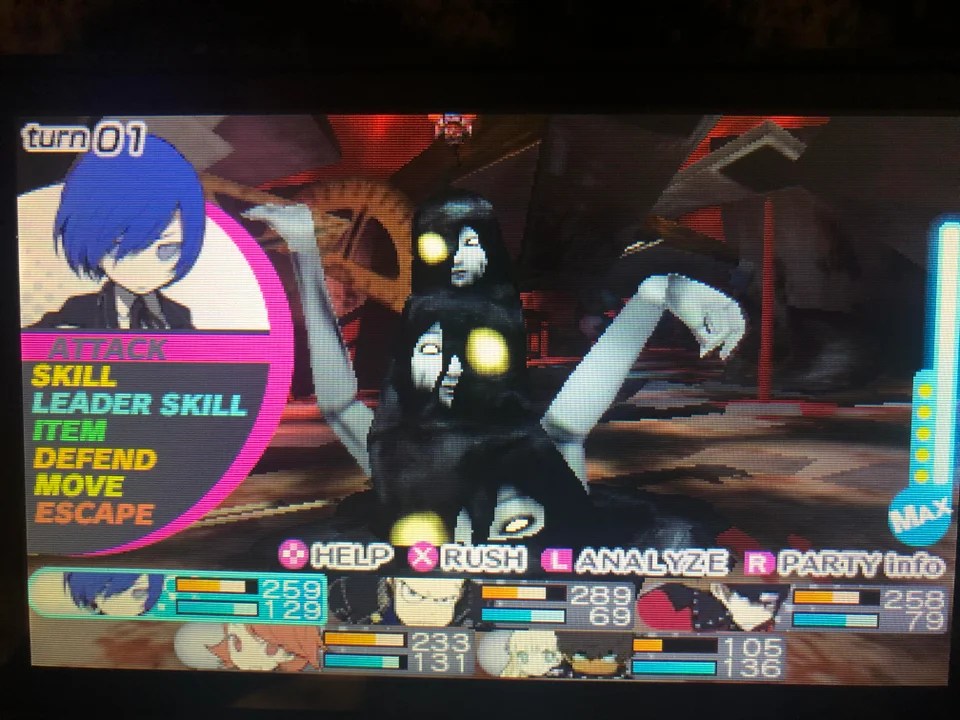
It is the case of turn-based JRPG, a genre usually associated with slow and static games, which instead surprisingly show several examples of immortal pursuers. As expected, several of these creatures come from Atlus games, the developer of the most known horror-themed JRPGs such as Persona and Shin Megami Tensei. On the other side, it is also true that some similar enemies can also be found in less horror-themed JRPGs such as Final Fantasy. Because I think everybody remembers the robot spider from the beginning of FF8. Moreover, this is especially true for more recent horror JRPGs, especially Idea Factory games, and even more fitting for dungeon-crawlers. Probably because of the mazes to explore, or the first-person view, dungeon-crawlers have a huge selection of immortal stalkers, chasing you till an unexpected dead end. And if instant death once trapped is not that different from any survival-horror games, being stuck in an almost impossible-to-win turn-based battle has a completely different taste. And if you find difficult to imagine that, try to think about the pressure of selecting the best move hoping to survive, while the creature annihilates at each turn a different character, or about attempting to escape the battle but failing each time. Moreover, random battles and turns create a denser atmosphere, because you don’t know how many different attacks the creature could do, or when it could appear. Another very interesting concept is that, while in pure horror games there is always a scheduled encounter to kill the immortal stalkers, in JRPGs this could be instead level-based. So maybe 50 levels later, when you are strong enough, you can come back to the stalker that was terrifying you early on to finally kill it.

So what will be on this list? I selected examples of immortal stalkers from different JRPGs, especially if horror-themed, and all with turn-based battles. If not, there would not be much different from pure horror games. The selected creatures should be also almost impossible to defeat, especially when met for the first time, and able to quickly annihilate the party. They should also be active stalkers, or appearing only when connected to rare or unwanted events or mechanics, in fact acting as a negative reward.

Mary Skelter – The Nightmares

Mary Skekter is a trilogy of dark dungeon-crawlers where everything is horror-themed. Not only the games are set inside a colossal living being but also blood is a central element in the gameplay (more info here: Mary Skelter Nightmares: When the dungeon is a colossal living creature with its own needs). But what truly shines as pure horror gameplay are the Nightmares, the immortal stalkers at the core of the experience. Every dungeon has its Nightmare patrolling around, disturbing creatures that are, at the beginning, impossible to kill. They will randomly appear when the player explores the dungeon, accompanied by creepy sounds and a white aura. If they spot the party, the only chance of surviving is to run away as far as possible till the chase is over. The worst thing? The map will be disabled during the chase, so you can easily finish trapped in a dead end. In battle, each Nightmare has an external shell that can be destroyed to briefly stun them, facilitating the escape. However, if random battles happen during the chase, the nightmare will join the fight, creating a very challenging situation. A Nightmare can only be truly defeated after losing the immortality, which will happen by destroying a core at the end of its dungeon. Moreover, the Nightmares are also seriously creepy and disturbing in appearance, linked to the theme of each dungeon and the background of the main heroine there, thus incorporating twisted fairytale elements in their grotesque design. If you are curious about more details, I also wrote a long analysis about the Nightmares, which you can check here: The Nightmares of Mary Skelter: fairytale characters reborn as twisted immortal stalkers.

Undernauts Labyrinth of Yomi – Luci

Undernauts is another dungeon-crawler JRPG, set in 1979 Tokyo where a mysterious structure appeared in the middle of the city. Full of dangers but also resources, soon mining companies start to explore this huge dungeon to unveil its secrets. Developed by Experience Inc, Undernauts is somehow connected to their main series Stranger of the Sword City. However, Undernauts is much more horror, violent, and disturbing than their other RPGs. Let’s just say that the first scene inside the game sees you as the only survivor of your mining expedition, which was was devoured by a kid with a giant leech-like arm. And you survived, only because the child was too full to eat you. While wandering around the dungeons, you will soon meet again that “sweet” cannibal child that spared you. Her name is Luci, an immortal child with a giant leech-like arm, which follows the orders of a mysterious man from a radio around her neck. While exploring the dungeons, you could randomly hear a radio massage of the mysterious man sending the girl to devour the party. After the message, whichever random or stationary battle in the dungeon, will be instead against Luci. So the only way to surely avoid this fight is to quickly run back to the main camp before a battle starts… and this is pretty stressful while exploring. During the fight, the little girls seems so weak and yet so disturbing. But she has the bad habit of attacking the rear row, usually quickly killing your magician or healer, thus making your life pretty miserable even if you succeed in repelling her. Yes, I didn’t use the word “killing” because Luci is immortal and, after behind defeated, she will just stand up and run away, after saying some very sad lines about failure and loneliness. But she will surely come back another time, trying to devour you. Moreover, Luci will also appear in some mandatory boss battles, together with other minions and the ability of massively healing, making such fights even more difficult. Without doubts, Luci is one of the most scary and disturbing stalkers on this list.

Persona – The Reapers

Persona started as a spin-off of Shin Megami Tensei, and now is more famous than the original series. Mixing real life and dark supernatural events, since Persona 3, the saga allows the exploration of huge dungeons while investing in your daily life. And also starting with Persona 3, the Reaper appeared to torment the main party. Especially in Persona 3, the Reaper is a pure horror stalker, integrated since the beginning of the game into the mechanics. If you explore for too long in a dungeon, depending on its size, the Reaper could appear on the floor to hunt you down. Since characters with levels below 70 have practically zero chances of defeating it, finding the exit as fast as possible is the only way to avoid death. Meeting the Reaper means starting an impossible battle, where the party will be annihilated in a couple of turns. The good side is that an end-game party can instead defeat the Reaper, unlocking very rare rewards. The Reaper is also present in Persona 4, but this time it acts only as a secret super boss, which can be faced only during a second playthrough after opening a mysterious chest. In Persona 5 the Reaper is back to stalk the party inside the dungeons, very similarly to Persona 3. When the Reaper appears, accompanied by the sound of rattling chains, the other party members will try to warn you about its danger, and how running away is the only option. Again, the battle is almost impossible to win due to the Reaper’s high defence and instant killing spells.

Etrian Odyssey – FOEs

A JRPG saga that truly integrated challenging battles against almost impossible foes is the dungeon-crawler Etrian Odyssey, published by Atlus. In almost every game of the saga, strong enemies called by the acronym FOE wander around the dungeons. They are always challenging enemies, usually very difficult to beat during the first visit, so it is always a recommended strategy to avoid these fights. However, Etrian Odyssey also integrated very interesting and variegated behaviours for the FOEs. In general, red FOEs work as relentless stalkers, charging at the player if in their sight. For example, the Freed Savage (Etrian Odyssey III) is a grotesque being caged behind gates but, once freed, the creature will quickly run toward the player to attack it. Other similar examples involved FOEs acting in pairs. For example, the Cruel Slayer (Etrian Odyssey IV) is a relentless robot hound almost impossible to outrun, but it will only start to track the players if they are spotted before by a wandering sentinel called the Cold Watchman. However, FOEs also exhibit more complex, hunting, and disturbing behaviours, creating challenging predators to avoid. A deadly example is the Vampire Tree (Etrian Odyssey III), an invisible FOE with a very horror-predatory behaviour. The tough monster will get visible only if close to you while you are in battle, slowly advancing at each turn of the fight. If you are too slow in the random fight, the FOE will join the battle. And having a tough boss with high defence, and a lethal poison that will both damage the characters and cure the monster, is not an easy challenge. Talking about erratic patterns, the disturbing Taurus Demon (Etrian Odyssey V) doesn’t directly charge the player, but once they line up with the monster, the FOE will start to mirror their movements, even if they are very far away. And since the creature is a deadly physical attacker, avoiding it is a necessity. Another deadly and peculiar FOE from Etrian Odyssey V is the Mounting Horror. The monster doesn’t move from its position, but will instead generate clones as strong as it to hunt the player, and the only way to survive is to find and kill the real monster. But the top spot for the scariest and most peculiar FOE from Etrian Odyssey goes to the Death Wall (Etrian Odyssey 2 Untold). Imagine being trapped in a twisted labyrinth typical of dungeon-crawler games, trying to find your way out. At some point, maybe you start to see that a wall was never there. What is happening? This is simply Death Wall, a FOE that mimics a normal dungeon wall… which will move only if you are not watching it. And once you are trapped in a dead-end hallway, you are forced to face it. And this is a battle where you cannot escape, and the Death Wall will literally try to crush all the party with strong physical AOE attacks.

The Lost Child Nyarlathotep

Another dungeon-crawler to add to the many on the list, Lost Child is a spin-off of El Shaddai, an action game involving Catholic mythology and angelic wars. Sharing many similarities with Shin Megami Tensei, in The Lost Child, the main character can trap demons and fallen angels to fight in the party. And the design of the enemies is very original and interesting, as you can see here for some demons: The most unusual Demons from the Japanese dungeon-crawler The Lost Child. However, angels and demons are not the only enemies, since the main bosses are Lovecraftian creatures, including Cthulhu. And Nyarlathotep from the bonus dungeon R’lyeh Road is an immortal stalker that deserves to be in this article. R’lyeh Road is a gigantic bonus dungeon of 100 floors, which can be faced at any point during the game. Each floor has only one exit, and a switch to open it. And the big twist is the presence of Nyarlathotep, which will manifest on every floor once the door is open. Nyarlathotep does not physically face the party but, as a sort of alien parasite, will take control of normal enemies, appearing behind them like a sort of puppeteer, enhancing them to a boss-level threat. The other unique feature is that Nyarlathotep will physically appear on the map, charging toward the player, one step at a time. By planning your moves and using big rooms to your advantage, it is fact possible to avoid Nyarlathotep and escape to the next floor. So how it is possible to truly defeat Nyarlathotep? You can discover the answer only on the 100th floor of R’lyeh Road, making Nyarlathotep one of the most relentless stalkers on the list.

Mother 3 – Ultimate Chimera

Earthbound saga is a cult game not only in Japan, but also worldwide, one of the weirdest RPG ever developed that influenced recent RPGs such as Undertale or Omori. Between funny and disturbing moments, the party will face different creatures, each requiring very peculiar strategies to be defeated. And in Mother 3, there is also an immortal stalker: the Ultimate Chimera. This creature, created inside a lab, looks like a fluffy pink monster with a pair of small wings. But behind this innocent-looking monster lies a deadly enemy. Once it sets free, the monster will roam the lab attacking NPCs and chasing the player. The terrible surprise is that, instead of starting a normal battle, meeting the Chimera means an instant Game Over. There is no hope in fighting the creature, so running away is the only alternative. Luckily, the ultimate Chimera can be deactivated by a button on its back… but only temporary since the party will meet the monster again during the game.

Death end re;Quest 2 – Dark Shadow

The sequel of one of the most horror and disturbing JRPG from recent years is even more insane and terrifying. Hopping between a cursed virtual reality and a town hiding a cult, Death end re;Quest 2 shows a set of really grotesque enemies (that you can check here: The most creepy and disturbing enemies and bosses of Death end re;Quest 2). But random enemies are not the only threat, since another entity could appear anywhere to hunt the party: the Dark Shadow. This cryptic creature appears together with some distortions in any point inside a dungeon. The towering shadow creature advances slowly toward the player, but a mere wrong turn inside a dead-end hallway… and it is Game Over. Because as with the Ultimate Chimera in Mother 3, simply touching the Dark Shadow means a sudden death. Moreover, sometimes the game will position the Dark Shadow in impossible points, where gimmicks like finding hidden suspended paths are the the only way to avoid the creature.

Shadow Hearts – Fox Face

Shadow Hearts is the first (or the second, if we consider Koudelka) entry of a dark saga of JRPGs released for PS2. Mixing European history with demons and eldritch abomination, the game knew how to assemble RPG mechanics with horror elements. And an immortal stalker could not miss this setting. Shadow Hearts involved a very peculiar mechanic around the Malice, a dark and malevolent energy released from death. The more the main character kills enemies in battle, the more Malice is accumulated. Till the breaking point, where the UI becomes red and the Graveyard opens its door. At this point, the Fox Face can appear instead of any random encountered. At first, the creature is not very intimidating, merely a human with a fox mask. However, this adversary represents the protagonist’s fears, and can be challenged only in a 1-on-1 combat, where death is the most possible outcome since the enemy has many dirty moves. The player can lower Malice and avoid Fox Face by going to the Graveyard, to then speak to mysterious floating masks demons and participate in their fighting arena. This is a perfect example of a terrifying stalker very well integrated into the game, so deadly and scary because the main character must face it alone.

Fear & Hunger – Crow Mauler and Greater Blight

Fear & Hunger is probably the darkest RPG ever made, set in a world so grim and sick that will make you often chill. Featuring a combat based on mutilations, where several negative effects are permanent, including death, and lacking any experience coming from combat, avoiding enemies is the standard in this game (and for more you can check the different articles I wrote here: https://darkrpgs.home.blog/category/videogames/fear-hunger/). But some enemies are even more specifically design to act as terrifying Stalkers. The most fitting example is the Greater Blight, a gigantic creature roaming the empty wasteland of the Void, a secret end-game area. While wandering around, sometime a message saying that something is following you will appear. Ignore the message, and soon enough more intimidating ones will appear. If you find a hole in the ground on time, you can hide there till the creature loses your scent. Otherwise, be ready for a tough battle. The Greater Blight looks like a gigantic T-rex missing the eyes, a deadly foe that can slaughter the entire party in a couple of turns. However, a strong and lucky party can still defeat the creature, which will only escape to prepare for another chase. And the player will gain nothing from this deadly battles, except probably for dead characters and mortal wounds. Another infamous enemy is the Crow Mauler, probably the most hated boss in the entire game. In the beginning, Fear & Hunger has only one save point, an old and forgotten bed inside a jail. However, saving in the game is also dangerous, since you have a 50% chances of facing the Crow Mauler. And an underprepared party will also surely die there, because the tough creature has even one-shot attacks. But if you want to freely save the game, soon or later you must defeat this creature. And if this was not enough, the end-game dungeon has trapdoors scattered around. If you fall inside them, you will finish in a basement… chased by a two-headed Crow Mauler, an enemy almost impossible to defeat. Anyway, if you are curious to know more about the Crow Mauler, I wrote an analysis here: When it is impossible to Save: surviving all the mutilations of the Crow Mauler in Fear & Hunger [Boss Battle].

If you want to check the Greater Blight getting your smell, and the battle against this terrible foe, you can check the video on the Surreal and Creepy YouTube channel:

Shin Megami Tensei – Jailer and Dante

Shin Megami Tensei saga doesn’t need introduction, since it is probably the most famous and longevous dark JRPG around. Moreover, the monsters based on mythologies around the world, created by Kazuma Kaneko, are still now an example in monster designing. And surprisingly, some of them also worked as immortal stalkers. An example is the Jailer from Digital Devil Saga (also known as the Buddhist demon Kumbhanda), a deviant creature in charge of a prison. The jail is also a factory where humans are converted into canned food, the Jailer’s favourite. And yes, if you didn’t know, cannibalism is a central theme in Digital Devil Saga (and you can read more about it here: Digital Devil saga: A cannibal JRPG — Surreal and Creepy). During the first battle against the Jailer, you will realise of a drastic anomaly: the boss has an attack able to paralyse everybody with a 100% success rate, quickly ending the battle. Later on, the prison becomes its hunting ground, where the main character should physically escape from the Jailer and its traps, while finding a way to trick it into losing its powers. If the Jailer is a pure horror stalker, another enemy is an even more emblematic hunter in Shin Megami Tensei. Just this time, it is an enemy that you would never expect. “Featuring Dante from the Devil May Cry Series” became quite a meme for SMT 3 Nocturne, and the legendary demon hunter from Capcom’s games truly appears in one of the bonus dungeons. Dante will literally stalk the player while exploring a complex maze, shooting them if they are far but still in his range, or starting a deadly battle when reaching them. In the last case, Dante will immediately kill the weaker demon in the party with his sword. And if the main character is the lowest-level one… well, time for an instant Game Over.

Persona Q – FOEs

Persona Q is a spin of the main series released for 3DS, with a gameplay more similar to Etrian Odyssey than the regular Persona. The similarities are so many that, even in this case, while exploring the dungeons, you can meet deadly FOEs. As well as for Etrian Odyssey, FOEs have different behaviours, and, in general, it is often recommended to avoid them. Moreover, due to the darkest nature of Persona setting, the FOEs are even more disturbing. For example, the Beast of Lust is a sort of small Cherub seated on top of a bondage horse, creating a very disturbing enemy that follows the player if they are directly watching the creature. So no eye contact, no pain. In the next dungeon, the Evil Spirit Club, the party must face creepy clusters of dolls, the Lovely Dolls, which share some similarity with Junji Ito’s Tomie. They are stationary, but tends to surprisingly teleport toward the player causing a jump-scare. Luckily, the light can repel those dolls granting safe passages. And if the Loving Dolls are not enough, the ancient version, the Old Doll, will actively chase the party and can even block some doors to create smaller hunting grounds. Other FOEs, such as the Festival Dudes, act as super tough side battles. They are a group of 4 monstrous and coloured muscled guys bringing around a shrine, which move in a fixed pattern around the dungeon. However, even if they are extremely strong, they can be defeated by selecting specific characters for a very unusual party. To conclude, the Reaper from previous Persona games is also there to hunt and terrify the party in the last dungeons.